
United Nations
Our work World drug problem Commission on Narcotic Drugs
Border management and anti-trafficking
Drug prevention, treatment and care
Organized crime UN Convention against Transnational Organized Crime
Border management and cross-border crimes
Firearms manufacturing and trafficking
Human trafficking and migrant smuggling
Corruption and financial crime UN Convention against Corruption
Crime prevention and criminal justice Commission on Crime Prevention and Criminal Justice (CCPCJ)
Crime prevention and criminal justice reform
Terrorism prevention Terrorism prevention and counter-terrorism responses
Laboratory and forensic science services
Treaties and intergovernmental bodies Commission on Crime Prevention and Criminal Justice
Congress on Crime Prevention and Criminal Justice
UN Convention against Transnational Organized Crime
Ad Hoc Committee on UN Convention against Cybercrime
Where We Are Europe and West and Central Asia Afghanistan
South-Eastern Europe - Regional Office
Regional Programme for Afghanistan and Neighbouring Countries
Africa and the Middle East Eastern Africa
Latin America and the Caribbean Andean Region and Southern Cone Argentina
South Asia, East Asia and the Pacific South East Asia and the Pacific
PRESS RELEASE
Waste trafficking driving toxic pollution and harming public health, says UNODC
Vienna, 25 February 2026
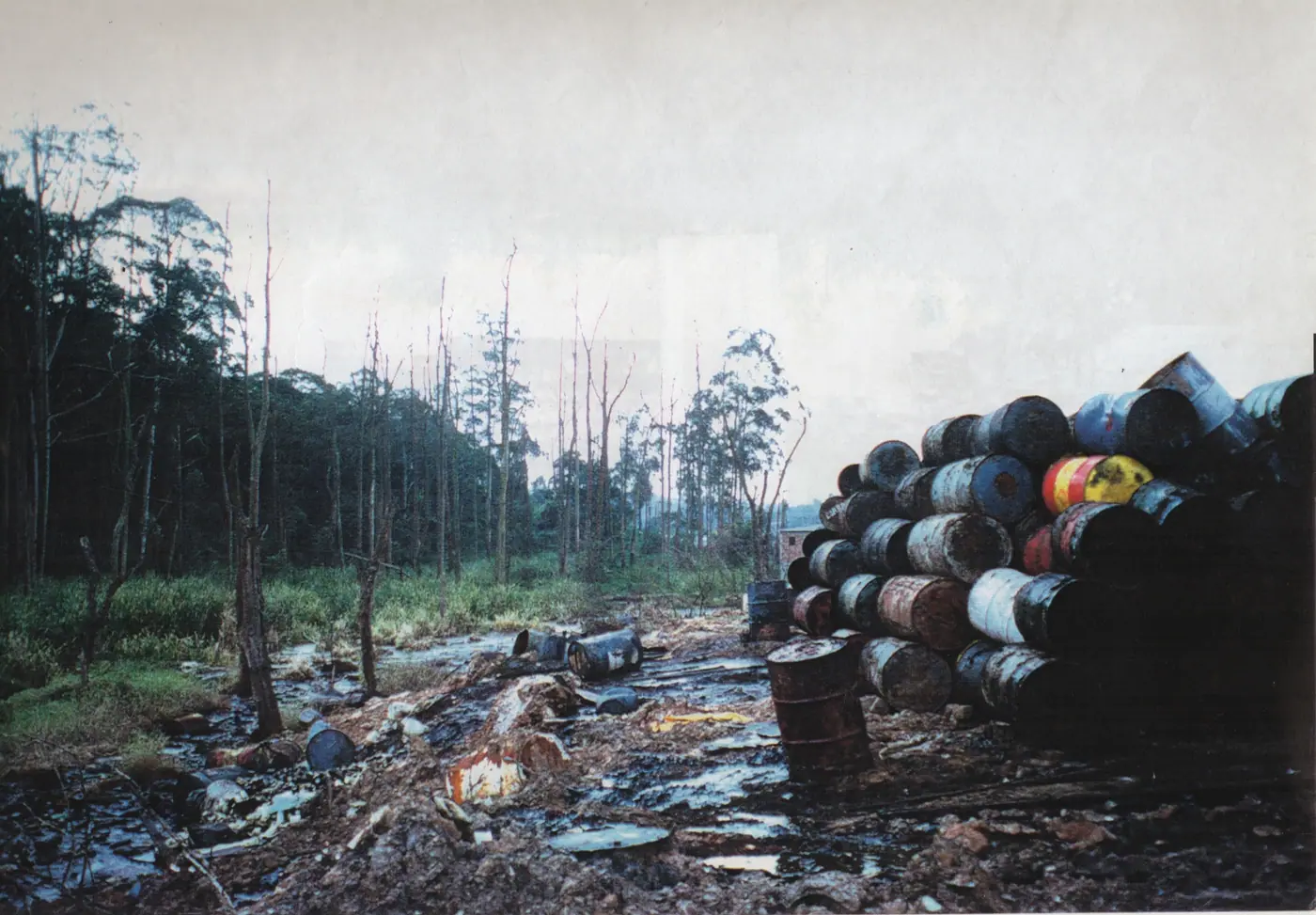
Illegal waste flows are causing economic, public health and environmental damage, especially in low-income countries, while a patchwork of regulations enables criminals to evade punishment, according to a new analysis from the UN Office on Drugs and Crime (UNODC) released today.
In “Waste Crimes and Trafficking”, a new installment of the Global Analysis on Crimes that Affect the Environment , UNODC examines the five main illegal waste trafficking categories: electrical/electronic waste (e-waste), plastic waste, end-of-life-vehicles and engines, metal and metal bearing wastes, and waste mixtures, as well as the modus operandi of the organized crime groups and corporations involved.
It finds that legislative gaps, limited enforcement capacities, lack of traceability and low penalties are all facilitating a trade that some estimate to be worth billions of dollars.
“Our study demonstrates that waste trafficking continues to be incredibly difficult to detect, investigate and prosecute,” says Candice Welsch, Director of Policy Analysis and Public Affairs at UNODC. “This is not an abstract challenge, but one with severe consequences for public health, as it drives toxic pollution of drinking water, the ocean, soil and more. ”
Organized crime groups have been found to be involved in waste crime cases around the world, ranging from local illegal activities to large-scale intercontinental trafficking. Corporate involvement in waste crime and trafficking is also common. Some companies do not comply with regulations, others knowingly acquire illegal services and still others have parallel illegal operations.
The analysis finds that both organized crime groups and corporations employ corruption to hide illegal waste within legal waste streams, bypassing regulatory checks through fraudulent and corrupt manoeuvers. These can include document fraud, extortion, theft, public embezzlement, abuse of office, money laundering and more.
Moreover, penalties for waste trafficking can be much lower than the potential profits that can be earned from a single illegal e-waste shipment, while the cost of illegal disposal or trade can be substantially lower than the price of legal disposal or management services – creating strong financial motives to commit waste offenses.
The lack of consistent offences and penalties around the world make it easy for would-be traffickers to “jurisdiction shop” for those places with the weakest regulations and lightest penalties.
The study finds that, although the illegal dumping, burning, movement, shipping and disposal of waste happens worldwide, when waste is trafficked, the least valuable and/or most difficult and expensive waste to dispose of flows from high-income to low-income regions. These include plastics and e-waste, which can contain hazardous substances or harmful chemicals.
Since waste is often trafficked to countries that struggle with environmentally-sound waste management, this has significant negative consequences for people’s health and the environment.
Read Waste Crimes and Trafficking here.
This study was funded with support from the Governments of France and Germany.
For further information please contact:
Sonya Yee Chief, UNODC Advocacy Section Mobile: (+43-699) 1459-4990 Email: unodc-press[at]un.org