
Drug trafficking, "more than 98% of the proceeds are not traced", says Dutch prosecutor Lucas
Cpr - Repatriation detention centers
Islands. Spaces of education and civil disobedience
Cpr - Repatriation detention centers
Islands. Spaces of education and civil disobedience
Drug trafficking, "more than 98% of the proceeds are not traced", says Dutch prosecutor Lucas
Speaking at the anti-mafia commission in Rome, the Dutch magistrate illustrated the main challenges of fighting organized crime in his state
Andrea Giambartolomei Editor of lavialibera
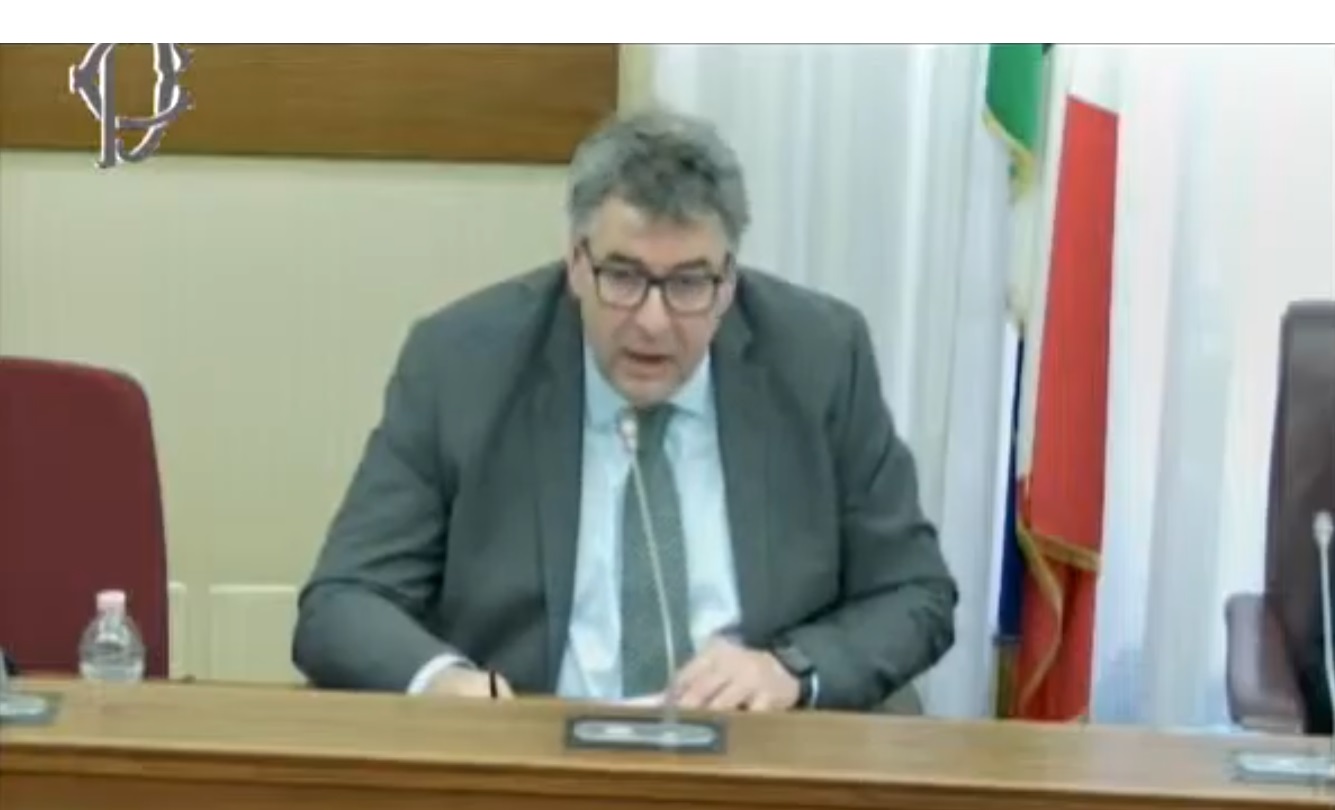
A “fundamental hub for cocaine trafficking in Europe”, but also the European capital of synthetic drugs and a frontier ground for investigative innovations. The Attorney General of the Netherlands, John Lucas, spoke on Tuesday 10 March before the parliamentary anti-mafia commission, providing an overview of the fight against organized crime in his state which, in recent years, has become a contested terrain between various criminal groups, including through violence. A particular observation point for many aspects related to drug trafficking.
Cocaine trafficking through the Netherlands
The port of Rotterdam is, together with Hamburg (Germany) and Antwerp (Belgium), among the main European maritime ports and the most important landing point for cocaine: "The Netherlands is centrally located and has a well-developed port structure and therefore has been and is the gateway for all shipments of cocaine from South America and West Africa". On this last route the magistrate tried to shine a light: "The impact for some West African countries should not be underestimated because we see criminal figures, including Dutch ones, who are able to influence governments and corrupt. They manage to acquire and control large parts of the infrastructure in the different countries where they operate".
However, in the Netherlands there is also a high consumption, estimated at 10 kg per day: "With an average price of 45-50 per gram, this amounts to a global amount for the Netherlands of around 160-180 million euros per year. It seems like a lot, but these figures disappear compared to the enormous quantity of cocaine that crosses our borders. In 2023, more than 45,000 kg were seized in Dutch ports, a small percentage of what crosses our borders, which we believe is ten times the annual internal consumption".
Moles of coke. Europe submerged in white dust
After the solutions implemented by the Netherlands, Belgium and Germany, the narcos looked for other ways. "The seizures of cocaine in Rotterdam and Antwerp from 2023 to 2024 decreased by 50 percent, despite the fact that controls have not decreased - explained the magistrate -. At the same time the price of a kilo of coca in the Netherlands has never been so low, within 15 thousand euros per kilo, while a year and a half ago it was 30 thousand. You don't need to be an economist to see the difference. Low price, fewer seizures: this it means that a lot of cocaine still arrives in Europe." And in fact, he further notes, "trafficking shifts to other modes and secondary ports. Cocaine avoids Antwerp and Rotterdam. Spain and Portugal are used."
Then there is the spread of a "camouflage" technique, the chemical camouflage of cocaine, "hidden at a molecular level on a support material and so that it cannot then be detected, for example, in port scanners". In this way the goods pass the checks and then, in some laboratories, they are "extracted": "We have found several extraction laboratories with a capacity of 200 kg of cocaine per day that can be extracted from these supporting materials. One of our main challenges will be to try to detect these materials already in the ports".
Synthetic drugs laboratory
In addition to the white powder from Latin America, other substances also pass through the Netherlands: "In 2018 the Netherlands was unofficially proclaimed world champion of synthetic drugs". We must start from an assumption: "We have a certain level of acceptability towards drug use for certain events", such as festivals.
The demand corresponds to a strong supply. "We have more and more drug designers (chemists expert in creating these substances, ed.). We produce many of these synthetic drugs. All these products are easily transported. The critical points concern the identification of laboratories and precursors, substances necessary to produce synthetic drugs". Dutch chemists who are experts in this sector also find outlets abroad, while new substances and new "chemists" arrive from other states, such as Mexico, to synthesize others. However, “while we focus on a fight against a synthetic drug, a new one is already being found.”
The 'Ndrangheta in Belgium. "In Limburg the mafia is not fiction"
The violence of the Moccro mafia
The drug market goes hand in hand with the violence of the organizations that want to control it and profit from it and the Netherlands, in recent years, has been shaken by some cases. It all began when the investigators began working with Nabil Bakkali, the first turncoat of the Moccro mafia clans, a criminal association that imported cocaine.
Only after the revelations of this collaborator of justice, the investigators were able to make progress and arrest many suspects involved in the Marengo trial. "However, after the word spread that there was a collaborator of justice, three murders took place: that of an innocent member of the family of the collaborator of justice (the brother, ed.); that of his lawyer (Derk Wiersum, ed.) and that of a journalist, Peter R. de Vries, 'confidante' of this criminal – said Lucas –. You have May 23rd and July 19th of 1992. Here in the Netherlands we have 18 September 2019 and 6 July 2021 which are the dates of the murders of the lawyer and the journalist. These are cases that shocked the Netherlands and made it clear that drug trafficking was a huge problem, that organized crime had changed definitively and that our approach had to be changed".
Discover our magazine!
Investigations, interviews, data, columns: because knowing is a right, remaining silent is a choice. On paper and digital
Cryptophones, the treasure chest of narcos' secrets
A "crucial event of recent years" has affected the way of fighting organized crime, the decryption of the messaging systems used by criminal organizations: "After having dismantled various encrypted communication services such as Encrochat, Sky Ecc, Exclu and Matrix, we have obtained a lot of information - he explained to the members of the Anti-Mafia -. We have managed to have a reasonable image of crime in the Netherlands and in other countries".
Through institutional channels, the information was provided to other States. Not only that. The study of this immense amount of data has changed the approach in the analysis of criminal power structures: "We also try to understand how to disturb the system to dismantle it and then we attack it. Thanks to the investigations we try to establish who covers the main roles and to anticipate the adaptation capabilities: if we arrest an important link, we try to predict how the network will react, who will succeed him and what the impact will be". An analytical work that has borne fruit: "The number of subjects arrested and tried has increased significantly and the number of murders in the Netherlands in recent years has decreased significantly, although this may be a coincidence."
Cryptophony systems are often legitimate platforms, but "we see that there are platforms used exclusively by criminals – Lucas specified –. I think that investing with legislation and know-how is the best tool to be able to 'crack', dismantle these systems".
How Sky Etc. cryptophones were hacked
Still a lot to do against money laundering
Another challenge, in addition to the dismantling of cryptophony systems, concerns investigations into money laundering resulting from drug trafficking. Lucas recalls Giovanni Falcone and the importance given to financial investigations: "This method has become the cornerstone in our fight against organized crime. You would think that we have achieved results, yet the European Union is faced with a disarming reality. We believe that more than 98 percent of all illicit proceeds remain untraced. It is a huge figure." He himself admits that “unfortunately we often focus on intercepting cocaine shipments rather than financial leads”.
But it's complex. Remember that profits often end up in countries like the United Arab Emirates. “Then there is the emergence of Türkiye as an important piece in what is an illegal banking system.” There are cryptocurrencies ("we lack the expertise to conduct investigations"), investment in luxury goods and, above all, payments made through informal systems such as underground banking.
China's "flying money" system for paying for drugs
The Netherlands has developed a task force with a “fundamental role: “It has allowed us to discover a completely parallel criminal financial system – he explained –. Through our investigation, especially through message decryption, we discovered this global underground banking network that functions as an entirely separate financial ecosystem. It is a system based on irregular exchange offices, which act as an informal bank for criminal organizations. The transactions take place without touching the formal financial system and are therefore invisible to anti-money laundering measures. We have created this task force and we hope to have a collaboration with our international colleagues."
Many aspects of crime worry the Dutch Attorney General: corruption, the complicity of some lawyers ("it is a problem that cannot be solved with criminal law, we need measures from the legal profession"), the power exercised by criminals detained right from their cells, which is why "we have set up a detention intelligence unit, which has been operational for years". There is also an emerging phenomenon for the Netherlands, that of “crime as a service”: “There are criminal subnetworks specialized in specific criminal roles, provided to other criminals”. This aspect also concerns “the engagement of minors for criminal activities via social media, for example, including for the export of or use of explosives” or to smuggle drug shipments out of ports. “They are vulnerable young people who enter criminal networks, they never leave.”