
$35 billion traffickers
$35 billion traffickers
The complaint by William Lacy Swing, head of the International Organization for Migrants
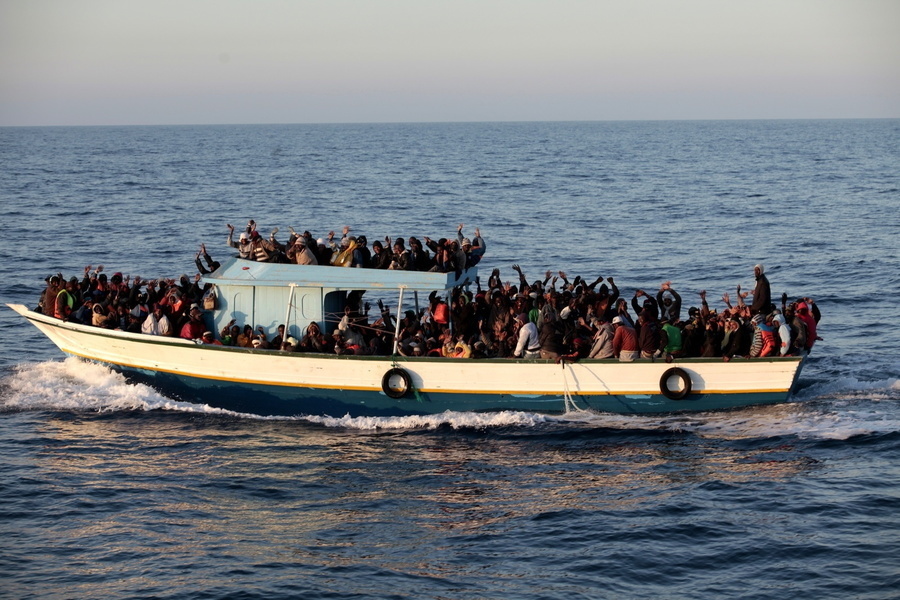
Human trafficking in the world is worth something like 35 billion dollars a year, money made above all at the expense of migrants who try to cross the Mediterranean to reach Europe. The number one of the World Organization for Migration (IOM), William Lacy Swing, declared this a few days ago during an interview with the Reuters news agency.
With its 35 billion dollar turnover, human trafficking today represents the third most profitable business in the world for international crime. The only thing that guarantees greater profits to these organizations is arms and drug trafficking.
Migrants fleeing from Africa and, more generally, from ongoing conflicts and humanitarian crises in various countries, are often convinced to set sail in Libya by these traffickers, by whom they are intercepted inside detention centres. Six years after the fall of Gaddafi, in fact, the country is still a lawless territory and refugees almost always report terrible conditions in government centers for migrants.
Deaths in the Mediterranean
Overall this year, more than 1,700 people have already died while crossing the Mediterranean (among them many children). A very high figure if we also consider that in the summer that is about to begin, the migrants who will undertake this journey will continue to grow. In all of 2015, there were 3,700 deaths at sea and, in 2016, 5,000, Lacy Swing recalled.
And we cannot ignore the fact that this is definitely only a small part of the real victims.
“We must be careful because these are only the people we know are dead, but how many other bodies are submerged in the Mediterranean or buried in the sand of the Sahara?”, asks the head of the agency linked to the United Nations.
The international community in Libya
After visiting Libya last March, Reuters underlines, Lacy Swing declared that for his organization "everything was ready to go", that is, the return of international staff to Libya to work in migrant centers could be started. So far, however, permission from the United Nations to proceed in this direction has not yet been received.
Furthermore, the organization had recently presented plans in Geneva together with the UN Refugee Agency (UNHCR) to support operations in Libya. In particular, Lacy Swing had said that IOM was ready to help the local government in managing internally displaced persons and migration centers.
In the country, in fact, the situation seems to be worsening day by day.
“There is an anti-migrant sentiment that hasn't been seen in the past, now fueled by suspicions that some of these people fleeing terrorism are terrorists themselves.”
According to Lacy Swing, what Western governments should do now is address the real causes of ongoing migration: conflicts, lack of water and disparities between rich and poor countries.
On the same topic read: Trafficking in human beings: UN proposes sanctions in Libya Hell Libya Mediterranean children's cemetery Migrant trafficking travels on the web Libya, the slave trade returns Exoduses: a thousand stories on a map
Disabled migrants: an unknown world
Criminalization of migrants: the European shortcut to hellip management;
Women's rights: 50 years of progress, obstacles and new challenges
Mediterranea Saving Humans: Safira, the sail that saves migrants
Israel-Palestine, peace under siege
Your email address will not be published.
Save my name, email, and website in this browser for the next time I comment.
Taser, deaths from Chieti to Bolzano: the investigation into the electric gun continues
Military spending or welfare state: in Italy rights remain broke
Masafer Yatta, Mediterranea denounces a "laboratory of ethnic cleansing"
Taser, at least eight dead: Francesco Pelle's sister speaks
Guantanamo, the US prison where the rule of law disappears