
Lead: The Significance of the Annual Report
The scheduled presentation of the 2025 annual report by the Autorità Nazionale Anticorruzione (ANAC) is a pivotal event in the landscape of Italian public governance. It represents a formal moment of accountability where the body tasked with overseeing public contracts and preventing corruption reports its findings to Parliament and the nation. The high-level institutional attendance signals the gravity with which the state regards the issues of transparency and integrity in public administration.
Historical and Institutional Context
The annual report is a recurring institutional obligation, a cornerstone of the democratic oversight mechanism for independent authorities in Italy. This yearly event provides a structured platform for ANAC to present a summary of its activities, highlight emerging trends in corruption and administrative inefficiency, and propose potential reforms. It serves as a public record of the state’s ongoing efforts to align with international standards of good governance and accountability.
The 2026 presentation will specifically cover the activities undertaken during the 2025 calendar year. While the full scope is unknown, the official announcement singles out one particular theme: “Trasparenza dei servizi pubblici locali di rilevanza economica” (Transparency of local public services of economic importance). This focus suggests that the management and oversight of essential local services, such as utilities and transport, were a significant area of investigation or policy development for the Authority during that period.
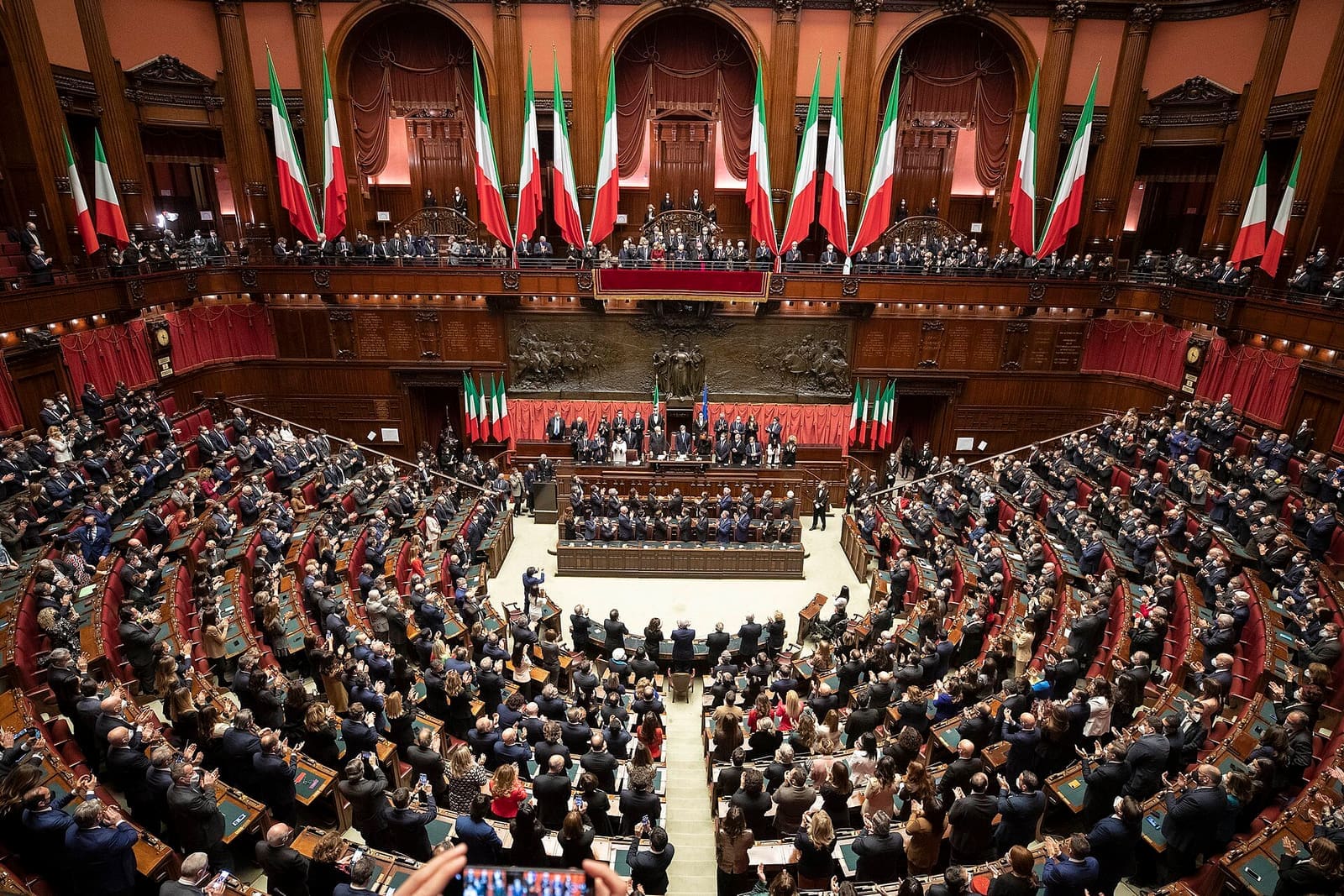
The event is set to take place in the prestigious Aula della Regina at the Chamber of Deputies, a location that reinforces the solemnity and official nature of the proceedings. This choice of venue underscores the direct line of reporting from the independent authority to the legislative branch of government, symbolizing the Parliament’s role in scrutinizing the executive and administrative functions of the state.
Key Actors and Entities
The Reporting Authority
The central entity is the [[Autorità Nazionale Anticorruzione|Q15818451]], commonly known as ANAC. As Italy’s independent anti-corruption body, its mandate includes supervising public contracts, ensuring transparency in public administration, and preventing illicit activities within government bodies. The annual report is its most prominent public-facing activity, delivered by its President, [[Giuseppe Busìa|Q106095908]].
The Institutional Audience
The report is formally presented to the [[Italian Parliament|Q1117547]], with the event physically hosted at the [[Chamber of Deputies (Italy)|Q793578]]. The presence of [[Sergio Mattarella|Q12205338]], the President of the Republic, is of paramount significance. His attendance, while symbolic, elevates the event and communicates a powerful message about the national commitment to the principles ANAC represents.
Also in attendance will be [[Lorenzo Fontana|Q18288544]], the President of the Chamber of Deputies. According to the official communication, he will deliver an initial greeting. This role positions him as the institutional host and provides an opportunity for the legislative branch to frame the context in which the Authority’s report will be received, establishing a formal dialogue at the highest level.
Critical Analysis of the Available Evidence
Inferences from the Procedural Framework
The meticulous detailing of the event’s logistics in the official announcement is more than administrative minutiae; it is a statement of institutional control and gravity. The strict timeline, from the 10:30 AM entry deadline to the simultaneous 11:00 AM presentation and documentation release, creates a highly structured environment. This framework is designed to ensure that the Authority’s message is delivered with maximum impact and without the distortion of premature leaks, centering the initial narrative firmly with ANAC.
The choice of the [[Chamber of Deputies (Italy)|Q793578]] as the venue, specifically the Aula della Regina, is deeply symbolic. It is not a neutral conference room but a seat of legislative power. Holding the event here visually and formally reinforces the direct accountability link between the independent supervisory body and the elected representatives of the people. It is a physical manifestation of the Parliament’s oversight function, receiving a report that may inform future laws and policy decisions regarding public integrity.
The presence of [[Sergio Mattarella|Q12205338]], President of the Republic, serves as the ultimate institutional validation. As the head of state and guarantor of the Constitution, his attendance elevates the report from a specialized administrative summary to an event of national importance. It implicitly signals that the themes of corruption and transparency are not merely technical issues for experts but are fundamental to the health and stability of the Italian Republic itself. This high-level endorsement can also serve to shield the Authority from potential political blowback resulting from its findings.
The specific mention that the documentation will be available on ANAC’s portal precisely at 11:00 AM speaks to a commitment to digital transparency, albeit a controlled one. It ensures equal access to the source material for all interested parties—journalists, academics, citizens, and private sector actors—at the same moment. This practice levels the playing field for analysis and prevents any single outlet from gaining an advantage through early access, reinforcing the principle of open and equitable information dissemination.
Thematic Clues and Unanswered Questions
The sole thematic clue provided—“Trasparenza dei servizi pubblici locali di rilevanza economica”—is a significant pointer towards the report’s core concerns. This focus suggests a deep dive into how municipalities and local bodies manage essential services. These are often multi-billion euro sectors, encompassing contracts for water, energy, waste, and transport, which are critical to citizens’ welfare but also notoriously susceptible to mismanagement, vested interests, and criminal influence due to their fragmented and localized nature. The report is likely to contain specific findings on these vulnerabilities.
However, the announcement offers no explanation for why this topic has been prioritized. This is the central analytical gap. Is this focus a response to a surge in whistleblower reports from local governments during 2025? Is it linked to the oversight of projects funded by national or EU recovery funds, which often involve local implementation? Or does it represent a proactive, strategic decision by ANAC to tackle a known, systemic weakness in Italian public administration? The answer to this will determine whether the report is reactive or prescriptive.
The role of [[Lorenzo Fontana|Q18288544]] remains an enigma. His “saluto iniziale” could be a simple procedural courtesy. Alternatively, it could be a substantive political statement, perhaps outlining the majority’s legislative priorities in the field of anti-corruption or signaling a particular disposition towards ANAC’s work. The tone and content of this opening address will be the first indicator of the political climate into which the report is being released, a crucial variable not contained in the source document.
The most profound uncertainty lies in the substance of the report’s data and recommendations. The press release is silent on the metrics of success or failure. It does not state whether public procurement has become more or less transparent, whether conflicts of interest are being managed more effectively, or whether the overall perception of corruption has changed. These are the core questions the public and policymakers will have, and the announcement serves only to build anticipation for the answers, leaving a notable information vacuum.
Finally, the document exists in a temporal void. By focusing only on the upcoming event, it provides no measure of the Authority’s long-term effectiveness. An annual report is a tool for accountability, but its true value is measured by its impact over time. Without knowing if past recommendations have been debated, adopted, or ignored by Parliament, it is impossible to assess whether this elaborate institutional ceremony translates into tangible progress in the fight against corruption. The event itself is transparent; its consequences are not.
Source Documentation and Legal Basis
The information contained in this dossier is derived exclusively from an official public announcement issued by the Autorità Nazionale Anticorruzione. The document is titled:
“Relazione annuale al Parlamento dell’Autorità Nazionale Anticorruzione, martedì 21 aprile ore 11”
The original communication is publicly accessible via the Authority’s institutional web portal at the URL: https://www.anticorruzione.it/-/cs.relazione.anac.2026. The public nature of this document is guaranteed under Italian law, ensuring it is available for independent review.
Specifically, Article 5 of Law no. 633/1941 stipulates that the acts of the state and public administrations are not covered by copyright. This legal provision is fundamental to government transparency, as it ensures that official documents, such as this press release, can be freely accessed, used, and disseminated by the press and the public for purposes of scrutiny and information.