
Bodies for sale: Nigerians' time
Bodies for sale: Nigerians' time
In Italy the "white slave trade" from Eastern countries is replaced by the arrival of young African women
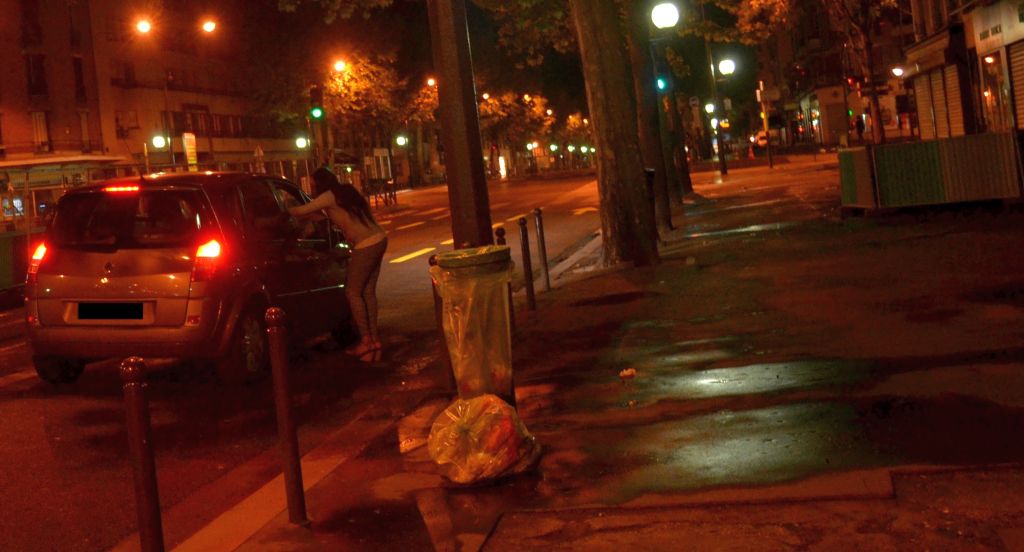
The trafficking of Nigerian women in Italy for sexual exploitation is a growing phenomenon. They are between 16 and 25 years old, they come from Lagos, Benin City, the Niger Delta area and since 2004 they have been progressively replacing the so-called "white trafficking": girls coming from Eastern European countries, who throughout the twentieth century represented the largest component in the prostitution market.
It is true that, even today, in the main metropolitan areas of Italy the absolute numbers speak of a majority presence of girls from countries of the former Soviet bloc (plus Albania and Romania), but the trend is changing. As emerged in the Social Policies Commission of the municipality of Milan at the end of last September, for example, only considering the female component among the victims of trafficking - and therefore excluding men, transsexuals and minors - there were 1,984 cases in 2015, of which 63% came from Eastern Europe.
But the Nigerian nationality, without counting women from other areas of Africa, alone accounts for 30% of the total. «The phenomenon of Nigerian women, which is not yet a majority in absolute terms, is worrying due to the increase and growth of arrivals by sea», said Claudia Biondi on that occasion, head of the “Women Mistreatment” area of Caritas Ambrosiana, one of the entities that has been working together with the Municipality on social assistance and protection programs since 2000.
Why precisely from Nigeria
The factors that led to this trend reversal are many. First of all, starting from the eastern enlargement of Europe, consolidated in 2004, one of the preconditions that lead women to end up at the mercy of criminal and slave groups was missing for girls coming from the former Soviet bloc: clandestinity and the absence of documents. Being able to enter EU countries regularly does not mean that social and working conditions have necessarily improved. But it means that migrants from the East are no longer forced to turn to informal, criminal and mafia-like networks in order to cross borders and access a job or housing.
The same does not happen for Nigerian women, who, in fact, as demonstrated by the most recent data from the European Agency for border surveillance, Frontex, permanently represent one of the main national groups that rely on human traffickers to reach Europe.
The story of the trafficking of Nigerians north, however, does not begin in this decade. The first migrants arrived in Europe in the 1980s in the wake of two events: the debt crisis that shook Nigeria starting in 1979 and the consequent adjustment policies, desired by the International Monetary Fund and the World Bank, which were grafted with heavy social repercussions on the rubble of the civil war in Biafra fought up to 10 years earlier. Creating a lethal mix of poverty, unemployment and underemployment perfect for the managers of trafficking. At the time the girls had decent rates of schooling, an average age slightly higher than today (20-30 years compared to the current 16-25), they mainly came from large urban centres, the capital Lagos above all.
In recent years, however, there have been other factors that have changed the causes and also the profiles of victims of trafficking. Among the causes there is also the low price of oil - a resource that drives the entire Nigerian economy among employees and workers in the sector and related industries - which has remained close to historic lows on the international crude oil markets for years. Creating the suitable context for migration. Not only in the capital, but also in rural and riverine areas, such as the Niger Delta, inhabited by the Christian-animist minority of the Igbo (or Ibo), where in 1966 the first deposits of black gold were discovered which had driven foreign investments and uncontrolled development both at an infrastructural (ports, industries, residential slums) and demographic level, attracting people from the northern countryside.
In these same areas, since the mid-2000s there have been reports of serious violations by the government and oil companies of economic and social rights or, as demonstrated by the Amnesty International campaign "Nigeria: are human rights in the pipeline?", of the right to health.
The girls who arrive from this area are very young, even minors, of various ethnic groups (Igbo, Yoruba, Bini, Edo) have low schooling and literacy rates and often already know what they are facing because they have a past of violence, trafficking and forced prostitution within the very borders of Nigeria and Libya before taking the road to Europe.
Despite this, they adapt and accept their fate under pressure from their families, who see in this possibility a way to pay off debts, new and old, monetary and also of a relational and spiritual nature - as demonstrated by the wodoo rites to which the girls are subjected before leaving (read "Becoming a prostitute in 30 days").
The debt to reach Europe can reach 60-70 thousand euros. At the time of departure, some of the future prostitutes do not understand that that amount is expressed in euros and not in "naira", the local currency, and therefore they imagine that they can free themselves from slavery much more quickly than in reality.
The numbers of victims of trafficking
However, the trend towards replacement is clear in the numbers. Frontex itself records in its monthly bulletins how the Nigerian nationality is preponderant among those arriving by sea along the central Mediterranean route. In April 2017, Nigerians are the first nationality, ahead of Bangladesh and Ivory Coast, out of the 12,900 monthly arrivals.
Eurostat writes that «considering the three-year period 2010-2012, the Nigerian nationality was among the top five non-EU nationalities in absolute terms of registered victims of human trafficking». A 2009 report on human trafficking from West Africa prepared by the United Nations Office that deals with drugs and crimes explains how Nigerian victims of trafficking have consistently represented more than 10% of the total number identified in Europe, for a turnover that varies between 152 and 228 million dollars a year, deriving from the sale of a number of women between 3,800 and 5,700.
In a report by the International Organization for Migration, carried out between April 2014 and October 2015, the IOM had identified 2,778 victims of certain trafficking and 3,952 potential victims in Italy. Partial numbers, which derive from a series of interviews and discussions conducted by the Organization in the ports of Lampedusa, Porto Empedocle, Augusta, Pozzallo, Messina, Trapani, Palermo, Otranto, Taranto, Brindisi and Reggio Calabria, as well as in the first reception centers in Southern Italy.
The IOM itself invited these figures to be taken with caution (and probably downwards). The data is partial for various reasons: the lack of time available in ports to carry out interviews and establish a relationship of trust at the time of disembarkation does not help; the linguistic factor further complicates; also the presence of a « feeling of gratitude towards traffickers, which may seem contradictory. But it is a fact that women look at their exploiters as someone who allowed them to arrive in Europe and at the exploitation itself as a price to pay to achieve a situation of well-being."
From Milan to Manchester, without any real questions
Democratic Republic of Congo: war for resources and return of Ebola
Death penalty: record number of executions in the world since 1981
Human rights in the world: the situation in the new Amnesty International report
Sudan, the civil war continues thanks to foreign aid
Francesco says 8 years ago Nobody talks about it but now no shaman or whoever can force Nigerian girls into prostitution under the threat of voodoo rites (ju ju). So the "Nigerian mafia" will no longer be active in this field but unfortunately when there is a lot of money involved, someone will take their place. answer
Your email address will not be published.
Save my name, email, and website in this browser for the next time I comment.
Military spending or welfare state: in Italy rights remain broke
Masafer Yatta, Mediterranea denounces a "laboratory of ethnic cleansing"
Taser, at least eight dead: Francesco Pelle's sister speaks
Guantanamo, the US prison where the rule of law disappears
American consulate in Milan: dozens of bricklayers victims of "para-slavery"