
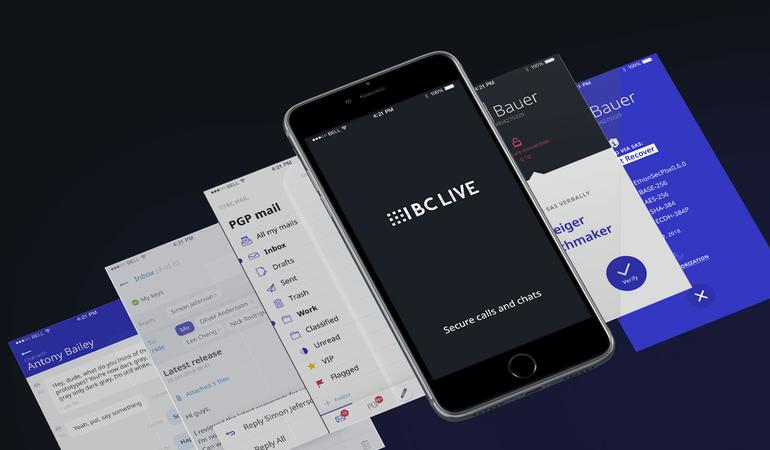
From a narco to a US banker: the criminal history of the company that equips mafias with anti-wiretapping telephones
Cpr - Repatriation detention centers
Islands. Spaces of education and civil disobedience
Cpr - Repatriation detention centers
Islands. Spaces of education and civil disobedience
Mafias. From a narco to a US banker: the No1BC company that sells anti-wiretapping phones
'Ndrangheta, Camorra and Albanian clans use No.1 Business Communication (No1BC) apps to organize drug trafficking. The latest confirmation comes from Eureka, the operation against the 'Ndrangheta which led to the arrest of over 100 people on 3 May 2023. The company is registered in Malta in the name of a US businessman, but an international investigation - conducted by lavialibera, IrpiMedia and Vice USA - reveals the link with a German company of the same name founded by a drug trafficker and managed by a convicted criminal convicted of money laundering
Rosita Rijtano Journalist
Lorenzo Bodrero Journalist IrpiMedia
'Ndrangheta, Camorra, and Albanian clans use its apps to organize international drug trafficking. It's called No.1 Business Communication (No1BC) and promises anti-eavesdropping smartphones. An American businessman signs his signature: a former banker very involved in the Jewish community of Miami, Florida. It is the new face of the company, with a respectable facade. But this is only the latest evolution of a company that has been providing drug traffickers with police-proof messages, emails and phone calls for more than ten years.
Now an international investigation conducted by lavialibera, IrpiMedia and Motherboard (Vice) is able to reconstruct the history of No1BC, revealing for the first time the link between the current company and a German company founded by a narco. Same name, same technology, same business. The bridge is Eli Gampel, former president of the Jewish community in Halle, Germany, convicted of money laundering.
Cryptophones, allies of narcos (until proven otherwise)
The investigation in 2 points:
No.1 Business Communication (No1BC) promises anti-wiretapping smartphones, and is the new hi-tech company favored by the mafias. This is demonstrated by at least four drug trafficking investigations by three Italian prosecutors' offices: Naples, Milan, and Reggio Calabria. This is also confirmed by the Eureka operation against the 'ndrangheta which last May 3 led to the arrest of over one hundred people in various European countries.
The investigation reconstructs the history of the company for the first time, revealing its criminal past: the link between the top management of the current company, with registered office in Malta, and a German company of the same name, founded by a drug trafficker and managed by the former president of the Jewish community of Halle, Germany, convicted of laundering money from the sale of drugs.
The rise of No1BC cryptophones among the mafias
No1BC is one of the longest-standing companies selling systems for encrypted communications, i.e. understandable only to the sender and recipient, based on so-called cryptophones: smartphones modified in software and/or hardware to be less vulnerable to external attacks. Criminal organizations can no longer do without it. On paper, they are perfect tools for moving tons of drugs from one end of the world to the other and discussing how to launder the money earned, reducing as much as possible the risk that the police are listening. Until a few years ago, the leading companies in the sector were EncroChat, Sky Ecc and Anom, but none of the three guaranteed the promised confidentiality, instead opening a window on the global drug market. Anom was managed directly by the FBI, without the knowledge of users, while European authorities managed to compromise both EncroChat (in 2020) and Sky Ecc (in 2021).
What are cryptophones: anti-interception smartphones (until proven otherwise)
Once upon a time they were the pizzini, the handwritten paper notes used by the mafia to communicate. Today organized crime is constantly looking for technological anti-interception systems. In jargon, they are called cryptophones. In practice, these are systems for encrypted communications, i.e. understandable only to the sender and recipient, based on smartphones with modified software and/or hardware to be less vulnerable to external attacks. Paolo Dal Checco, a forensic computer scientist, explains that they can offer additional levels of protection to end-to-end encryption, i.e. the technology that prevents intermediaries, including network managers, from reading the exchanged messages: only the communicants have the encryption keys available. There are various ways to increase protection levels: more robust hardware, the removal of applications deemed useless or potentially harmful, or - again - proprietary SIMs, which only communicate with each other. However, what should increase security often backfires. These technologies are closed, that is, accessible only to the developers of the company that developed them according to the dogma "security through obscurity" in which the fewer people know about the infrastructure, the more difficult it will be to violate it. But if the principle can be valid in the physical world, in the technological sector "it represents a risk - continues Dal Checco - since making this technology which validates its solidity accessible to the public is an essential condition in the IT security sector".
Until a couple of years ago, the leading companies in the sector were EncroChat, Sky Ecc and Anom. The news says that none of the three, however, guaranteed the promised confidentiality, instead opening a window on drug trafficking to the police: Anom was managed by the FBI without the knowledge of the users. A team of European police then managed to hack both EncroChat (in 2020) and Sky Ecc (in 2021). Hence the need to reorganize with a new service.
The new frontier is called No1Bc, one of the longest-standing companies in the sector. The magistrates of the Eureka investigation admit that his service has not yet been "intercepted" by the police. The secret of durability is difficult to understand. The product consists of a SIM, a small Bluetooth device to be paired with a phone, and an ecosystem of applications managed by a platform. Previously it worked with Blackberry, now the reference smartphone is an iPhone. Users pay a six-monthly subscription to the service costing 1450 euros.
This is the moment that marks the rise of No1BC among the mafias, and beyond. This is demonstrated by at least four drug trafficking investigations by three Italian prosecutors' offices: Naples, Milan, and Reggio Calabria. In hacked EncroChat and Sky Ecc chats, bosses talk about No1BC as the new star. The latest confirmation of the service's popularity comes from Eureka, an operation against the 'ndrangheta which on 3 May 2023 led to the arrest of over one hundred people in several countries. With cryptophones, the Locride clans ran an international drug and weapons business from San Luca, a town of three thousand souls perched on the Ionian Aspromonte. They asked the Pakistanis for 400 Kalashnikovs to be delivered to the "friends in Rio". To the Chinese, to transfer millions of euros to be recycled in bars and restaurants. In the orders, the judges admit that the police have not yet "intercepted" No1BC. And, discussing among themselves, some suspects define it as "urgent at best".
The associates of Raffaele Imperiale, close to the Splinter clan, and considered one of the biggest brokers of the Camorra, are of the same opinion. "Take him now. Now", he writes to his brother Antonio Bartolo Bruzzaniti, a man of the 'Ndrangheta, now at large. An urgency dictated by the need to receive a message with the identification code of a container containing over two tons of cocaine headed to Gioia Tauro. Bartolo Bruzzaniti is accused of having been Imperiale's point of reference in Calabria: he ensured that drug shipments arriving from South America landed without problems in the Calabrian port and took care of their distribution in Lombardy. "Milan is rightfully mine", he told his friends. An important name, but not the only one convinced of the need for No1BC cryptophones. So is a young Albanian drug trafficker who in February 2021 decided to stock up on them by buying eight at the price of 15 thousand euros, around 1800 each.
How Imperiale launders drug trafficking money
No1BC's respectable facade (crumbling quickly)
Yet the company, whose activity is not in itself illegal, appears respectable. It boasts many other clients on its website. It calls itself a “world leader in providing technologies to secure telephone communications,” advertising that its users include celebrities, companies and even institutions, including the Austrian defense ministry. It has an official headquarters in Malta, registered in 2016, and now in the hands of Jack David Burstein. The 2018 financial statement, the latest available, reports a turnover of over one million and 200 thousand euros.
Burstein is a well-known name in the Jewish community of Miami, United States. A self-made man who arrived in New York in 1949 from a Polish refugee camp who "built his fortune by forming real estate investment groups", writes the New York Times, describing his economic rise in a 1982 article.
Seventy-seven years old, trained as an accountant and with a background in high finance, especially the more speculative one, he was among the founders of the Mount Sinai medical center, the largest private hospital in South Florida, now affiliated with Columbia University. He also served on the board of directors of the Rabbi Alexander S. Gross Hebrew Academy, a Jewish school of excellence, where his photo still hangs on the cafeteria wall. 1982 saw him as the protagonist of a share climb that took him to the top of the City National Bank of Miami, at the time one of the most important financial institutions in Florida. One of his partners in that operation was Colombian coffee baron Alberto Duque, later convicted of fraud in what US prosecutors called one of the largest banking scams in American history.
No1BC is among Burstein's latest deals. Since November 2019 he has been its executive director and legal representative. The perfect frontman.
It doesn't take much, however, and the company's respectable facade crumbles. Contacted via email, the Austrian defense ministry denies any business relationship with No1BC. In Malta no one knows her. They didn't hear about it in both the first and last registered offices: condominiums occupied by dozens of companies that exist one day and vanish into thin air the next, as if vaporized. To every "driin" the answer is the same: "Never seen". Also never seen on Valley Road, a long road with potholes as wide as chasms where Google has their office and in reality there is an appliance shop. The company seems to exist solely on paper. Not only that. Burstein is linked to the current leaders of a German subsidiary of No1BC, founded by a drug trafficker. A story worth delving into to understand how the company's popularity among the mafia is not accidental.
The long criminal history of No1BC
There is a moment that marks the beginning of No1BC's long criminal history. In 2010, in London, Roy Livings opened the first branch under his leadership. He is a British citizen, the son of two Royal Air Force servicemen. He has business in South America, and in the United Kingdom he already has two old convictions for dealing in cocaine and cannabis. Cryptophones become his passion and in a short time he founds a kingdom made up of five satellite companies of the same name. There are several in Great Britain - whose names however suggest operations in Spain, Belgium, and Holland - and one in Germany, the latest to be born, in 2013. The narcos become his first clients and he doesn't hide it much.
All our articles on drug trafficking
In the official documents of No1BC Belgium, in the role of director, a man appears linked to the Mocro Maffia: the criminal organizations present in Holland and Belgium specialized in drug trafficking, so called due to the high number of affiliates of Moroccan origin. Not just anyone, but Najeb Bouhbouh, close collaborator of Gwenette Martha. Martha is the man who in 2012 supported the theft of a huge shipment of drugs destined for the rival faction, starting an internal war that left dozens dead. Bouhbouh also became a victim, killed on 18 October 2012 by two hitmen who killed him in broad daylight in front of the Crowne Plaza Hotel, a crowded hotel in Antwerp. They find fourteen bullets in his body.
Livings doesn't stop and is so convinced of the goodness of No1BC's service that he used it firsthand to follow the journey of 168 kilos of coca from Venezuela in the summer of 2014, with an estimated value of eight and a half million euros. They are transported by a sailing boat which, after crossing the Atlantic, is waiting in Sines: a small Portuguese seaside town. Livings waits for her and speaks with the skipper of the boat via BlackBerrys equipped with a No1BC card. The shipment was discovered, but the police were unable to "neither intercept nor recover" the communications exchanged with those phones, say the magistrates of the court of Portimão, Portugal, in the first instance ruling of July 2015 which sentenced Livings to ten years in prison for drug trafficking, a judgment later confirmed by the Supreme Court in 2016.
The protagonists of the investigation
It is a company that provides services for encrypted communications, i.e. comprehensible only to the sender and recipient. It has become very popular among Italian mafias since 2021. Representatives of the 'Ndrangheta, Camorra and Albanian clans speak of it as the new frontier for chats that are wiretap-proof by the police. Since 2016, the company has had a registered office in Malta, but has been active for over ten years and has a criminal past.
Eli Gampel was president of the Jewish community of Halle (Germany), sentenced to four years in prison in 2005 for money laundering from drug trafficking and tax evasion. From company documents he appears to be a "delegate" of the German branch of No 1BC, of which his wife is the managing director. He worked in the investment bank Strategica, founded by Jack Burstein, current owner of No1BC Malta.
Born in '47, very involved in the Jewish community of Miami, and former banker. He built his fortune in Florida by forming real estate investment groups. He is also the founder and CEO of the investment bank Strategica, based in Florida. He worked in Strategica with Eli Gampel (No1BC Germany), who served as the bank's ambassador outside the United States. He is the current CEO, and legal representative, of No1BC Malta.
British citizen and founder of several branches of No1BC in Europe. He has several drug convictions behind him: 10 years in prison in 2015 for drug trafficking, 54 months in 2000 for cannabis trading, five years in 1982 for cocaine. He hands over control of No1BC's German branch in 2020 to Larissa Gampel, wife of Eli Gampel.
He was a director of one of No1BC's UK branches. He was part of a Mocromafia gang, criminal organizations made up of people of Moroccan origins, specialized in trafficking cocaine and synthetic substances. In 2012 he was killed by two hitmen as part of the war that broke out in Holland and Belgium for control of the ports of Rotterdam and Antwerp for the cocaine market.
After the arrest, all No1BC companies opened in Livings' name are closed. Only the German one is an exception. The company's business, legal and otherwise, continues. Indeed, taking advantage of the market void resulting from the dismantling of the previous giants in the sector, the company is growing, especially in Europe. The secret of its durability is difficult to understand. The product consists of a SIM, a small Bluetooth device to be paired with an iPhone, and an ecosystem of applications managed by a platform. Users pay a six-monthly subscription to the service costing 1450 euros. The company claims that encryption and decryption of communications do not take place through servers, but through its own SIM cards, claiming to be different from the systems that preceded it. A former retailer, who agreed to speak on condition of anonymity, has an opposite view: “Nothing new, it's similar to Sky Etc.” The technical details are impossible to verify, certainly the service never stopped working. In 2016, No. 1 Business Communication Malta was born, which became the official face of No1BC, to which the web page also refers.
Past and present: the role of Eli Gampel
Apparently the German and Maltese entities, despite having the same business and an almost identical name, are not linked to each other. Analyzing the corporate composition of the branch in Germany, however, we discover that this is not the case. Ever since Livings opened it, Eli Gampel has appeared as corporate attorney. He is 62 years old and lives in Halle, a city 170 kilometers south of Berlin. He is the point of contact between the criminal past and the respectable present of No1BC.
The national anti-mafia prosecutor Melillo: "Deep relationships between mafias and the cyber world"
We need to go back to 1999, when Gampel, after a bad economic moment, found some respite thanks to a company called Strategica, an investment bank founded by Jack David Burstein, the current director of No. 1 Business communication Malta. Strategica's philosophy is to “achieve extraordinary results for our clients and investors”. Gampel not only works there but becomes its ambassador outside the United States. “International managing director” is the title given to him on the company portal. In 2000 he had the merit of concluding an important agreement for the company with a Ukrainian counterpart, which rewarded him with several thousand euros. But the activity for Strategica was not his only source of income in those years. This is stated in a ruling from the Halle court, which in 2005 definitively sentenced Gampel to four years in prison for laundering money from drug trafficking and evading taxes. The German magistrate describes him as a man frustrated in his ambitions for power. In 1996 he managed to win the election as president of the Jewish community of Halle but after less than a year he was ousted due to internal friction. A defenestration that he doesn't like and against which he appeals through legal action, but without success.
Gampel's role in Strategica in the Halle court ruling
He was almost broke when he founded Continental Business Limited (CBL) in London: a front company which - writes the judge from Halle - had as its main purpose that of organizing and disguising the money laundering activity. The CBL office is a single rented room in Stamford Hill, the neighborhood of the British capital with the highest concentration of Hasidic Jews in Europe. There enter bags full of small denomination pounds, the result of the sale of narcotics, and out come bags of clean 100 dollar notes. On at least four occasions Gampel had the money delivered to Colombia by hiring a courier. One of them is arrested at Bogota airport with 900 thousand dollars in cash.
That adventure ends, but in 2013 we find Gampel alongside Livings in the cryptophone deal. In 2019, Burstein, the old business partner, took over. Public company registers show that both the Maltese company and the one based in Halle (directed since 2020 by Larissa Gampel, according to the Mitteldeutsche Zeitung newspaper, Eli's wife) are active, but the website indicates that No1BC also has many other resellers and distributors around the world. And it remains to be seen who started the company in the first place: the online domain predates the company created by Livings in 2010.
For clarification, lavialibera, IrpiMedia and Motherboard contacted Burstein via WhatsApp, asking him about his relationship with Gampel, whether he knows that the products of the company of which he is executive director are used by the mafias and that the German branch was founded by a drug trafficker. Questions were not answered. Attempts to contact Gampel also yielded no results.
Beyond No1BC, the cryptophone business
No1BC is one of the best known companies, not the only one. There are dozens of services that, in various ways, allow you to increase the level of protection of your communications via smartphone and there are dozens of companies that offer them "new ones are created every day", warns the director of the Anti-Mafia Investigation Directorate (DIA) Maurizio Vallone, adding that at the moment there are more than 20 companies monitored, while it is estimated that in Europe the users of this type of system are around 200 thousand. 10 percent are located in Italy. "Using them does not equate to being linked to organized crime - specifies Vallone -. There are those who, for example, use them to protect their company secrets from potential interceptions by competing companies. The confidentiality of communications is important for the market, as for the privacy of citizens, and cryptophone companies, or similar services, are not illegal in themselves. The problem is their use for illicit activities".
Even if, in the past, some of these companies have explicitly and directly turned to narcos. And the criminal background of other suppliers was then discovered, as in the case of Mpc, owned by the Gillespie brothers, wanted by the Scottish police and also accused of murder. For Vallone, European legislative intervention is necessary: "Companies that offer these services must be obliged to make themselves available to the judicial authorities, when necessary."
Eli Gampel in a photo from 1999. Photo: Thomas Sandberg
Meanwhile, Europol specifies that it must maintain maximum confidentiality on the subject because "there are many investigations underway". Another app to protect communications was dismantled on February 6, 2023. It was called Exclu and had three thousand users, including organized crime men. For the Irish Independent newspaper, one of the main suspects behind Exclu is the Irish criminal George Mitchell, known as The Penguin. According to one of our sources, the operation also caused mistrust in No1BC which, almost simultaneously, released an update to its operating system. Overseas, the FBI also confirms to lavialibera, IrpiMedia and Motherboard that it is aware of the company, but prefers not to reveal whether or not investigations are underway. The last chat of the narcos remains standing. At least for now.
On the left, a photo of a No1BC device bearing half of the container identifier, on the right, in which a load of cocaine was recovered
Edited by Rosita Rijtano. Acknowledgments: Raffaele Angius, Steffen Koenau, Wouter Laumans, Tom Pettifor, Koen Voskuil, Alex Orlowsky Occrp ID collaborated