
Human rights in the world: the situation in the Amnesty International report
Human rights in the world: the situation in the new Amnesty International report
Crimes against humanity and wars fueled by illegal arms transfers. Attacks on international law and civil society. Violation of the rights of migrants and women. This is what emerges from Amnesty International's 2025-2026 report on human rights in the world
US aggression against Venezuela. Russia's Intensification of Attacks on Civilian Infrastructure in Ukraine. The war in Sudan fueled by the United Arab Emirates. The illegal use of force by the US and Israel against Iran.
The continuing violation of women's rights in Afghanistan. The repression of dissent everywhere. The weakening of international accountability mechanisms by the USA, Israel and Russia.
This is the picture that emerges from Amnesty International's annual report on the human rights situation in 144 countries around the world. A dramatic picture, which shows a world in which international law, the multilateral system and civil society risk being replaced by a system that is increasingly racist, patriarchal, unequal and contrary to human rights.
«We are facing the most difficult moment of our era. Humanity is under attack from transnational human rights movements and predatory governments determined to assert their dominance through illegal wars and blatant economic blackmail,” said Agnès Callamard, Secretary General of Amnesty International.
Read also: • Francesca Albanese: what happened • War news: the latest updates published by Osservatorio Diritti
Human rights violated around the world
Amnesty International's report details crimes and attacks on international law and justice that are undermining human rights protections globally.
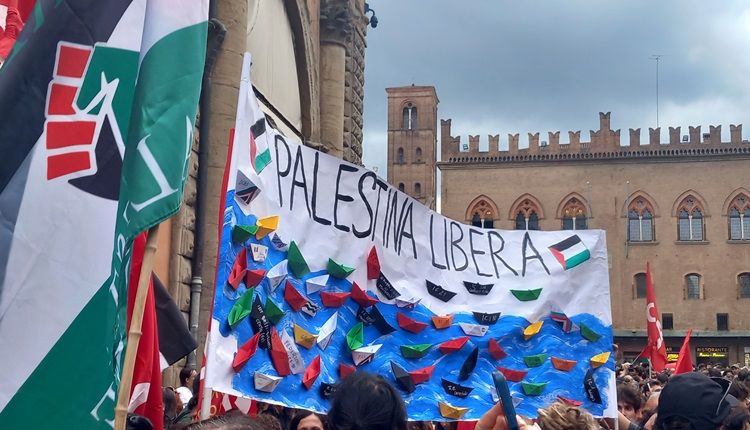
Despite last October's ceasefire declaration, Israel has continued to perpetrate genocide against Palestinians in Gaza, accelerating the expansion of illegal settlements in the occupied West Bank and taking steps towards annexation.
The US has carried out over 150 extrajudicial executions by bombing boats in the Caribbean and the Pacific and in January attacked Venezuela, arresting its president.
In early 2026, the illegal use of force by the US and Israel against Iran triggered reprisals by Iran against Israel and the Gulf Cooperation Council countries and by Israel against Lebanon.
“What makes this moment profoundly different is that we are no longer seeing gradual deterioration at the edges of the system. This is a direct attack on the foundations of human rights and the rules-based international order by the most powerful actors, with the aim of gaining control, impunity and profit,” Callamard added.
Human rights in the world today: states no longer know how to report
In 2025, international accountability mechanisms were weakened by the actions of several countries: Donald Trump's administration imposed sanctions on International Criminal Court (ICC) staff and on Francesca Albanese, United Nations special rapporteur for the occupied Palestinian territories; Russian courts have issued arrest warrants for ICC officials; several states have withdrawn (or have announced the intention to do so) from the Rome Statute (the one that established the ICC) and from the treaties banning cluster munitions and anti-personnel mines; Italy and Hungary have refused to arrest people subject to ICC arrest warrants on their territory.
And most states have been incapable of denouncing these predatory acts and developing diplomatic solutions: the European Union and many European states have supported US attacks on international law, they have not stopped the genocide in Gaza or the illegal transfers of weapons that fuel wars around the world, they have not adopted laws to protect the subjects of US sanctions, such as ICC judges and prosecutors.
Read also: • Myanmar, four years of civil war in a story from the front • Sudan war: the civil war continues thanks to foreign aid
Human rights defenders at risk
In 2025, Amnesty reported a global worsening of attacks against civil society and social movements, with efforts to silence and undermine human rights defenders, organizations and dissidents. It happened in Nepal and Tanzania, but also in Afghanistan, China, Egypt, India, Kenya, the United States and Venezuela.
In these countries protests have been repressed with anti-terrorism laws, forced disappearances, extrajudicial executions, abusive police tactics.
The UK has banned Palestine Action, a protest network that targeted Israeli arms manufacturers and their subsidiaries: being part of or supporting them are crimes punishable by 14 years in prison. Over 2,700 people have been arrested for peacefully demonstrating against the ban imposed on the group.
The United States has launched a campaign of repression against migrant people, refugees and asylum seekers, resorting to excessive use of force, racial profiling, arbitrary detention and torture.
In Latin America, some states have adopted or modified laws to impose disproportionate controls on civil society organizations, compromising their action, access to resources, support for communities and the defense of human rights.
Many governments have used spyware and digital censorship to limit freedom of expression and the right to information, against students, civil society and journalists. Among these, there is also the Italian executive.
Human rights in Italy: the situation
The picture of Italy that emerges from the Amnesty International report is that of a country in which the levels of violence against women are very high - 85 were killed in 2025 by partners or exes, in which detained people are forced into overcrowded and often non-compliant prisons, in which dissent is criminalised.
New offenses and tougher sanctions were introduced in June 2025 to limit civil disobedience and protests, including passive resistance in prison and migrant return centres.
In 2026 the government adopted a new security decree with other measures on public safety including searches, bans on access to urban areas, higher penalties for unauthorized marches, the possibility of stopping people deemed dangerous during demonstrations for up to 12 hours (the decree must be converted into law, under penalty of revocation, by 25 April).
The Italian government continued to hinder NGOs' attempts to rescue people at sea, and non-governmental organizations criticized the country's authorities' late response to alarms about vessels in distress: by the end of 2025, the number of people who had died in the Mediterranean reached 1,195.
Italy is one of the countries that has continued to send weapons to Israel and has not prevented transfers from other countries through its territory, including the shipment of explosives that left the port of Ravenna in June 2025.