
Human trafficking: UN proposes six sanctions in Libya
Human trafficking: UN proposes six sanctions in Libya
The United Nations Security Council is, for the first time, proposing to sanction six human traffickers in Libya, known for their activity with migrants in Africa, Italy and Northern Europe. They risk being banned from traveling and having their assets frozen abroad. The proposal is put forward by the Netherlands, but Russia holds back
For the first time, the United Nations Security Council is proposing to sanction six famous human traffickers in Libya, Reuters and AFP agencies report. The names are important: an Eritrean appears, on trial in Italy as one of the suspects responsible for the Lampedusa massacre on 3 October 2013. And there are two important leaders of the Libyan militias with whom Italy has entered into agreements through the Tripoli government which signed the Italy-Libya Memorandum of Understanding.
The characters who should be blacklisted were, at least from 2014 to 2017, the masters of human trafficking in Tripolitania, the western region of Libya. They controlled the flows of migrants from the Horn of Africa to the coastal strip that runs from Tripoli to the border with Tunisia. Most of the migrants who have landed on the Italian coast in recent years have probably paid for the organization of at least one of these traffickers.
Human trafficking in Africa, Italy, Northern Europe
Among the six who risk sanctions from the UN is Ermias Ghermay, and Tiope, according to the Palermo magistrates at the top, together with Medhanie Yehdego Mered, of the group of traffickers responsible for the Lampedusa massacre of 3 October 2013. He has been on the run since 2015, when the Court of Palermo issued a precautionary custody order against him. The operation that led to his identification is called Glauco, which was then developed into three complex strands: it is the first maxi-trial on human traffickers in Italy.
As part of the same investigation, a man was arrested, Medhanie Tesfamariam Behre, who investigators believe to be another name of the trafficker Medhanie Yehdego Mered. There is a strong suspicion that there was, however, an exchange of persons, at least from the data reported by international newspapers such as the Guardian.
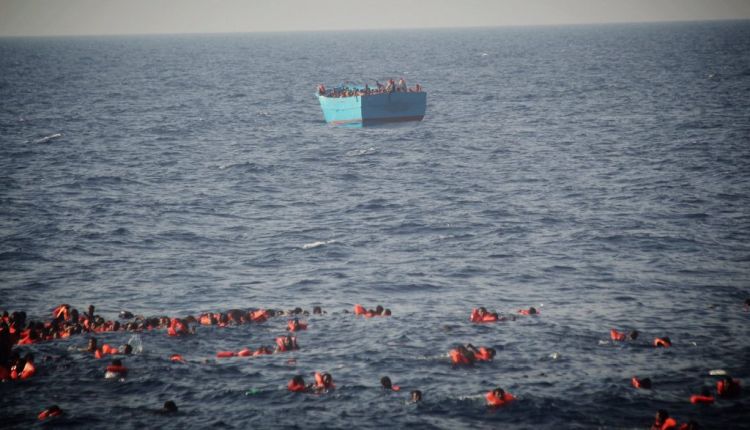
Rescue operations after the shipwreck of 3 October 2013 in Lampedusa. Photo: Coast Guard (via Flickr)
Italian investigators discovered that Ghermay was, at least until his arrest was ordered, in Zuwara, Libya. He had a dense network of collaborators both "on land" and in Sicily. In fact, to every migrant who trafficked he gave the number of his brother Ashgedom, born in 1975, arrested in Catania in 2015. From here, Ashgedom organized the second part of the journey, up to the countries of Northern Europe. He was in contact with both his brother, Mered and other traffickers.
After he fell, the entire group of traffickers appeared to be in difficulty, although it appears they still remain active. Every single transfer in the migrant odyssey had a price that varied from 250 to a thousand euros. Since he ended up in the sights of the magistrates, Ermias has played a minor role in the panorama of Libyan traffickers.
Migrant trafficking: the identikit of two other accused
The list presented to the United Nations continues with Fitwi Abdulrazek, Eritrean, a non-prominent figure in the Glauco investigation. He was constantly in contact with the Ghermays, with whom he organized trips, especially within Libya.
The blacklist continues with Ahmed al Dabbashi, nicknamed Alamu (or Al-Ammu), at least until last summer one of the owners of Sabratha, one of the main cities of departure for migrants. The United Nations reports on Libya report that Alamu is the leader of the Anas al Dabbashi brigades, named after a jihadist belonging to his family, allied with ISIS until 2016 (then they changed sides).
At least until last year, the militia was in charge of external security at the compound of Mellitah Oil Gas, an Italian-Libyan company of which Eni is a 50 percent partner. Cousin Ibrahim had a career as a diplomat at the UN between 2013 and 2016, while Mostafa was a minister in Libya in 2015. A powerful family.
Trafficking from Sudan and Niger and prison for migrants in Libya
Mussab Abu Ghrein, aka Musab Abu-Qarin, also known as Doctor Mussab, is the fourth name to end up on the UN blacklist. Libyan who traffics migrants from Sudan and Niger and "passes" them to the Dabbashi. He is also considered to be active in Sabratha. We haven't heard from him for a few years.
Mohammed Koshlaf, a figure of enormous importance in particular in the city of Zawiya, also ended up in the UN's sights, as shown by information collected by Osservatorio Diritti. His militia, the al-Nasr Brigade, was hired by the local refinery to ensure the safety of the plant. In the same area of the industrial plant, Koshlaf also opened a prison for migrants, now recognized by the Ministry of the Interior of Tripoli.
Finally, among the six indicated by the United Nations, there is Abd al Rahman al-Milad, known by the nickname al-Bija, who is (according to other sources he was) head of the Zawiya Coast Guard, trained and equipped with patrol boats following the cooperation agreements with the European Union. UN reports indicate him as a lieutenant of Mohammed Koshlaf, to whom he is also linked by the same tribal affiliation.
UN sanctions on traffickers: the positions of the USA and Russia
The Netherlands proposed the blacklist to the UN Security Council. The immediate effect for those appearing on the list would be an absolute ban on travel and the freezing of assets abroad. Many of these traffickers, in fact, have bank accounts in the Gulf countries, especially Dubai. According to the Security Council's first comments, someone also has assets in the US.
France, Germany, Great Britain and the United States voted in favor of the Dutch proposal. Not Russia:
“We need more information to better understand the value of the proposal and how efficient it would be if approved,” reads a letter reported by AFP and Reuters.
In addition, Russia also requested further evidence from "reliable sources" regarding involvement in human trafficking.