
Pietro Grasso: «The mafia has changed, but it is no weaker than when they killed Don Pino Puglisi»
Pietro Grasso: «The mafia has changed, but it is no weaker than when they killed Don Pino Puglisi»
Interview with former magistrate and senator Pietro Grasso thirty years after the murder of Pino Puglisi and from an era in which the mafia reigned
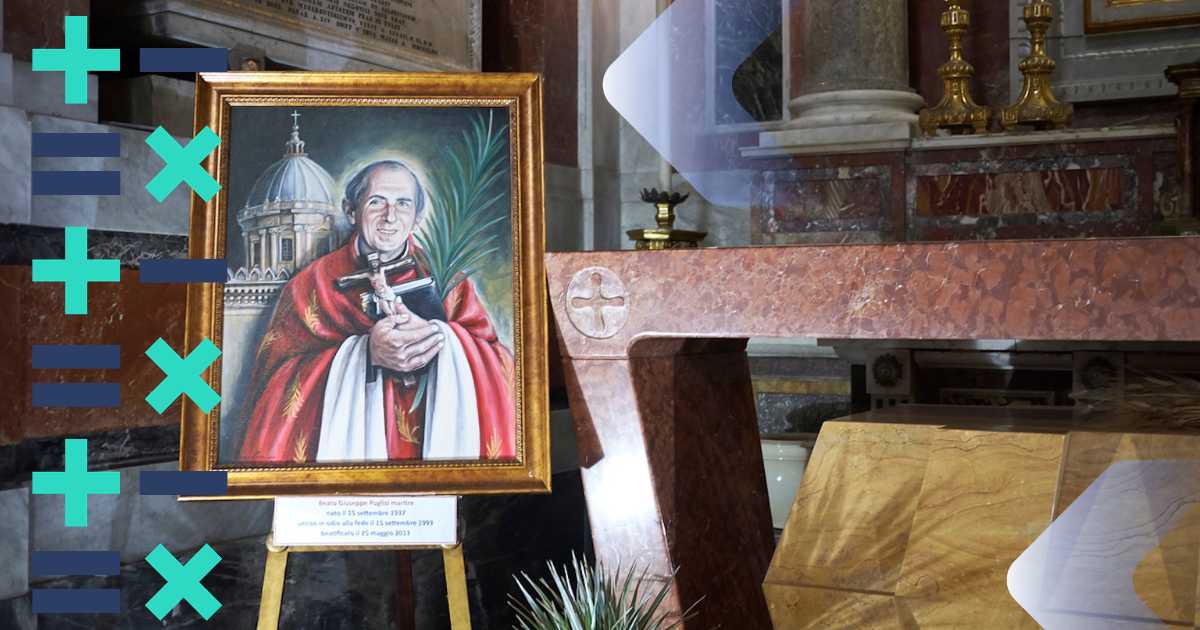
Don Pino Puglisi is one of those men to whom the whole of Italy should say "thank you". A priest on the front line against the mafia, he was murdered on 15 September 1993 by a mafia commando, on the orders of the bosses Filippo and Giuseppe Graviano. He had attempted to revolutionize - with the weapons of legality, change and his evangelical mission - the Brancaccio neighborhood in Palermo. A fiefdom of the gangs at the time.
Pietro Grasso is also one of those men to whom the whole of Italy should say "thank you". Born in Licata in 1945, but actually from Palermo, he dedicated his entire life to the fight for legality, sacrificing a lot, putting his life and that of his family at risk. From 1969 in the judiciary, he was a deputy prosecutor for twelve years. In 1980 he was responsible for the investigation into the assassination of the then president of the Sicily Region, Piersanti Mattarella. A complex, difficult investigation, and for which even today it has not been possible to identify the killers, while the instigators within Cosa Nostra have been convicted: a story "that still makes me sleepy", Grasso will tell when presenting the volume "Piersanti Mattarella: alone against the mafia".
In 1986 he was a side judge in the "maxi trial" against the mafia: the largest criminal trial in the history of Italy. In 1991 he was called by Giovanni Falcone to the Ministry of Justice: together they created much of the current anti-mafia legislation including the national anti-mafia prosecutor's office, of which Grasso himself will be head since 2005, after having been chief prosecutor in Palermo since 1999.
In 2012 he left the judiciary to devote himself to politics. He will be elected senator and will preside over the upper house of the Italian Parliament. Pietro Grasso - who is now president of the Scintille di futuro Foundation will be a guest of FestiValori, the Valori.it festival which this year will be held from 20 to 22 October in Modena. Together with the magistrate Giuseppe Lombardo and the director of Banca Etica Giacinto Palladino, he will talk about the financial arms of organized crime (the moderator will be Rosita Rijtano, journalist from La via libera).
Thirty years have passed since the death of Don Pino Puglisi. A life. It was 1993, the year of the attack on the national artistic heritage, which followed that of the Capaci and Via d'Amelio massacres. And of the planned attack against her. What memories do you have of those years?
I remember a period that I wish would never come back, terrible for the history of Italy. The Falcone and Borsellino massacres, first. Then the 1993 attacks in Rome, Florence, Milan. The massacre at the Olympic stadium in January 1994, which narrowly missed. And in all of this also the plan to attack me, in the period in which there was contact between the mafia and the ROS of the Carabinieri, through Vito Ciancimino. A "dialogue" which, however, did not bear fruit and therefore Totò Riina thought another "push" was necessary. He thought it might be useful to kill another magistrate to convince him to continue the negotiation. And they thought of me, starting to plan the attack as early as November 1992. It had to be in Monreale, where I was going to visit my seriously ill mother-in-law with my wife. However, there were problems with the remote controls, because the frequency of an alarm system of a nearby bank could trigger the explosion at an unwanted moment. It took a while before they found the right remote control: they went to get it in Catania. Then, partly Riina's arrest, partly the death of my mother-in-law saved my life. Finally, suddenly, everything stopped, after the elections in March 1994.
Do you make a direct connection between those elections and the end of the mafia's massacre strategy?
I take note of the facts. When I asked a justice collaborator like Gaspare Spatuzza why the massacres were not continued, I was told that once the Graviano brothers had been arrested he no longer had any indication to continue. Then in 1995 they thought about restarting the massacre strategy, but Spatuzza tells of a meeting with the bosses Giovanni Brusca and Matteo Messina Denaro, after the arrest of Leoluca Bagarella, during which they also talked about the possibility of restarting the negotiations through a sensational act, which was supposed to be the kidnapping of my son, but this too did not materialize due to the arrest of the fugitives.
Father Puglisi had attempted to restore dignity to the Brancaccio neighbourhood, in which there were no theatres, cinemas or services for young people. He asked for a middle school, a socio-health center. Today in Brancaccio, and in the other mafia fiefdom neighborhoods, what has changed?
Today there are no more Gravianos. Puglisi was killed for a series of reasons that had arisen in the neighborhood. I'll give you an example. Father Puglisi, together with the intercondominium association of via Hazon, wanted to prevent the Gravianos from participating in the organization of the festival of the neighborhood's patron saint, also because he knew that the mafiosi were using that excuse to extort money. As an intimidating signal, the doors of the homes of the three leaders of the association were set on fire at the same time. At that point Puglisi began to publicly indicate the Gravianos as the authors of these facts during his homilies. Spatuzza even had the task of inviting an aunt from Graviano to no longer participate in Father Puglisi's religious functions.
The best of ethical finance and sustainable economy news.
Living in the neighborhood, he knew perfectly well who was in charge…
Not only that: Puglisi removed from the streets of Brancaccio the boys who were exploited by the mafia as a source of labor recruitment. Many young people who otherwise would have ended up in the hands of the gangs gathered at the Padre Nostro center. That center was so popular that at a certain point it even aroused suspicion. It was a period of war between the state and the mafia and the bosses feared that men from the DIA and the police forces might have infiltrated there as an observation point on the neighborhood and to capture fugitives. A justice collaborator told me that a doctor had been assigned to monitor the center's activity in this respect. But the investigations ascertained that in that place wanted by Puglisi there were only volunteers and people who worked for the good of the neighborhood.
There are other priests today who are at risk like Puglisi, Maurizio Patriciello in Campania, Don Coluccia who tried to invest in a march for legality in Tor Bella Monaca in Rome. How important is their work?
It's fundamental. It must be said that there has been a turning point in the attitude of the Catholic church towards the mafia. I remember Cardinal Pappalardo at the time of General Dalla Chiesa, or the speech of John Paul II who asked the mafiosi to convert. From then on there was a clear position. As for the importance of the example of certain men, suffice it to say that Father Puglisi affected consciences so much that after his death he provoked a reaction of conscience even in his two killers, who at different times became very important collaborators of justice. Spatuzza tells how he was already on the verge of repenting, as he was in the throes of a crisis of conscience, but it was at Easter 2008, when a holy card with a prayer and the image of Father Puglisi was distributed to him that he had me call asking to spill the beans. I had the privilege of collecting the first statements, which among other things allowed us to discover the enormous misdirection regarding the Via D'Amelio massacre.
It is no coincidence that someone rushed to question Spatuzza's reliability.
It touched too many raw nerves. He was opposed. It took more than a year for him to fully enjoy the program for the repentant and to succeed it was necessary to appeal to the TAR. On Via D'Amelio, then, he made himself believe that he wanted to favor someone.
It was clear to me that he was the perpetrator of the theft of the Fiat 126 which was then used as a car bomb because Spatuzza said that it was necessary to change the brakes of that car, as they no longer worked. Despite the inferno that was created by the explosion, an expert report made it possible to verify that it was true: the brakes had recently been replaced. It was therefore understood that the repentant was recounting events that actually happened.
However, there is still an enormous amount of unresolved facts and unclear circumstances. Many insist on the involvement of deviant state apparatus, starting with the secret services. How far did the tentacles of the mafia reach in those years?
There are some lacerating intuitions that can emerge from the analysis of clues. But it takes irrefutable evidence to prove it. And Riina and Provenzano are now dead, taking their secrets to the grave.
What is not working in the management of assets confiscated from the mafia
Law 109/96 allows assets confiscated from the mafia to be returned to the community. But its application still reveals many problems
Spatuzza himself was among the commandos who killed Puglisi.
Yes, it is to him that Puglisi said "I expected it". Spatuzza says that initially they tried to kill him by running him over with a car. They wanted it to look like an accident, but they couldn't. So they opted for the simulation of a robbery. For this Spatuzza took away his purse, then Salvatore Grigoli shot him in the back of the head. And he did it with a 765, not a mafia killer's weapon. In this way, an attempt was made not to directly attribute the crime to Cosa Nostra.
Of course, there was some sort of neighborhood uprising. Puglisi was much loved. The Gravianos knew that the murder was attributed to them. And Spatuzza says that they commissioned him to kill a car thief (who among other things had stolen the car from one of the Gravianos: revenge, in this sense), to throw the body in front of the Puglisi house, and set it on fire. The idea was to pretend to have "executed" the person responsible for the priest's death. Spatuzza actually killed that thief, but he never managed to leave the body in front of Puglisi's house, such was the pilgrimage of faithful who went there to say goodbye. So he left him in a car in an adjacent street, but no one ever connected the presence of that dead man to the Puglisi crime, until Spatuzza himself revealed everything.
The disturbing picture remains of a mafia essentially undisturbed in the area.
That was a period in which the mafia was extremely present, aggressive and confident, enjoying a feeling of impunity that it no longer has today. Just think that Puglisi had obtained contributions to restore the parish and there was a company that was working. At that time, Spatuzza was asked to extort protection money from her, and since the money wasn't arriving, the Gravianos had a company van set on fire right in front of the construction site. Extortion was a blanket activity: everyone had to pay. Even those who had obtained the job of renovating the parish.
The mafia makes less noise today: what is the strategy of the gangs?
The mafia today is no weaker than then. He just changed his strategy, and he did it because he saw what the state's reaction was. The strategy inaugurated by Provenzano is therefore that of submersion. No more social alarm, no more bombs. Thus the pressure of the police on the territory decreases and the neighborhoods are left calm. If sensational events happen in Tor Bella Monaca or in the outskirts of Naples, all illicit trafficking is affected. It is, in fact, a strategy: the mafia has adapted. Today it is a drug, business, procurement and finance mafia.
The 'Ndrangheta in particular, but mafias in general are increasingly using financial channels. Now, finance in many cases lacks sufficiently stringent regulations. Follow the money, is Falcone's method increasingly the solution to reconstruct the networks of illicit trafficking?
Yes, but the reality is that it is increasingly difficult to find money. If we look at investment funds, at the possibilities that financial systems allow for legitimately hiding capital, there is really cause for concern. And you don't even need to get to tax havens. This is why it is often very difficult to reconstruct the flows and, above all, trace the origin of the funds, which is fundamental to understand whether or not it is of an illicit nature.
Organized crime
Follow the money, because the Falcone method is still relevant
Giovanni Falcone understood that it was necessary to "follow the money" to rebuild mafia businesses. A revolutionary method, very useful even today
What reforms are necessary in your opinion in the world of finance?
I myself have proposed changes, but in the world of politics there are many hesitations. The key is transparency, in any financial transaction. Today the only way is to allow connections to be established between databases, and the fears that some express regarding the fact that some investigations may be oriented by reasons other than those linked to the need to target activities that damage the real economy must be overcome.
The weight of the mafias on the economic system is in fact still enormous.
Capital of illicit origin pollutes and damages the economy. They undermine the system as a whole. The problem is that if they steal your wallet you notice it immediately, but if they use financial instruments to launder the money of the mafia you don't see anything. Yet it is through false accounting, bankruptcies, money laundering, tax evasion and the underground economy that more resources are taken away from the community.