
Special March 21st. Drug trafficking, construction sites and foreign clans: all the mafia trials in Piedmont
Cpr - Repatriation detention centers
Islands. Spaces of education and civil disobedience
Cpr - Repatriation detention centers
Islands. Spaces of education and civil disobedience
Special March 21st. Drug trafficking, construction sites and foreign clans: all the mafia trials in Piedmont
From 2011 to today, over 25 judicial investigations and dozens of convictions for mafia. In Piedmont the clans, including foreign ones, deal with drug trafficking and public works. And they cultivate good relationships with white-collar workers
Salvatore Maresca Master APC Trainee
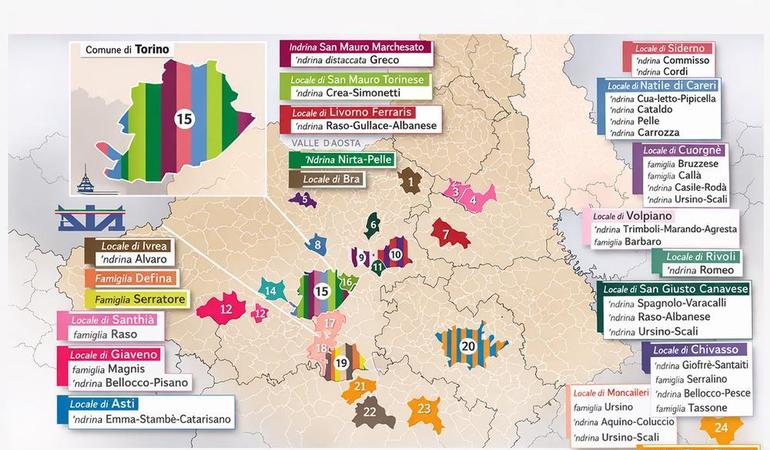
For knowledge and the fight against mafias in Piedmont there is a before and after Minotaur. The operation, which began at dawn on 8 June 2011 with the arrest of 142 alleged 'Ndrangheta supporters and accomplices, changed the common perception of the criminal presence in the region. From that investigation and subsequently from the hearings of the trial, held in the bunker room of the Turin prison, the links between certain exponents of the 'Ndrangheta and local politicians emerged, some of whom (such as the mayor of Leinì, Nevio Coral, or a councilor of Chivasso, Bruno Trunfio) condemned for their heavy complicity.
10 years after Minotauro, politics and entrepreneurship are absent
"It is clear that the organization tried to infiltrate politics and institutions", said the then chief prosecutor of Turin, Gian Carlo Caselli, during his indictment. The maxi trial and the sentences that followed changed public awareness of the problem but also, more technically, the work of the judiciary.
Before Minotauro, investigators started by investigating purpose crimes (i.e. those crimes committed by associates, for example extortion) and then tried to demonstrate the existence of a mafia association. With Minotauro the method changes: "There is the association, they talk about it in the wiretaps, let's go and see what it does", summarized during a Libera meeting in 2021 Roberto Sparagna, the magistrate who - collecting the confessions of the repentant Rocco Varacalli - set up the maxi-investigation and is now deputy prosecutor in Turin.
The fruits of that work have led to at least 25 other judicial investigations in the Piedmont area. Investigations which - with more than 450 suspects and several dozen convictions for 416 bis - have demonstrated how the criminal presence in Piedmont is a constantly evolving phenomenon. The latest report from the Anti-Mafia Investigation Directorate for 2024 indicates the presence of the 'Ndrangheta in at least 24 municipalities.
A few days after Minotauro, on 21 June 2011, the Albachiara investigation revealed the mafia presence in Lower Piedmont, between the provinces of Asti, Cuneo and Alessandria, where crime had close ties with politics: a municipal councilor, Giuseppe Caridi, had even been affiliated with and therefore subsequently convicted of mafia.
Gotha trial: this is how the invisible members of the 'Ndrangheta act
In 2012, Operation Coup de tail investigated the presence of the 'Ndrangheta in Chivasso (Turin) and Livorno Ferraris (Vercelli). In that context, investigators discovered the commitment of some affiliates in collecting votes in favor of the centre-left mayoral candidate, Gianni De Mori, for the Chivasso local elections. De Mori was never involved in the proceedings, but resigned, avoiding the dissolution of the Municipality due to mafia infiltration.
A measure which instead affected the municipalities of Leinì and Rivarolo Canavese. 2012 was the annus horribilis for Piedmontese local authorities, with Piedmont being the first region in Northern Italy in terms of the number of municipalities dissolved by the mafia: three in total, also considering the case of Bardonecchia (Turin), dating back to 1995. In 2014 the San Michele operation revealed the appetites of some 'Ndrangheta supporters for earthmoving and aggregate disposal works in the TAV works Turin-Lyon.
Some subsequent investigations, such as Alto Piemonte, Barbarossa and Carminius, shed light on the settlements of the 'ndrangheta outside the capital. The first, in 2016, revealed the links between men from the 'ndrine and the Juventus ultras and discovered other presences in the provinces of Biella and Vercelli. The second, dated 2018, routed what according to investigators was the Asti "local", leading to the arrest of 26 people between Asti, Alba and Costigliole d'Asti.
Turin, the relative of a boss in the legality commission
The third, in 2019, focused on the Carmagnola area, but also hit the upper echelons of the Piedmont Region: a councilor, Roberto Rosso, was arrested and tried for political-mafia exchange votes. According to investigators, Rosso had asked two men from the 'Ndrangheta for electoral support. The accusation held up until 2025, when the Supreme Court annulled the sentence by ordering a new appeal process: for the judges it was not proven that Rosso was aware of speaking with clan men.
Cocaine trafficking and construction sites
2019 was the year of three other major investigations. Cerbero (out of 66 people linked to the 'Ndrangheta clubs in San Giusto Canavese and Volpiano, some of whom were involved in large international cocaine trafficking), Criminal Consulting and Iron Fist. From the last two operations, an 'Ndrangheta emerged capable of using white collar workers to pocket large portions of public funds through the use of fictitious companies and front men.
In 2021 the Platinum-Dia investigation dismantled a large drug trafficking network that supplied itself in Northern European ports. Drug trafficking with South America is also the core business of some families of Calabrian origins who have settled in Turin and Volpiano for decades, such as the Agresta, the Marando, the Assisi, already involved in other investigations such as Pinocchio (2015), Cerberus and Samba.
Dirty money in southern German restaurants
In 2024, Operation Echidna shed light on a series of illicit conduct in the management of public procurement. Among those placed under house arrest is Roberto Fantini, former CEO of Sitalfa, part of the Sitaf group which manages the A32 Turin-Bardonecchia motorway. This investigation demonstrated the links between the entrepreneur and an elderly 'Ndrangheta member, Giuseppe Pasqua, but also between the latter and an experienced politician with a past among the socialists, Salvatore Gallo, father of the then regional leader of the Democratic Party Raffaele Gallo.
The ndrangheta boss: "Without Fantini I don't live"
Finally, the recent Factotum investigation showed that in Turin the 'Ndrangheta supporters could also count on their "representative" within the CISL union. According to what has been reconstructed, the man, a representative of Filca (the acronym of construction workers), was active in encouraging the absconding of some mafiosi, finding jobs for the construction companies of affiliates, supporting "friends" in disputes and helping some to obtain citizenship income.
Romanian and Nigerian clans
Judicial activity has also certified the presence of foreign mafias in Piedmont: in 2014 the Brigada investigation led for the first time in Italy to a conviction of 416 bis, also confirmed by the Supreme Court, against a group of Romanian citizens dedicated to extortion, robberies and control of illicit trafficking. The subsequent Athenaeum operation instead confirmed the presence of the Nigerian clans Black Axe, Eiye and Maphite.
Thus the cults became the Nigerian mafia
Investigations have shown that these groups are organized in top-down structures, strengthened by the bond of loyalty and by the pressure exerted on their members, also through the threat of retaliation against family members remaining in their homeland.