
Ten years after the Minotauro investigation, politics and business are absent
Cpr - Repatriation detention centers
Islands. Spaces of education and civil disobedience
Cpr - Repatriation detention centers
Islands. Spaces of education and civil disobedience
Ten years after the Minotauro investigation, politics and business are absent
Businessmen and institutions have not learned the lesson of the investigation that defeated the 'Ndrangheta in Turin in 2011
Lavialibera editorial team
To explain the legacy of the Minotauro anti-mafia operation ten years after the arrests of 'Ndrangheta supporters rooted in Turin and their supporters, deputy prosecutor Paolo Toso tells an anecdote. In the Carminius trial, underway at the Asti court, he questions Roberto Rosso, a former regional councilor accused of political-mafia vote swapping, and asks whether in 2011, after the involvement of some of his comrades from the Popolo delle Libertà in the investigation, the party had analyzed the matter. No reflection was made. The regional coordinator of the PDL, heard as a witness, responds to Rosso's defenders who ask the same question. No analysis, everything was left to the individuals. Politics would not have learned any lessons from that scandal, with candidates willing to meet self-styled "Calabrian entrepreneurs" to obtain votes.
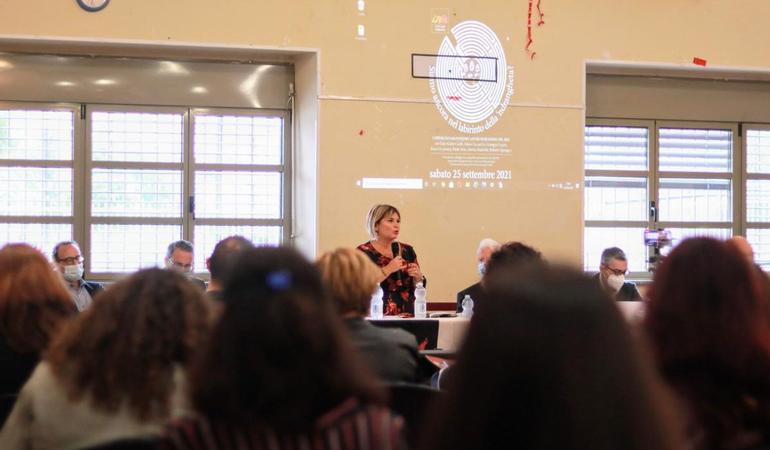
"Politics and economics are missing here and this is the real problem of Minotauro's legacy", says professor Rocco Sciarrone, at the beginning of his speech at the meeting organized by Libera Piemonte: "Minotauro. Are we still in the labyrinth of the 'Ndrangheta?". What has been done since then at a local level seems only a superficial response, like the municipal commission to legality: "There are elections and we don't talk about it. It's an alibi. We deal with it because there is a political return. But what are the results?", questions the professor. And so even in the Region there is an organization dedicated to the theme: “It doesn't matter”. An absent and distant politics, as confirmed by Maria José Fava, regional representative: "We sent the invitation to this conference to the three main mayoral candidates - but they are very busy in their electoral campaign -. We tried to speak with the professional associations and employers' organisations, but it is very difficult". Ten years after Minotauro, then, there is still a segment of society that is not very interested in the risks linked to organized crime, while investigators find themselves with inadequate tools in the face of the technological evolutions of criminal groups and while journalists suffer subtle, but heavy, judicial persecution.
For years, before that investigation by the Turin District Anti-Mafia Directorate, many signals were ignored. "Never be surprised if the water gets wet. Rather, you need to equip yourself, open your umbrellas, umbrellas that few have opened in recent years", warns Gian Carlo Caselli, chief prosecutor in Turin in 2011. He remembers many of those signals: the words of Carlo Alberto Dalla Chiesa on mafia infiltration in the north, the murder of Bruno Caccia on 26 June 1983, the investigations into Calabrian crime and drug trafficking, but also some documents that caused a sensation, such as the report of the anti-mafia parliamentary commission chaired by Carlo Smuraglia in 1994 and then that of the commission chaired by Francesco Forgione which focused on the 'ndrangheta, also in the north. "Discussions? Debates? Nothing at all." Indeed: "Forgione was accused of being a provocateur. All this means a very low sensitivity of the political and intellectual class and of training and information agencies." Davide Mattiello, former member of the anti-mafia commission (2013-18) and president of Benvenuti in Italia, recalls that "the investigations that began with Minotauro stimulated politics. The reform of the 416-ter and the reform of the anti-mafia code dates back to those years". Of course, he specifies, "it's childish to think that politics can create perfect things. We need to keep an eye on ourselves."
The political-mafia exchange vote, four questions (and some notes) on 416 ter
Minotaur, a revolutionary investigation
Roberto Sparagna, deputy prosecutor of the National Anti-Mafia Directorate, previously employed by the Turin prosecutor's office, retraced some stages of the investigation. "The precautionary measures were carried out in 2011, but it started before that, in 2006 with the declarations of Rocco Varacalli (a repentant, ed.). In 2009 came the repentance of Rocco Marando", a member of an important 'Ndrangheta family. “Everything, however, began in 2003 with a murder in Grugliasco in which Varacalli was involved”. Minotaur, however, "is not born from nothing". There had been investigations, such as Cartagine, Betulla, Asso, which attest to the presence of the 'Ndrangheta in Piedmont. “But why have there been around 20 years of absence of operations against the 'Ndrangheta?”, he asks. The work carried out by the prosecutor and his colleagues in Minotauro "starts from the analysis and study of the 'Ndrangheta and its manifestations in the north":
"Previously a series of crimes were put together with the aim of saying that there is an association. With Minotauro the method is overturned: there is an association, they talk about it in the wiretaps, let's go and see what it does." This approach then becomes a method: “All the northern investigations following Minotaur have this approach”. Not only that: "It contributed to the formation of a network of knowledge that wasn't there before. After the arrests, politicians said, 'The 'Ndrangheta doesn't exist here'. Now no one can say something like that anymore. Everyone takes it for granted that it exists. It created a sharing of anti-mafia themes. There are many conferences, degree theses, moments with the church or with schools. Today we talk about 'Ndrangheta issues".
Gray area, where mafias, business and politics meet
The present and future of anti-mafia investigations in Piedmont
Prosecutor Toso gives an overview of what happened afterwards, with the release of some bosses, the Crea brothers, who get back into business (Operation Big Bang) and reconstitute an organisation: "The Piedmontese are also affiliated with the traditional rites of the 'Ndrangheta", he remarks. "Turin is still a terminal for huge drug trafficking", but "the 'ndrangheta has understood that where there is noise the attention of the investigators is attracted. It is sufficient to use one's link to the organization in an implicit, allusive way to obtain advantages". He cites an interception of an investigation, two 'Ndrangheta members from the North who returned to the South complain: "We have distanced ourselves and are standing aside, but you can no longer do as you once did, where you met, did things and spoke. Now all you have to do is speak and they will immediately put the association on you." The investigations have become more difficult: "They communicate with other methods. This is a big problem that legislative policy has not yet addressed. We are concerned about limiting the use of wiretaps and we are not concerned about the fact that organized crime is very technologically advanced. They communicate with ways that we are not able to record and since they no longer meet, if we are no longer able to intercept what they say and write to each other, we will no longer be able to investigate. I cannot understand the fact that we receive leaked chats from the FBI. Italian 'Ndrangheta supporters because they have the systems to break in and we don't." Organized crime evolves, the state apparatus lags behind.
In the future "we should not expect new venues, but new businesses – underlines Sciarrone –. We must learn to look beyond the mafia". Also because, for example, "Minotauro brings out the problem of the gray area: there is a strong presence of the 'ndrangheta which not only deals with illicit trafficking, but has many connections with the economic and political world". Politicians and entrepreneurs who seek the services of the 'ndrangheta, but "there has been a lack of reflection on how to do economics and how to do politics".
Talking about the mafias: too little road and too many cards
The journalistic story on the 'Ndrangheta in Turin
The sociologist Rocco Sciarrone (Photo I.G.)
Minotauro is defined as a "tsunami" that hit public opinion, says the director of lavialibera Elena Ciccarello and then lists many of the elements that allowed us to give an interpretation of the phenomenon, including some trials from the early 2000s such as Poker and Gioco Duro. “At the Gioco duro trial in 2009 there was all the dramaturgy of mafia trials: there were the Crea brothers bold defendants, the wives present in the audience and the terrified witnesses”. “We created the knowledge gap for ourselves from a media point of view by not dealing with these processes,” he states. Giuseppe Legato, reporter for La Stampa notes how there was a "difficulty in writing about the 'Ndrangheta until Minotauro". Now the challenges are different. On the one hand "we need to tell the story of the evolutionary path of the mafia", on the other we need to protect journalists from exploitative complaints: "Today it's not the mafioso who sues you, but the entrepreneur, the lawyer, the accountant or the owner of the car wash. They make five complaints against you in a few months, all starting from the same 'area' and delegating the judicial authority to find the defamatory passages. The prosecutor's request for dismissal is followed by the opposition of the plaintiff and the journalist has to go to court to defend himself with a lawyer. And after a while the newspaper gets tired of providing a lawyer. These reckless complaints are increasing and this is intimidation."