Giornalismo d'Inchiesta
Unclessify — Rivista di Investigazione e Declassificazione, Fondata da Graziano Costantino
Detonazioni nucleari dei test X-ray Yoke e Zebra sull’atollo di Enewetak
declassification.blogs.archives.gov
STREAMING HD

Detonazioni nucleari dei test X-ray Yoke e Zebra sull’atollo di Enewetak

declassification.blogs.archives.govStati Uniti2026public
#atollo di enewetak#pacific proving grounds#runit dome#test nucleari#decontaminazione militare#guerra fredda

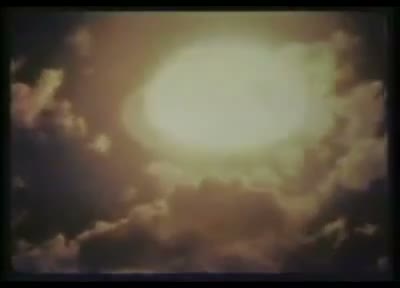
Il filmato documenta le detonazioni nucleari X-ray, Yoke e Zebra sull’atollo di Enewetak, mostrando palle di fuoco, bagliori all’orizzonte e funghi atomici.

Il filmato si apre su uno schermo nero mentre una voce narrante introduce le detonazioni atomiche denominate X-ray, Yoke e Zebra, definite tappe fondamentali nell’era dell’energia atomica. A partire dal nono secondo, le immagini mostrano la ripresa ravvicinata di un’esplosione nucleare con la rapida espansione di una palla di fuoco luminosa sopra la superficie dell’acqua e tra le formazioni nuvolose. Seguono inquadrature da diverse prospettive che documentano l’intenso bagliore che illumina il cielo coperto, lo sviluppo del fungo atomico e, verso il primo minuto di ripresa, un’esplosione notturna o crepuscolare che rischiara l’orizzonte con fumo e nubi infuocate.

Questo documento audiovisivo, della durata di due minuti, è una produzione dello United States Department of Energy ed è conservato nel pubblico dominio. Il file è archiviato su Wikimedia Commons nell’ambito della documentazione storica relativa alle attività di sperimentazione atomica condotte dagli Stati Uniti all’interno del poligono di tiro denominato Pacific Proving Grounds.

La documentazione declassificata e gli atti ufficiali consentono di inquadrare queste immagini nella storia amministrativa e militare dell’atollo di Enewetak, conquistato dallo United States Marine Corps tra il 17 e il 23 febbraio 1944. Successivamente integrato nel luglio 1947 nel Trust Territory of the Pacific Islands, l’atollo divenne sede di sei serie di test nucleari e termonucleari tra il 1948 e il 1958, aperte dall’Operation Sandstone nell’aprile-maggio 1948, proseguite con l’esplosione Ivy Mike del 31 ottobre 1952 — che distrusse l’isola di Elugelab — e concluse con la serie Hardtack del 1958.

Dopo l’interruzione delle detonazioni sancita dal Partial Test Ban Treaty dell’agosto 1963, gli Stati Uniti avviarono gli impegni di risanamento nell’aprile 1972, seguiti dai rilievi della Energy Research and Development Administration e della Defense Nuclear Agency nel 1975. Il materiale filmico e i documenti ufficiali conservano una rilevanza primaria per l’analisi della gestione del rischio radiologico, dell’amministrazione dei territori fiduciari e delle politiche di bonifica ambientale.

Condividi:

Dettagli del Contenuto

Fonte

declassification.blogs.archives.gov

Nazione

USA

Anno

2026

Classificazione

public

Categorie

declassified, Storia

Formato

Streaming Diretto HD

Stato Link

Fonte validata

📁 Fascicolo Probatorio & Atti AcquisitiInchiesta Video Unclessify

Filmati d'inchiesta, telemetrie autenticate e atti probatori acquisiti dal team di Unclessify.

Clausola di Trasparenza & Diritto di Cronaca

Dossier e video reportage originale prodotto dalla redazione di Unclessify a partire dall'analisi di filmati storici, telemetrie autentiche e registri declassificati. La contestualizzazione storico-giudiziaria, il montaggio e il commento critico costituiscono opera giornalistica indipendente tutelata dall'art. 21 della Costituzione e dal diritto di cronaca.

Consulta la Politica Editoriale e la Trasparenza delle Fonti →

Su cosa si regge questo pezzo

Il testo è stato verificato contro i fatti elencati, estratti dall'atto qui sopra. Non ha ancora una corroborazione da fonti indipendenti.

I 17 fatti verificati nel testo
  1. Operation Enewetak December 7, 2018 by US National Archives , posted in Cold War History , New Openings Original caption: Cactus Crater on Runit island holds 110,000 cubic yards of radioactive contaminated soil and 6,000 cubic yards of contaminated debris.
  2. Marine Corps force assaulted the three islands and overcame the Japanese defenders between 17 and 23 February 1944.
  3. As the fighting of the Pacific War shifted northward towards the Japanese home islands through the rest of 1944 and early 1945, Enewetak became more of a Navy backwater anchorage providing support to the fleet now steaming many hundreds of miles to the north.
  4. The first postwar nuclear tests were two weapons effects tests conducted in the summer of 1946, prior to the establishment of the TTPI.
  5. Once the TTPI was established in July of 1947, it was only a matter of days before the newly established Atomic Energy Commission (AEC) designated both Enewetak and Bikini as part of the Pacific Proving Grounds (PPG).
  6. Enewetak quickly became a favored test site, beginning with Operation Sandstone in April and May of 1948.
  7. Between 1948 and 1958, the AEC, supported by the Armed Services, conducted six series of nuclear and thermonuclear weapons tests on the northern and northeastern islands of the atoll.
  8. The small island of Elugelab hosted the detonation of the very first thermonuclear device, the cryogenically-fueled Ivy Mike shot on Halloween 1952.
  9. The Partial Test Ban Treaty of August 1963 eventually led to the end of U.S. above-ground testing in the PPG, and no more nuclear detonations took place on Enewetak Atoll.
  10. However, after the Hardtack series of tests in 1958, the islands of the atoll were either uninhabitable due to radiological hazards or covered with testing infrastructure.
  11. Rebirth? From a Defense Nuclear Agency (DNA) fact sheet prepared in April of 1980: in April 1972, the United Sates committed to the transfer of the administration of Enewetak to the TTPI and to the cleanup of the aftermath of the weapons tests.
  12. By mid-1975, the Energy Research and Development Agency (ERDA, the successor to the AEC) along with the DNA conducted a series of surveys to determine the work needed to ready the atoll for the return of all its people.
  13. Although nearly $40 million was requested for the total project in the Fiscal Year 1976 budget, the U.S.
  14. In September 1976, while the formal planning of the difficult decontamination and cleanup work progressed, the formal turnover ceremony took place when the atoll was turned over from the Department of Defense (DoD) to the TTPI administration.
  15. In March of 1977, a small party of islanders returned to the uncontaminated island of Japtan, on the southeastern rim of the atoll.
  16. The construction of the dome in the Fall of 1979 culminated the removal and entombment of the contaminated soil and debris.
  17. Decontamination was scheduled in three phases, with the last phase to be completed by mid-April 1980.

Commenti (0)