Giornalismo d'Inchiesta
Unclessify — Rivista di Investigazione e Declassificazione, Fondata da Graziano Costantino
Filmato USAF sui velivoli e metodi di trasporto delle bombe atomiche
archives.gov
STREAMING HD

Filmato USAF sui velivoli e metodi di trasporto delle bombe atomiche

archives.govStati Uniti2026public
#guerra e crimini di guerra#filmato d'archivio#pacific#omaha#usa

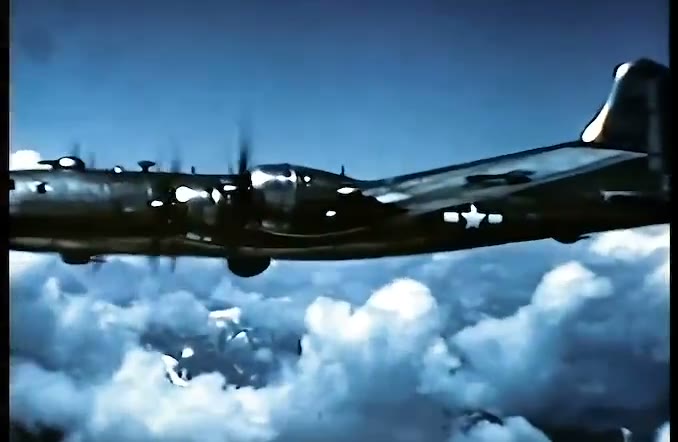
Il filmato documenta il caricamento di ordigni atomici su bombardieri B-36 e B-50, le operazioni di rifornimento in volo e le manovre di sgancio aereo condotte dalla Air Force insieme alla Atomic Energy Commission.

Il filmato, della durata di 13 minuti, mostra le procedure operative per l’impiego e il trasporto di ordigni atomici da parte dei velivoli militari statunitensi. Nelle sequenze iniziali una bomba atomica racchiusa in una custodia protettiva viene issata nella stiva di un bombardiere B-36 per una missione di prova sul Pacifico. La narrazione illustra le capacita del bombardiere medio B-29, in grado di volare senza scalo da Omaha all’Inghilterra per 3400 miglia nautiche e di trasportare un ordigno da 60 pollici a 300 nodi da 30.000 piedi, e del modello B-50, dotato di motori da 3500 cavalli, superfici di coda piu alte e autonomia di circa 4000 miglia nautiche a 35.000 piedi, richiamando l’impresa del B-50 Lucky Lady che compie il giro del mondo senza scalo in 4 giorni. Scorrono immagini del bombardiere a reazione B-47, di atterraggi con paracadute frenante, del decollo rapido di un B-57, di manovre di rifornimento aereo tra velivoli, di un caccia che rilascia un ordigno con metodo LABS e di strumenti di bordo come l’indicatore Time-To-Go fabbricato dalla Sperry Gyroscope Co.

L’opera filmica e una produzione congiunta realizzata da USDoD, AEC e USAF, catalogata con il titolo USAF Atomic Bomb Delivery Aircraft 1950s Film e rilasciata nel pubblico dominio. Il materiale audiovisivo testimonia le attivita condotte dalla Air Force congiuntamente alla Atomic Energy Commission per sviluppare tecniche di maneggio e vettori aerei assegnati al personale del Strategic Air Command e del Tactical Air Command, operativi anche nei contesti bellici del passato come la seconda guerra mondiale contro il Giappone e il fronte in Corea.

Il quadro archivistico federale relativo alla gestione delle infrastrutture e degli armamenti militari trova riscontro nei documenti conservati presso i National Archives nel Record Group 77, relativo all’Office of the Chief of Engineers, originato dagli atti del 9 maggio 1794 e del 3 marzo 1795. La documentazione testuale comprende la corrispondenza generale e le sezioni inventariate da Johnson nelle pubblicazioni NM 19, NM 45, NM 78 e NM 79, che raccolgono la corrispondenza decimale e i registri sulle funzioni militari e civili fino al 1955.

La pellicola conserva il valore documentale delle sperimentazioni per verificare l’affidabilita del rifornimento in volo e il rilascio di carichi pesanti a quote elevate, mostrando visivamente i dettagli tecnici degli equipaggiamenti di bordo e le rotte strategiche attraverso l’Oceano Atlantico e verso basi avanzate in Europa.

Condividi:

Dettagli del Contenuto

Fonte

archives.gov

Nazione

USA

Anno

2026

Classificazione

public

Categorie

declassified, Storia

Formato

Streaming Diretto HD

Stato Link

Fonte validata

📁 Fascicolo Probatorio & Atti AcquisitiInchiesta Video Unclessify

Filmati d'inchiesta, telemetrie autenticate e atti probatori acquisiti dal team di Unclessify.

Clausola di Trasparenza & Diritto di Cronaca

Dossier e video reportage originale prodotto dalla redazione di Unclessify a partire dall'analisi di filmati storici, telemetrie autentiche e registri declassificati. La contestualizzazione storico-giudiziaria, il montaggio e il commento critico costituiscono opera giornalistica indipendente tutelata dall'art. 21 della Costituzione e dal diritto di cronaca.

Consulta la Politica Editoriale e la Trasparenza delle Fonti →

Su cosa si regge questo pezzo

Il testo è stato verificato contro i fatti elencati, estratti dall'atto qui sopra. Non ha ancora una corroborazione da fonti indipendenti.

I 128 fatti verificati nel testo
  1. [atto] Johnson, rev., "Preliminary Inventory of the Textual Records of the Office of the Chief of Engineers, Part I, Central Office, Subordinate Offices, Engineer Boards and Commissions, Field Offices, and Detached Engineer Officers," NM 19 (ca. 1964);
  2. [atto] Johnson, comp., "Preliminary Inventory of the Textual Records of the Office of the Chief of Engineers, Part II, Engineer Divisions and Districts," NM 45 (1965);
  3. [atto] NM-19, Textual Records of the Office of the Chief of Engineers, Part I," NM 78 (1967);
  4. [atto] NM-45, Textual Records of the Office of the Chief of Engineers, Part II," NM 79 (1967); supplement in National Archives microfiche edition of preliminary inventories.
  5. [atto] Top of Page 77.2 General Records of the Headquarters Office 1789-1955 History: Corps of Artillerists and Engineers authorized for three years by an act of May 9, 1794 (1 Stat. 366), and continued indefinitely by an act of March 3, 1795 (1 Stat. 430).
  6. [atto] Top of Page 77.2.2 Correspondence relating to civil functions, 1890-1947 Textual Records: General correspondence, 1890-1923, with record cards and indexes.
  7. [atto] Correspondence with engineer districts and other field offices, 1923-42, with index and record cards.
  8. [atto] Decimal correspondence with engineer divisions and districts, 1942-47.
  9. [atto] Correspondence with other agencies and organizations ("Miscellaneous File"), 1923-42, with record cards and index.
  10. [atto] Correspondence relating to rivers and harbors, bridge construction, boats, and construction permits, 1923-42, with record cards and index.
  11. [atto] Top of Page 77.2.3 Other records relating to civil functions Textual Records: Register books and card indexes to the Civil Works Map File described below, 1800-1947.
  12. [atto] Architectural and Engineering Plans: "Construction" portion and other portions of the Civil Works Map File, showing canals, bridges, dams, piers, and jetties built along U.S. coasts and major rivers, and types of dredge boats used, ca. 1840-1947 (7,000 items).
  13. [atto] Photographic Prints: River and harbor improvement activities, from Civil Works Map File, 1863-1927 (H, 2,000 images).
  14. [atto] Equipment and techniques used in river and harbor improvement work, 1897-1948 (RF, RHEO; 2,300 images).
  15. [atto] Views showing progress on various river and harbor construction projects, published in Corps of Engineers numbered pamphlets, 1938-41 (PR, 475 images).
  16. [atto] Flood control activities in urban and rural areas nationwide, in albums, 1913-47 (FC, 500 images).
  17. [atto] Various civil works projects in the United States, 1936-40 (HI, 20 images).
  18. [atto] Various civil works projects in South America, mainly Brazil, in album, 1933 (BE, 109 images).
  19. [atto] Dam and underwater tunnel construction at an unidentified site, 1904-6 (D, 22 images).
  20. [atto] Top of Page 77.2.4 Correspondence relating to military functions, 1890-1955 Textual Records: General correspondence, 1890-1917, included in general correspondence, 1890-1923, described Under 77.2.2; with record cards and indexes.
  21. [filmato, parlato] Hidden under this security cover is the most destructive force ever devised by man: an atomic bomb.
  22. [filmato, parlato] The energy of 10,000 lightning bolts, enough to wipe out a city of 200,000, is packed within this harmless-appearing case.
  23. [filmato, parlato] So, with healthy respect and cool efficiency, the weapon is hoisted into the bomb bay of a B-36.
  24. [filmato, parlato] For this is another bombing mission conducted by the Air Force in conjunction with the Atomic Energy Commission to test new weapon ideas, to devise effective handling techniques and delivery methods suitable under any and all conditions of weather and warfare.
  25. [filmato, parlato] Now, the loading completed, the B-36 is on its way.
  26. [filmato, parlato] Over the Pacific, the plane climbs to cruising altitude.
  27. [filmato, parlato] We will join it again on its bombing run during this test mission.
  28. [filmato, parlato] Tests such as this are vital for the security and defense of our nation.
  29. [filmato, parlato] For bombs are useless unless they can be delivered on targets.
  30. [filmato, parlato] And therefore, air delivery of atomic bombs is one of the main responsibilities of the Air Force, particularly of the Strategic Air Command and the Tactical Air Command.
  31. [filmato, parlato] Today, the Strategic Air Command with its medium and heavy bombers can carry atomic missiles to the heart of an enemy country anywhere in the world.
  32. [filmato, parlato] For example, a B-29 can easily fly from Omaha to England non-stop, a distance of approximately 3400 nautical miles.
  33. [filmato, parlato] The B-29 medium bomber is one of the workhorses of the strategic bombing fleet.
  34. [filmato, parlato] Developed from the Flying Fortress of World War II, the B-29 was the backbone of the heavy bombardment fleet in the war against Japan, and also has seen yeoman service in Korea.
  35. [filmato, parlato] It can carry a 60-inch atomic weapon and bomb targets at a speed of 300 knots from 30,000 feet.
  36. [filmato, parlato] With the in-flight refueling now available, far-distant targets come within range of the B-29.
  37. [filmato, parlato] An improved version of the B-29 is the B-50, designed to go higher and farther.
  38. [filmato, parlato] The tall vertical tail surfaces on the B-50 and the large oil coolers beneath the 3500-horsepower engines permit easy identification of this plane.
  39. [filmato, parlato] Since all B-50s are equipped for in-flight refueling, they also are potential intercontinental bombers.
  40. [filmato, parlato] In fact, the B-50 Lucky Lady flew around the world non-stop in 4 days by means of this technique.
  41. [filmato, parlato] And as for atomic bomb delivery, the B-50 can carry a 60-inch atomic weapon approximately 4000 nautical miles at 300 knots and bomb effectively from 35,000 feet.
  42. [filmato, parlato] During World War II, when the possible loss of bombing bases close to Europe was considered, plans were prepared for a giant of a plane weighing 180 tons.
  43. [filmato, parlato] This was the B-36, capable of making a round-trip non-stop combat mission to Europe or a straight-line flight to India, a range of more than 8500 nautical miles.
  44. [filmato, parlato] It has 4 jet engines in twin pods on each wing for takeoff and climb power, plus 6 conventional engines giving it 42,000 horsepower and an operating ceiling of 53,000 feet.
  45. [filmato, parlato] On one endurance mission, a B-36 was in the air for 51 hours of continuous flight on a fuel load of 22,000 gallons, the equivalent of two tank cars.
  46. [filmato, parlato] In this exhibition of carpet bombing, a tremendous load of 84,000 lb of bombs pouring out of 4 bomb bays of a B-36 lays a highway of destruction on the earth below.
  47. [filmato, parlato] Multiply this 4,000 times to get the idea of the wallop packed in only two 60-inch atomic bombs, which can be delivered easily by a modified B-36.
  48. [filmato, parlato] The rapid advance of high-speed jet fighter planes necessitated the development of jet bombers, the first of which is the B-47, an all-jet plane with swept-back wings powered by 6 jets with a single and a twin pod on each wing.
  49. [filmato, parlato] The B-47 replaces the B-29 and has a range of 3400 nautical miles.
  50. [filmato, parlato] For longer missions, in-flight refueling is required, and for this purpose, the KC-97 is used.
  51. [filmato, parlato] The B-47 can carry one 60-inch atomic weapon and is capable of a speed of 550 knots at 40,000 feet.
  52. [filmato, parlato] Therefore, each man serves in more than one capacity.
  53. [filmato, parlato] As an example, the man in the nose has a triple-threat function as bombardier, navigator, and radar man.
  54. [filmato, parlato] On short takeoffs with a maximum load and a short runway, 18 JATO bottles are used for additional power.
  55. [filmato, parlato] And speaking of power, the greatest of all jet bombers is the new B-52 with 8 improved-type jet engines giving it a phenomenal range and load capacity.
  56. [filmato, parlato] In a functional sense, the B-52 replaces the B-36.
  57. [filmato, parlato] It has a speed of 550 knots and can carry two of the 60-inch weapons.
  58. [filmato, parlato] Both the B-52 and the B-47 use the parachute braking method to slow down landing speed.
  59. [filmato, parlato] When it comes to just transporting bombs, the record is held without question by the C-124, which can carry 4 of the fully packaged 60-inch bombs from stockpile to forward sites, either transcontinental or transoceanic.
  60. [filmato, parlato] It was a C-124 delivery such as this that brought the atomic weapon now in the bomb bay of the B-36 at this moment high in the sky over the Pacific on its way to the target area.
  61. [filmato, parlato] Final preparations for the drop are underway.
  62. [filmato, parlato] Dog 1 to Destiny Control, leveling out at 8500 feet for IFI.
  63. [filmato, parlato] And this flight is a test of a new weapon.
  64. [filmato, parlato] So, black curtains are on the windows as protection against heat and bright light from the burst.
  65. [filmato, parlato] To permit in-flight insertion of the weapon, the B-36 holds a flight pattern at an altitude of 8500 feet.
  66. [filmato, parlato] Weaponeer to aircraft commander, IFI proceeding satisfactorily.
  67. [filmato, parlato] In-flight insertion is an exacting job that calls for calm efficiency.
  68. [filmato, parlato] It is performed at a lower altitude to eliminate the hampering of oxygen equipment.
  69. [filmato, parlato] Weaponeer to aircraft commander, IFI completed.
  70. [filmato, parlato] Now the B-36 climbs to bombing altitude.
  71. [filmato, parlato] The weapon is armed, and until it is dropped, the arming and firing circuits are monitored continuously.
  72. [filmato, parlato] A short time later, after a final report on winds and weather, the B-36, now at bombing altitude, starts its final run.
  73. [filmato, parlato] These huge atomic exclamation points in the sky punctuate the record written by the Air Force as it acquires experience for strikes on strategic enemy targets with the atomic bomb.
  74. [filmato, parlato] And as smaller atomic weapons are developed, their tactical use becomes a reality.
  75. [filmato, parlato] The Tactical Air Command, with the use of atomic weapons, is better able to fulfill its mission of gaining air superiority, interdicting enemy supplies and troops moving to the front, and providing close support to friendly troops.
  76. [filmato, parlato] Among the aircraft in tactical use is the B-45, powered by 4 jet engines, two in a pod on each wing.
  77. [filmato, parlato] Here, the B-45 is being loaded with a 30-inch Mark 7 weapon.
  78. [filmato, parlato] And the B-45 is equipped with the Norden visual bombsight, the Q-24 radar sight or Shoran, and has shown phenomenal accuracy in bomb drops.
  79. [filmato, parlato] This light bomber makes a very stable bombing platform.
  80. [filmato, parlato] Another plane of the tactical striking force is the B-57, assigned to the night intruder wings as a nighttime extension of the day fighter-bomber capability.
  81. [filmato, parlato] A plane of this type made a round-trip crossing of the Atlantic Ocean, enabling its crew to have breakfast in England, lunch in Newfoundland, and tea again in England.
  82. [filmato, parlato] Equipped with Shoran or guided by MSQ-1 radar, the B-57 can deliver a 30-inch atomic weapon to tactical targets at night and in bad weather.
  83. [filmato, parlato] For a jet plane, it has a very fast takeoff and very low landing speed.
  84. [filmato, parlato] It has over 2000 nautical mile range at 500 knots.
  85. [filmato, parlato] When it comes to speed, of course, the now you hear them, now they're gone jet fighters are supreme, with speeds that exceed 600 knots.
  86. [filmato, parlato] These high speeds greatly increase the effectiveness of jet fighters, particularly in executing tactical missions within 500 miles of the front lines.
  87. [filmato, parlato] By means of in-flight refueling, the normal operating range of jet fighters can be extended considerably.
  88. [filmato, parlato] Using in-flight refueling techniques, complete squadrons of F-84s have flown over the Pacific to Japan.
  89. [filmato, parlato] And of course, the same technique permits the F-84 to be used as escorts for long-range strategic daylight missions.
  90. [filmato, parlato] In addition to functioning as a fighter escort and fighter interceptor, the F-84 and the F-86, which showed up so well against the MiG-15 in Korea, can operate now with great effectiveness as fighter-bombers on tactical objectives.
  91. [filmato, parlato] To the devastating effect of machine guns, rockets, conventional bombs, and napalm can now be added the vastly greater destruction of a tactical atomic bomb.
  92. [filmato, parlato] This small weapon, externally carried, can be delivered either by conventional dive-bombing or by the newly developed Low Altitude Bombing System, the LABS method.
  93. [filmato, parlato] In this system, the aircraft comes in on deck at a predetermined speed over an initial point, which is a known distance from the target.
  94. [filmato, parlato] Over this initial point, a computer is started, which tells the pilot when to go into his 4G pull-up.
  95. [filmato, parlato] In this pull-up, when the aircraft reaches the predetermined angle with the horizontal, the bomb is automatically released.
  96. [filmato, parlato] And the aircraft continues its maneuver to escape the effects of the bomb, which is lobbed with pinpoint accuracy to the target.
  97. [filmato, parlato] And so, this atomic cloud is a symbol of Air Force capability, a capability to strike with a wide choice of aircraft from long-range bombers to speedy jet fighters, a capability to deliver with a variety of methods the entire family of atomic weapons whenever and wherever necessary, a capability to guard with its atomic arm the welfare and security of our country.
  98. [filmato 00:46] Una bomba atomica all'interno di un involucro protettivo viene issata nella stiva di un bombardiere.
  99. [filmato 02:05] Mappa animata raffigurante la rotta di volo transatlantica diretta dagli Stati Uniti all'Inghilterra.
  100. [filmato 02:49] Operazione di rifornimento in volo tra due bombardieri dell'aeronautica.
  101. [filmato 03:59] Vista inferiore di un bombardiere B-36 mentre effettua un bombardamento a tappeto.
  102. [filmato 04:36] Un bombardiere a reazione B-47 in volo nel cielo terso.
  103. [filmato 05:46] Un velivolo militare in fase di atterraggio sulla pista mentre impiega un paracadute frenante.
  104. [filmato 06:45] Un membro dell'equipaggio in uniforme e cuffie consulta documentazione tecnica a bordo del velivolo.
  105. [filmato 07:44] Primo piano dell'indicatore di tempo 'Time-To-Go Indicator' sul quadro comandi. — a schermo: SPERRY GYROSCOPE CO. TIME-TO-GO INDICATOR SECONDS
  106. [filmato 08:35] Grafica illustrativa con aerei, truppe ed esplosioni aeree su sfondo marrone. — a schermo: TACTICAL AIR COMMAND
  107. [filmato 09:47] Decollo rapido di un aereo militare B-57 in prossimità di hangar aeroportuali.
  108. [filmato 10:25] Dettaglio ravvicinato della sonda e del meccanismo di aggancio per il rifornimento aereo.
  109. [filmato 11:27] Un aereo da caccia compie una manovra di risalita ripida rilasciando un ordigno con metodo LABS.
  110. [filmato] Air Force
  111. [filmato] Atomic Energy Commission
  112. [filmato] Strategic Air Command
  113. [filmato] Tactical Air Command
  114. [filmato] Lucky Lady
  115. [filmato] Sperry Gyroscope Co.
  116. [filmato] Pacific
  117. [filmato] Omaha
  118. [filmato] England
  119. [filmato] Japan
  120. [filmato] Korea
  121. [filmato] Europe
  122. [filmato] India
  123. [filmato] Atlantic Ocean
  124. [filmato] Newfoundland
  125. [filmato] durata 13 minuti (755 secondi)
  126. [filmato] licenza Public domain
  127. [filmato] autore o produzione: USDoD / AEC / USAF
  128. [filmato] pagina d'origine https://commons.wikimedia.org/wiki/File%3AUSAF%20Atomic%20Bomb%20Delivery%20Aircraft%201950s%20Film.webm

Commenti (0)