
Executive Summary: The Mechanics of Aerial Cash Smuggling
Modern economic sanctions have increasingly driven illicit state finance away from digital banking systems and back toward physical transit channels. An enforcement action targeting the financial architecture connecting Tehran and Beirut reveals that physical commercial aviation remains a primary conduit for bulk foreign currency transfers across regional borders.
The public record documents the formal designation of ten individuals operating as couriers to move hundreds of millions of dollars between the Islamic Revolutionary Guard Corps-Qods Force and Hizballah. By routing cash couriers through major commercial transit hubs across four sovereign jurisdictions, this network bypassed international electronic monitoring to supply liquidity directly to armed non-state actors.
This dossier provides a structural analysis of the disclosed aviation-based pipeline, the historical evolution of sanctions authorities utilized against these entities, the operational friction of physical cash logistics, and the evidentiary limits inherent in public diplomatic releases.
Historical and Geopolitical Context
The regulatory and intelligence framework governing financial interdiction against Iranian state apparatuses and regional non-state allies has evolved over nearly three decades. Rather than an isolated enforcement event, the current designations represent the latest layer in an interlocking series of counterterrorism and anti-money laundering measures built since the late 1990s.
Executive Order 13224, signed in the immediate aftermath of September 11, 2001, provides the baseline executive authority for blocking property and prohibiting transactions with persons who commit, threaten to commit, or support terrorism. The administrative architecture relies on dual tracks managed by both the State Department and the Treasury Department to restrict access to the international financial system.
The institutional timeline demonstrates a progressive escalation of statutory designations against both organizations. The State Department designated Hizballah as a Foreign Terrorist Organization on October 8, 1997, pursuant to Section 219 of the Immigration and Nationality Act, followed by a Specially Designated Global Terrorist designation under Executive Order 13224 on October 31, 2001.
Concurrently, the Islamic Revolutionary Guard Corps-Qods Force was designated as an SDGT by the Treasury Department on October 25, 2007. Twelve years later, on April 8, 2019, the State Department designated the IRGC-QF as an FTO, formalizing direct statutory penalties against foreign government military elements operating in regional proxy theaters.
As digital interdiction protocols like SWIFT screening, correspondent banking reviews, and asset tracing tightened over successive decades, the target entities adapted by utilizing non-intermediated, cash-intensive movement methods. The physical transit of hard currency on regular commercial passenger routes emerged as a direct response to comprehensive electronic financial isolation.
Institutional and Operational Actors
Target Entities and Intermediaries
The core structural entities involved in this financial ecosystem consist of the Quds Force—the external operations arm of Iran’s Islamic Revolutionary Guard Corps—and Hizballah, a Lebanon-based political and military organization. The Qods Force functions as the principal source of foreign capital, operational directives, and regional logistics, while Hizballah serves as the recipient and operational end-user.
The operational layer detailed in official findings comprises a network of ten designated individuals acting as physical couriers. These operatives were deployed to carry bulk hard currency across commercial flight routes, exploiting the sheer volume of regional passenger aviation to blend illicit capital transfers into standard international travel flows.
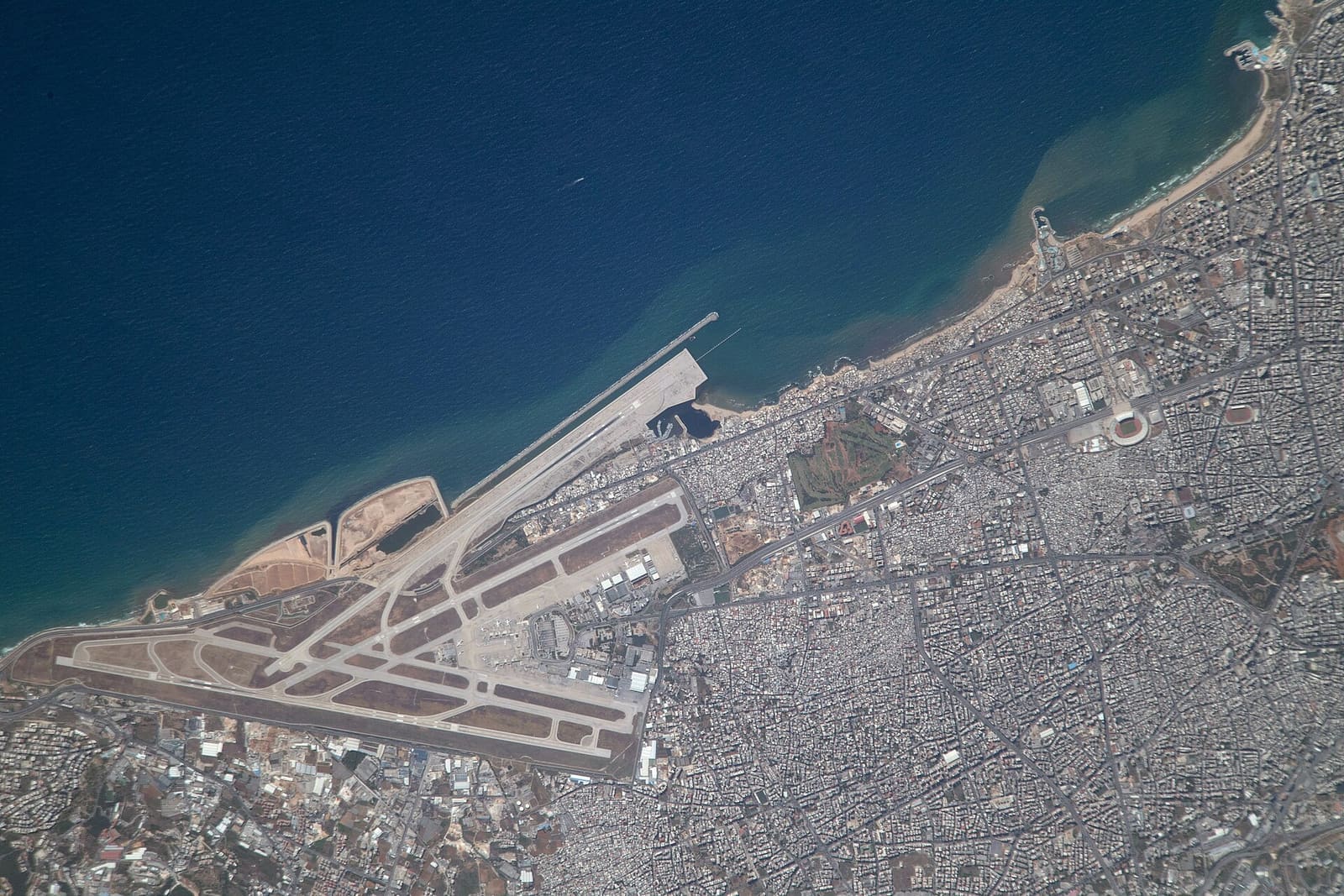
Geographically, the courier operations spanned four key transit nodes: Iran, Turkey, the United Arab Emirates, and Lebanon. Each jurisdiction represents an essential node in regional air connectivity, providing frequent commercial connections that enabled continuous, distributed cash movement across the Eastern Mediterranean and the Persian Gulf.
Enforcement and Investigative Authorities
On the regulatory and interdiction side, the primary domestic actors are the U.S. Department of the Treasury, which manages asset blocking and designations under counterterrorism authorities, and the U.S. Department of State, which formulates foreign policy designations and coordinates international partner engagements.
Critically, the investigative framework highlights direct coordination with Turkish security and customs authorities. The explicit acknowledgment of Turkish partnership underscores the necessity of host-nation intelligence and border cooperation when interdicting physical transit networks operating through international hub airports.
Critical Analysis of the Evidence
The Logistics of Airborne Bulk Cash
The public record explicitly identifies commercial airline passenger flights as the primary transmission vector for this network. Moving hundreds of millions of dollars physically through international air hubs reveals distinct operational compromises made by the IRGC-QF and Hizballah under strict economic sanctions.
“The network uses couriers traveling on commercial airline flights between Lebanon, Turkiye, the UAE, and Iran to move hundreds of millions of dollars, enabling the regime to obtain foreign currency illicitly, evade sanctions, and fund Hizballah.”
Physical cash smuggling on commercial flights is labor-intensive, risky, and constrained by physical mass and airport security checkpoints. A million dollars in 100-dollar bills weighs approximately 10 kilograms; moving hundreds of millions requires either dozens of coordinated flights, heavy passenger baggage manipulation, or institutional facilitation at point-of-departure and transit airports.
The choice to route couriers through commercial aviation rather than overland or maritime routes suggests a trade-off prioritizing transit speed over bulk capacity. Direct flights between Tehran, Istanbul, Dubai, and Beirut take only a few hours, reducing exposure to border interdiction compared to multi-day overland journeys through conflict or frontier zones.
Bilateral Enforcement Dynamics and Turkish Cooperation
A central data point in the public findings is the role of Turkish authorities in disrupting the network. Official releases explicitly note that the investigation and disruption were achieved through close coordination and collaboration with Turkish partners.
“The investigation and disruption of this network are the result of close coordination and collaboration with our Turkish partners.”
This operational partnership indicates that Turkey served as a pivotal transit or interdiction point for the courier network. Given Istanbul’s position as one of the world’s busiest international aviation crossroads, the disruption of courier pipelines passing through Turkish airspace requires deep integration between border control, financial intelligence units, and foreign security agencies.
Furthermore, the acknowledgment reflects a shared interest in preventing regional airport infrastructure from being weaponized by illicit state-backed financial couriers. It demonstrates that while electronic sanctions are enforced unilaterally or through banking channels, physical cash interdiction depends entirely on sovereign host-nation border enforcement.
Evidentiary Omissions and Open Analytical Questions
While the administrative statement outlines the broad parameters of the smuggling apparatus, significant analytical gaps remain in the public record. The release confirms the designation of ten individuals but does not provide their full operational dossiers, corporate vehicles, or exact chain of command within the IRGC-QF hierarchy.
Similarly, the documentation leaves open the precise mechanics of how couriers bypassed standard airport screening protocols in commercial terminals. It remains unstated whether the network relied on corrupt terminal personnel, false diplomatic documentation, undeclared excess baggage, or fractured customs enforcement across disparate jurisdictions.
Another key unknown is the net timeline and distribution of the funds. While the total volume is described in the hundreds of millions of dollars, the documentation does not specify the temporal span over which these flights occurred, nor the proportion of currency retained in transit jurisdictions versus the final amounts delivered into Lebanese territory.
Transparency, Source Provenance, and Legal Framework
This dossier is constructed exclusively from official regulatory and diplomatic records issued by the United States Department of State and the United States Department of the Treasury. The primary document is an official press statement released by the Office of the Spokesperson on August 20, 2026, articulating executive branch actions taken under federal counterterrorism statutes.
The statutory basis of the underlying sanctions rests on Executive Order 13224, as amended, which authorizes the blocking of assets and financial isolation of entities associated with terrorism. Complementary legal actions cited include Section 219 of the Immigration and Nationality Act (8 U.S.C. § 1189), governing Foreign Terrorist Organization designations.
As an official publication of the United States Federal Government, the referenced source material falls under the public domain pursuant to Title 17, Section 105 of the United States Code (17 U.S.C. § 105). The underlying source record is accessible via the official State Department repository at state.gov.