
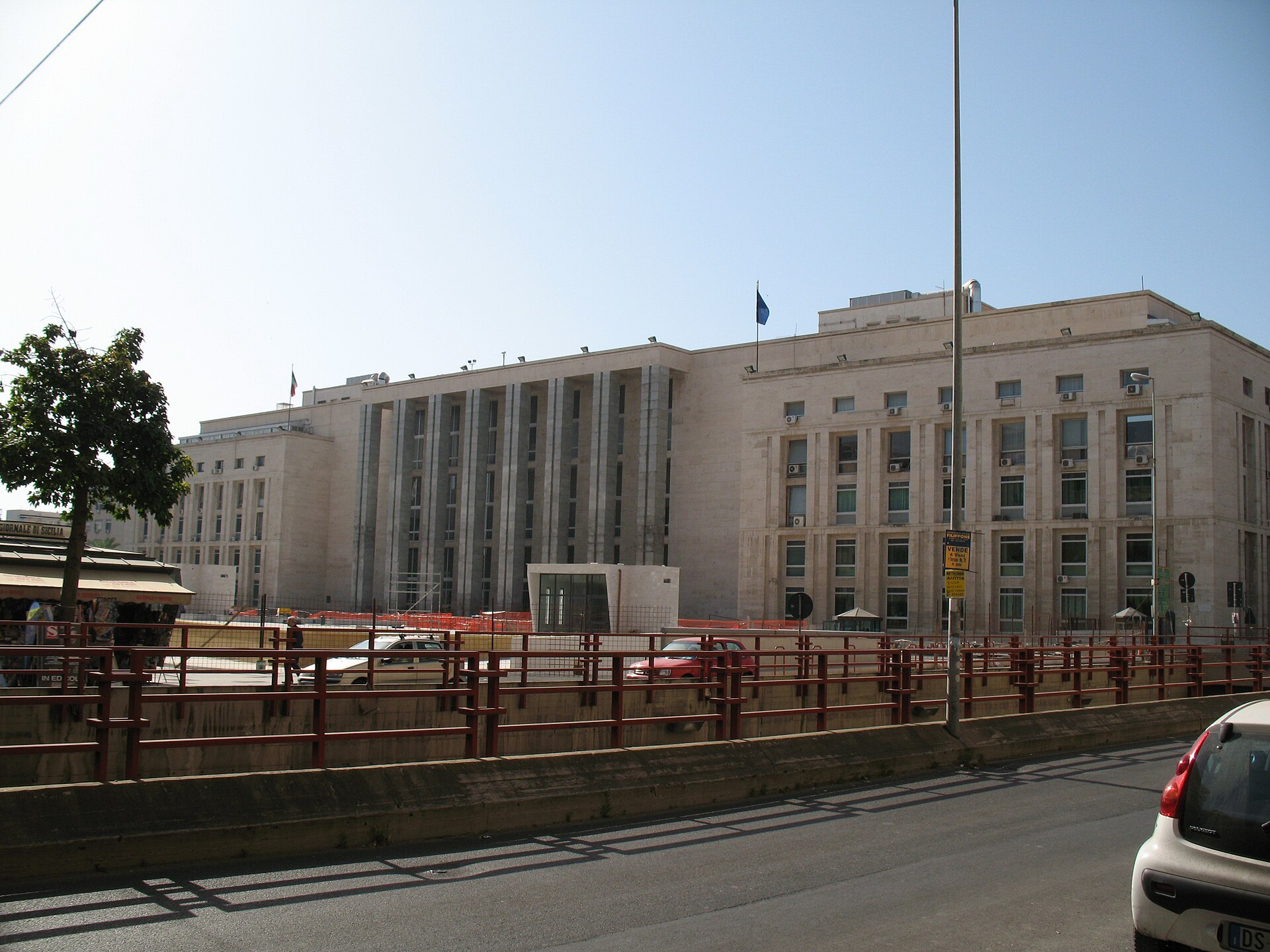
When the Italian state formalized the structure of the Direzione Investigativa Antimafia in 1992, it marked the end of a defensive decade defined by high-profile assassinations and ad-hoc legislative responses. The strategic baseline drawn in the first semester of 1992 provides an unvarnished audit of criminal density, jurisdictional friction, and structural intelligence overhauls. Understanding this pivotal transition reveals how institutional coordination evolved from fragmented emergency decrees into a centralized framework designed to track both financial assets and covert clan confederations.
The Strategic Pivot of 1992
The institutional architecture established in 1992 was not created in a vacuum, but under the immediate shock of systemic violence that tested the operational continuity of the Italian state. The inaugural reporting cycle prepared by the newly formed Direzione Investigativa Antimafia, scheduled to deliver an annual assessment by 31 December 1992, framed the current crisis as the culmination of an intense ten-year cycle. This operational dossier documented both the internal hierarchy of Cosa Nostra and the administrative machinery assembled to dismantle it.
Between 1982 and 1992, law enforcement confronted a dual escalation: the exponential expansion of illicit capital accumulation paired with a growing social and institutional mobilization against organized crime. The state’s response required moving beyond conventional public order policing toward an integrated strategy targeting illicit wealth, criminal command structures, and intelligence coordination. The 1992 baseline documents the precise point where tactical judicial victories met structural administrative reorganization.
Historical and Institutional Trajectory (1982–1992)
The operational decade analyzed in the records began on 3 September 1982 with the assassination in Palermo of General Carlo Alberto Dalla Chiesa, alongside his wife and an escort officer. That violent breach prompted the immediate passage of the Rognoni-La Torre law later that same month, introducing Article 416-bis into the Italian Penal Code. This statute established the legal definition of mafia-type criminal association and authorized the formal seizure and confiscation of illicit assets.
The legislative mechanism altered anti-mafia finance tracking immediately. Within the first four years following the enactment of the Rognoni-La Torre law, Italian judicial authorities identified and seized criminal assets exceeding 1,000 billion Italian lire. Simultaneously, emergency coordination measures enacted in 1982 established the Office of the High Commissioner (Alto Commissario) to unify administrative and police responses across fragmented jurisdictions.
This evolving legal and investigative framework laid the foundation for the judicial offensive of 1985–1986, culminating in the Maxi-trial before the Court of Assizes of Palermo against Abbate Giovanni plus 706 co-defendants. That historic proceeding formally indicted leading figures belonging to the federation of clans answering to the Greco-Corleonesi alliance. It demonstrated that Cosa Nostra possessed a unified, hierarchical command structure rather than operating as disparate criminal bands.
The ten-year cycle reached a catastrophic turning point on 23 May 1992 with the Capaci bombing. The attack claimed the lives of magistrate Giovanni Falcone, his wife Francesca Morvillo, and police escort officers Vito Schifani, Antonio Montanari, and Rocco Di Cillo. This violent strike signaled the violent end of an era and forced the immediate operational activation of previously approved legislative reforms.
Key Actors and Institutional Architecture
The documentation identifies several key institutional bodies and organized criminal cartels that shaped the strategic landscape in Sicily leading into the 1992 transition:
Institutional Entities and Leadership:
- Direzione Investigativa Antimafia (DIA): Formally instituted by Law no. 410 on 30 December 1991 as an interforce investigative agency dedicated exclusively to combating organized crime.
- Giovanni Falcone: Investigating magistrate assassinated on 23 May 1992 alongside magistrate Francesca Morvillo and protection officers Vito Schifani, Antonio Montanari, and Rocco Di Cillo.
- Carlo Alberto Dalla Chiesa: Prefect and General whose assassination on 3 September 1982 accelerated the creation of the High Commissioner and the passage of landmark anti-mafia legislation.
- High Commissioner for the Coordination of the Fight Against Mafia Delinquency: The executive authority created in 1982 to oversee inter-agency coordination, receiving structural organizational studies from the emerging DIA.
- Interforce Integrated Group: The specialized working unit established within the Ministry of the Interior that produced the 1990 structural mapping of Sicilian organized crime.
- Deputy Director General of Public Security: Institutional head assigned under Article 4, paragraph 6 of Law 410/1991 to preside over the Permanent Commission tasked with resolving jurisdictional allocation conflicts.
- Intelligence Services: Security services operating under administrative directives issued by the President of the Council of Ministers to align intelligence collection with the statutory mandates of Law 410/1991.
Organized Crime Factions:
- Greco-Corleonesi Federation: The dominant ruling coalition within Cosa Nostra prosecuted during the 1985–1986 Palermo Maxi-trial (Abbate Giovanni + 706).
- Madonia Clan: Cosa Nostra syndicate that secured undisputed local predominance in 1990 only after sustaining severe internal and operational casualties.
- Santapaola Family: The Catania-based Cosa Nostra family comprising 229 verified affiliates documented by judicial authorities in 1990.
- Autonomous Eastern Sicilian Gangs: A coalition of 8 clans operating outside the formal hierarchy of Cosa Nostra in Catania, fielding an estimated collective strength of approximately 1,000 members.
Critical Analysis of Evidence and Operational Intelligence
The interforce investigative mapping completed in 1990 by the Ministry of the Interior provided the first systematic census of mafia density across Sicily. In the province of Palermo, where law enforcement identified a virtually complete convergence between traditional mafia groups and Cosa Nostra families, the census documented 67 active clans comprising 1,630 identified members, representing an average clan size of 24.3 affiliates.
A rigorous comparative analysis of the 1990 data reveals a significant structural paradox regarding violence and territorial control. When correlating total homicides across all nine Sicilian provinces against the number of active clans in each jurisdiction, the provinces displaying the highest density of Cosa Nostra families—specifically Palermo, Agrigento, and Trapani—ranked at the very bottom of the relative homicide index.
“The final objective of neutralizing individual criminal groups must be pursued both through the statutory instrument of Article 416-bis of the Penal Code, and through alternative tactics consisting in the preventive identification of mafia associations and their prosecution through the criminal activities they carry out.”
This inverse correlation indicates that provinces characterized by total, unchallenged Cosa Nostra hegemony did not experience erratic, street-level homicide spikes in 1990. High structural control enabled internal dispute management without visible public warfare, whereas fragmented territories saw intense bloodshed. Hegemony acted as a regulator of violence, masking systemic penetration beneath low provincial homicide rates.
By contrast, territorial consolidation in non-hegemonic provinces came at immense cost. The Madonia clan achieved undisputed territorial dominance only in 1990, paying a massive toll in casualties during their internal expansion. In Catania, the operational landscape remained divided between the 229 identified affiliates of the Santapaola family and eight rival clans outside Cosa Nostra commanding around 1,000 members, generating an unresolved, highly volatile equilibrium.
To address this complex operational environment, the Italian state moved from reactive legislation to specialized structural training under Law 410 of 30 December 1991. Pursuant to Article 4, paragraph 4-ter of the statute, the DIA established specialized qualification programs to train personnel in complex financial investigations and preventive intelligence mapping, following the initial organizational blueprints submitted to the High Commissioner on 19 November 1991.
A critical operational obstacle remained the allocation of investigations among existing police forces and the newly formed DIA. To prevent inter-agency friction and duplicative inquiries, Law 410/1991 mandated the creation of a Permanent Commission headed by the Deputy Director General of Public Security under Article 4, paragraph 6. Simultaneously, direct instructions from the Prime Minister required civilian and military intelligence agencies to coordinate their intelligence-gathering priorities with the DIA’s operational mandate.
Transparency and Legal Basis
This dossier is compiled from primary administrative records published in the inaugural semester report of the Direzione Investigativa Antimafia for 1992. Official acts, institutional reports, and legislative instruments of the Italian public administration are in the public domain pursuant to Article 5 of Italian Law no. 633/1941 (L. 633/1941 art. 5). The underlying source document can be accessed through the official institutional repository of the Italian Ministry of the Interior: Direzione Investigativa Antimafia — I Semestre 1992.