
Public Interest and the Expanding Perimeter of Workplace Surveillance
The unauthorized deployment of biometric tracking across routine employment contexts poses an immediate threat to fundamental privacy rights and individual autonomy. When corporate entities substitute standard attendance monitoring with automated facial recognition, workers are subjected to disproportionate biometric harvesting without statutory necessity. This investigation examines how an administrative consulting firm operating within public utility supply chains captured employee biometric profiles in direct violation of European data protection standards.
The public interest at stake extends beyond individual workplace disputes into the structural integrity of data governance. When external service providers handle sensitive biometric workflows without formal processor designations or legal accountability, corporate transparency collapses. The case documented in municipal waste management operations demonstrates how easily non-compliant surveillance mechanisms permeate subcontracting networks, normalizing invasive biometric oversight under the guise of technical efficiency.
Institutional Trajectory and Chronology of On-Site Inquiries
The regulatory scrutiny into biometric labor tracking in the municipality of Ardea originated through coordinated on-site compliance activities. On January 19, 2023, inspectors initiated operational verifications directly at the Ardea worksite, inspecting the technical infrastructure deployed in local public hygiene services. These verification measures quickly revealed systemic dependencies between operational field management and external administrative consultants.
Following the initial site visit, regulatory authorities escalated the investigation to the corporate headquarters. Administrative audits were conducted at L’Igiene Urbana Evolution s.r.l. on January 26 and 27, 2023, targeting the governance frameworks and contractual mechanisms governing digital personnel tracking. The inquiry established that the digital infrastructure supporting attendance verification was intertwined with corporate consultancy services that operated outside clearly defined data management perimeters.
The administrative inspections subsequently expanded to include the consulting entity itself. On May 30, 2023, authorities executed a targeted inspection at Unica s.r.l.s., a company established in January 2020 to provide legal, technical, procurement, and labor consulting services. Official testimony collected during the inspection confirmed the existence of biometric apparatus that had been actively recording employee facial markers across extended operational windows.
The formal escalation occurred on September 13, 2023, when regulatory authorities served formal notification of alleged statutory violations pursuant to Article 166, paragraph 5, of the national privacy code. The notice cited substantive non-compliance with Articles 5(1)(a), 9, and 28 of the General Data Protection Regulation, initiating corrective and sanctioning proceedings that culminated in the definitive institutional finding of February 22, 2024.
Involved Entities and Institutional Governance Actors
The administrative matrix surrounding the Ardea worksite involves specific commercial operators and regulatory bodies tasked with enforcing personal data boundaries:
- Unica s.r.l.s.: An administrative and management consultancy firm incorporated in January 2020. The company executed unauthorized biometric data processing via facial recognition apparatus on personnel between late 2021 and early 2023 without establishing a lawful statutory basis.
- L’Igiene Urbana Evolution s.r.l.: A commercial waste management entity operating the municipal hygiene service at the Ardea yard, which failed to formalize mandatory data processing agreements or establish regulatory boundaries with external consultants.
- Garante per la protezione dei dati personali (Italian Data Protection Authority): The national supervisory authority responsible for conducting on-site investigations, auditing digital records, and enforcing statutory sanctions against non-compliant data processing operations.
- Corte Suprema di Cassazione (Supreme Court of Cassation): The highest judicial body in Italy, whose jurisprudence (specifically Order No. 35256/2023) established binding legal limits on unauthorized external data handling and strict criteria for data controller liability.
Critical Evidence Analysis: Biometric Extraction, Contractual Voids, and Accountability Gaps
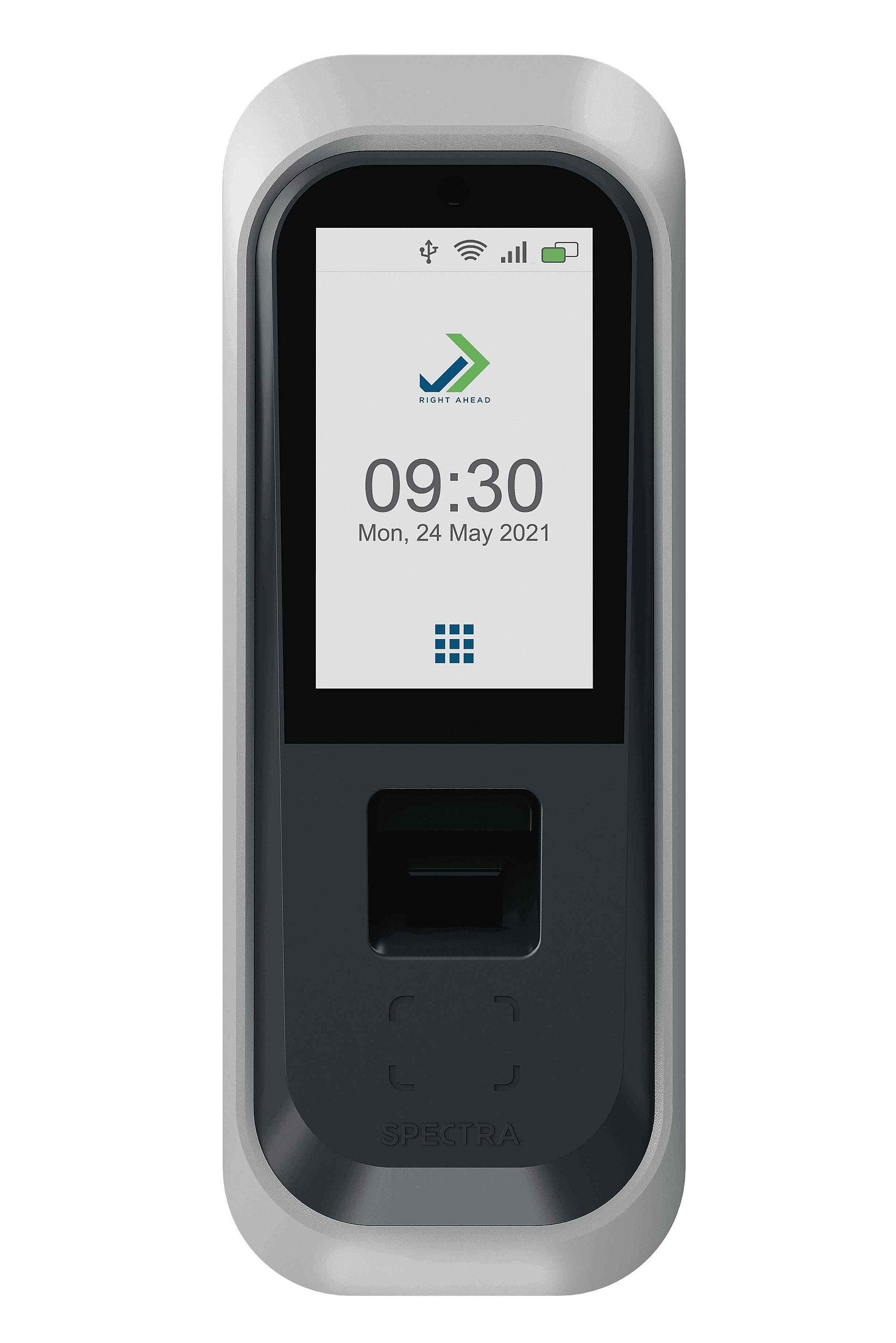
The technical audit of the hardware and software systems dismantled the assertion that facial recognition constituted a benign or automated feature of modern workplace management. Digital forensics extracted from the physical terminal established that five individual users were actively subjected to facial recognition processing. The data records confirmed that biometric processing initiated between December 2021 and January 2022, remaining continuously active until operations were halted in January 2023.
“All’esito dell’esame dei dati estratti dal sistema, è emerso che i trattamenti di dati biometrici avevano riguardato 5 utenti, erano iniziati tra il mese di dicembre del 2021 e il mese di gennaio del 2022 ed erano cessati nel mese di gennaio 2023.”
A critical divergence emerged between operational realities and internal compliance documentation. The company’s processing register, updated on September 28, 2021, explicitly recorded the handling of employee biometric data under its operational schedule. However, when regulatory inspectors arrived on May 30, 2023, the biometric features of the system had been rendered inactive, leaving an undocumented gap regarding the exact triggers that caused the equipment to be decommissioned immediately prior to administrative scrutiny.
Under European jurisprudence, biometric data constitutes a special category of personal data governed by Article 9 of the GDPR. Its processing is fundamentally prohibited unless specific exceptions—such as explicit consent or clear statutory authorization—are met. In the context of employment relationships, statutory authorities have repeatedly affirmed through precedents (Decision No. 16 of January 14, 2021, and Decision No. 369 of November 10, 2022) that the structural imbalance of power between employer and employee prevents freely given consent, rendering standard attendance facial scanning disproportionate and unlawful.
The investigation further unmasked a total absence of formal data processor designation. Under Article 28 of the GDPR, a data controller may only engage external processors who provide sufficient guarantees, governed by a binding legal contract detailing the scope, duration, and nature of processing. The formal service convention between L’Igiene Urbana Evolution s.r.l. and Unica s.r.l.s. contained none of the mandatory stipulations outlined in Article 28(3). Consequently, Unica s.r.l.s. acted as an unauthorized third party under Article 4(10), processing biometric identities without documented instructions.
The administrative records expose broader systemic questions regarding organizational transparency during regulatory procedures. Under Article 168 of the national privacy code, submitting false declarations or fabricating documentation during official oversight proceedings constitutes a severe statutory offense. The evidentiary trail confirms that while the consultancy claimed broad administrative support functions, it operated high-risk technical surveillance infrastructure without basic legal safeguards.
Transparency, Source Verification, and Statutory Legal Basis
This dossier is constructed exclusively from official administrative findings issued by the Italian Data Protection Authority (Garante per la protezione dei dati personali) on February 22, 2024, registered under official document number 9995785. The original institutional act details the complete investigative proceedings, on-site inspection transcripts, and definitive regulatory sanctions.
All underlying factual materials, administrative minutes, and regulatory determinations cited in this investigation belong to the public domain pursuant to Article 5 of Italian Law No. 633/1941, which explicitly exempts official acts of the State and public administrations from copyright restrictions. The full public record and verified administrative decisions remain accessible through the official institutional repository of the Garante per la protezione dei dati personali.