
Lead: The Public Interest in Institutional Capture
The boundary separating institutional authority from organized crime dissolves when law enforcement officials and elected representatives actively service illicit hierarchies. In southern Italy, the systematic co-optation of civic governance represents an enduring threat to democratic integrity and administrative impartiality.
Judicial investigations into the Serraino syndicate reveal a deliberate, long-term penetration of municipal politics and security apparatuses in Calabria. Rather than relying solely on external extortion, the criminal network embedded trusted figures directly into local legislative bodies and regional police offices.
Examining these procedural findings is vital for understanding modern administrative corruption. The documented evidence highlights structural vulnerabilities in local public administration, demonstrating how state authority can be subverted from within to provide strategic immunity to entrenched crime syndicates.
Historical and Geopolitical Context
The Aspromonte mountain range and the urban perimeter of Reggio Calabria have historically served as the territorial stronghold of historical ’Ndrangheta factions. Among these, the Serraino family established deep territorial dominion spanning from the mountain hub of Cardeto to the urban districts of San Sperato, Cataforio, and Modena.
Historically led by figures such as Francesco Serraino, widely known as “Don Ciccio, king of the mountain,” the cosca exercised rigid control over local economic contracts, agricultural land, and urban development. Following internal shifts and high-level enforcement actions, structural leadership transitioned across generational lines to maintain operational continuity.
The territorial command passed to Domenico Serraino, known as “Mico” (born 1945), who maintained authority even while subjected to the rigorous Article 41-bis prison regime. Upon his death, command over the syndicate’s strategic decisions relocated to his direct descendants, solidifying an unbroken line of dynastic authority across decades of urban expansion.
Parallel to territorial control in Calabria, judicial inquiries led by the Anti-Mafia District Directorate (DDA) of Trento demonstrated the transnational and interregional projection of the Serraino network into northern Italy. The syndicate operated not as an isolated provincial band, but as an integrated criminal enterprise capable of coordinating operations across distant jurisdictions.
This territorial reach required a sophisticated political interface. Between 2002 and 2012, the municipal administration of Reggio Calabria experienced profound structural instability, marked by contested appointments and eventual council dissolutions resulting from documented criminal infiltration into essential municipal services.
Key Actors and Entities
The investigative records identify specific individuals holding distinct operational, logistical, and political responsibilities within the territorial jurisdiction of Reggio Calabria and Cardeto.
The Serraino Dynastic Core
Antonio Serraino, known as “Nino,” occupies the documented apical role within the criminal hierarchy. As the son of the late boss Domenico Serraino and brother of Alessandro Serraino (born 1975, known as “Lisciandro”), Antonio assumed leadership over illicit rackets, dispute arbitrations, and strategic alliances.
Domenico Serraino (“Mico”, 1945–2010), historic capo subjected to strict maximum-security confinement under Article 41-bis, whose funeral in March 2010 served as an institutional litmus test for political allegiances in the region.
The Political and Security Interface
Sebastiano Vecchio, alias “Seby” (born February 8, 1973, in Reggio Calabria), served as a dual-role actor operating across the state security apparatus and local political institutions. Vecchio served as a Police Chief Coordinator (Assistente Capo Coordinatore) of the Polizia di Stato, assigned to the Venice Railway Police Department before facing disciplinary suspension.
Within civic administration, Vecchio accumulated extensive municipal offices: Councillor for the VII Circoscrizione (San Giorgio – Modena – San Sperato) from 2002 to 2007; Assessor for Public Education in the second municipal junta of Giuseppe Scopelliti from June 22, 2007, to July 5, 2010; and subsequently City Councillor and President of the Municipal Council of Reggio Calabria from June 20, 2011, to October 10, 2012.
Logistical and Operative Operatives
Antonino Fallanca (born August 13, 1954, in Cardeto, resident in Reggio Calabria), an operative linked to direct business assets utilized to advance the syndicate’s economic hegemony.
Francesco Russo, known as “Ciccio lo Scalzo” or “’u Scazzu” (born August 24, 1973, in Cardeto, resident in Reggio Calabria), and Paolo Russo, known as “Zamburro” (born October 2, 1961, in Cardeto), who formed key components of the territorial support network.
Critical Analysis of the Evidence
The judicial dossier relies upon the convergence of electronic surveillance, financial seizures, and detailed testimonies from multiple justice collaborators (collaboratori di giustizia). These statements found corroboration during the “Pedigree” operation executed on July 9, 2020, and the subsequent “Pedigree 2” enforcement action executed on October 15, 2020, coordinated alongside the ROS of Trento.
The San Sperato Funeral as an Evidentiary Keystone
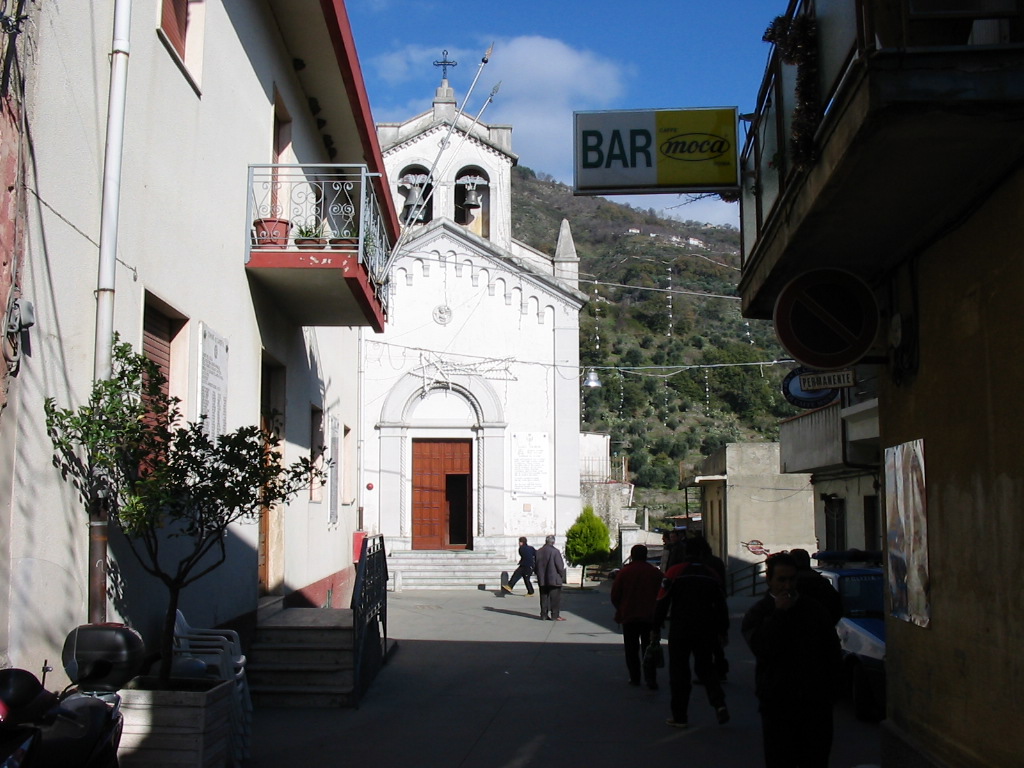
A critical event documenting the alignment between public administration and the Serraino cosca occurred on March 12, 2010, at the church of San Sperato in Reggio Calabria. On this date, Sebastiano Vecchio attended the funeral of boss Domenico “Mico” Serraino while actively serving as the sitting municipal Assessor for Public Education.
“On March 12, 2010, Vecchio — at the time an assessor of the Municipality of Reggio Calabria — took part, at the church of San Sperato, in the funeral of the boss Domenico, known as ‘Mico’ Serraino, head of the cosca.”
Judicial analysts evaluate this public presence not as an isolated social gesture, but as an explicit exhibition of loyalty to the clan’s core leadership. Attending the funeral of an incarcerated 41-bis capo provided public validation of the syndicate’s standing during a critical phase of administrative management.
Economic Seizure and Instrumentality
The investigative findings extended into corporate patrimonies tied directly to mafia operations. On October 15, 2020, the Reggio Calabria Anti-Mafia District Directorate enacted preventive seizures against commercial enterprises tied to Antonino Fallanca.
“The Reggio Calabria District Anti-Mafia Directorate deemed it necessary to proceed with the preventive seizure of said business activity, as it resulted in a relationship of evident instrumentality with the crime of mafia association charged against Antonino Fallanca.”
The legal determination of “instrumentality” (strumentalità) indicates that the commercial entities did not merely suffer extortion; they were operated as functional conduits for laundering illicit capital and shielding assets under clean entrepreneurial fronts.
Gaps and Unresolved Questions in the Evidence
While the administrative trajectory of Sebastiano Vecchio is exhaustively documented through institutional registers, several operational areas remain unaddressed in the declassified procedural summaries:
First, the specific administrative resolutions, public tenders, or educational procurement contracts approved during Vecchio’s tenure as Assessor for Public Education (2007–2010) require systematic forensic accounting to quantify the exact volume of public funds diverted toward clan-affiliated contractors.
Second, the exact intelligence flow originating from Vecchio’s status within the State Police remains an open analytical question. Official records do not detail whether regional law enforcement databases were accessed to provide early warnings regarding wiretaps or impending arrest warrants against the Serraino leadership.
Third, the precise mechanisms linking the territorial commands in Cardeto to the operational branches active in Trento demonstrate geographic reach, yet the logistical conduits used to move illicit profits between northern and southern Italy remain only partially detailed in available summaries.
Legal Basis and Public Records Transparency
The factual details in this investigative dossier derive from official law enforcement notices, formal seizure decrees, and procedural summaries published by the State Police (Polizia di Stato – Questura di Reggio Calabria) regarding the “Pedigree 2” operation executed on October 15, 2020.
Public access to these records is governed under Italian Law No. 633 of April 22, 1941, Article 5, which explicitly provides that official acts of the State and public administrative bodies are not protected by copyright and reside in the public domain.
The dissemination of judicial facts, public administrative careers, and confirmed asset seizures serves the constitutional public interest in transparent governance, civil accountability, and historical documentation of anti-mafia judicial enforcement.