
Executive Summary: The Strategic Significance of Supply Chain Interdiction
The interdiction of maritime equipment at commercial container terminals represents a qualitative shift in how clandestine cross-Channel logistics are mapped and disrupted by law enforcement. By intercepting bulk nautical hardware before it reaches European distribution hubs, authorities bypass the acute operational challenges of coastal policing along northern French shores. This dossier evaluates the structural dynamics behind maritime smuggling supply chains and the institutional mechanics of international container tracking.
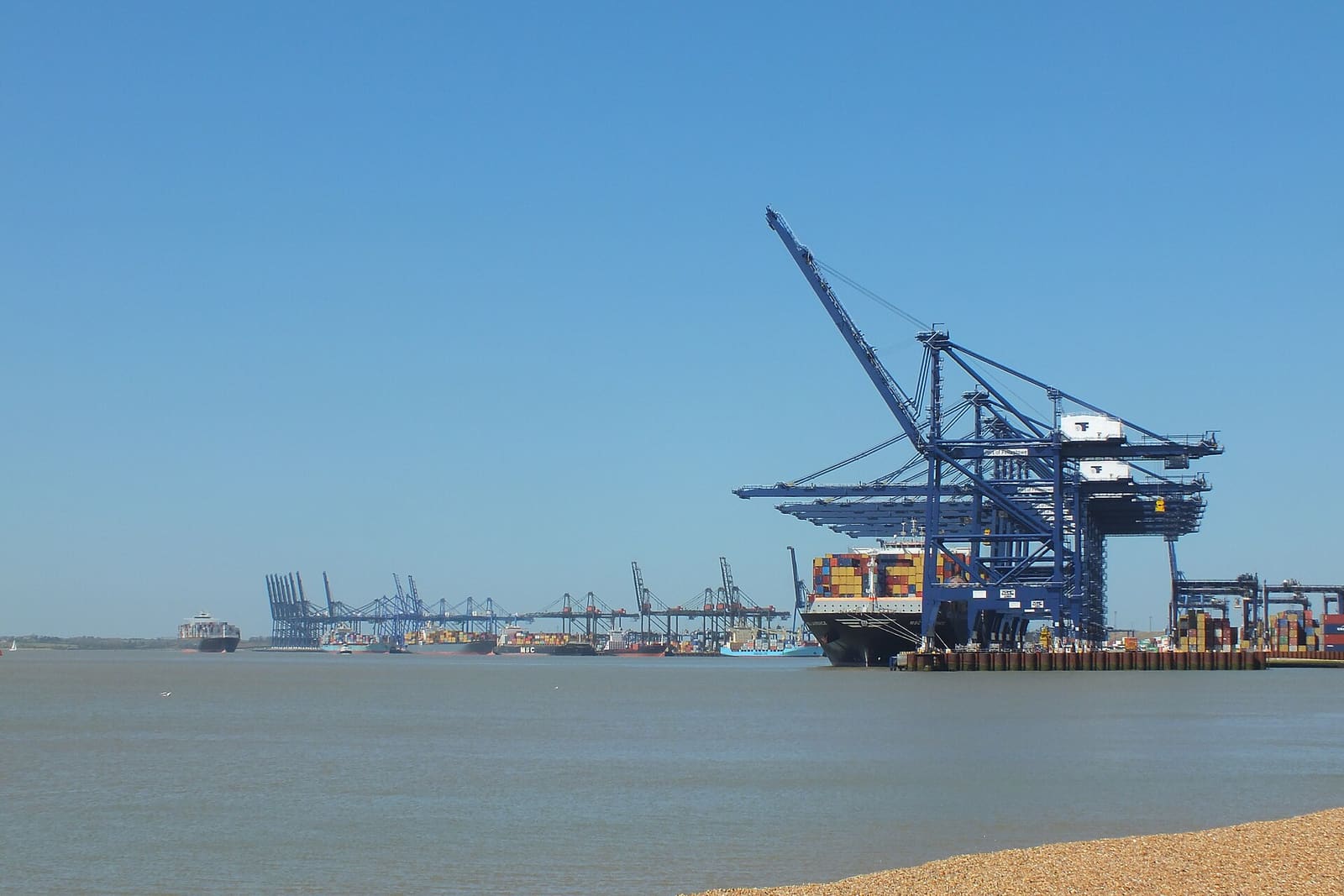
On Saturday 18 July, officers from the National Crime Agency, in operational coordination with specialist search teams from Border Force and terminal staff at the Port of Felixstowe, secured a commercial shipping container originating in China. Inside the unit, investigators discovered at least 25 ten-metre rubber inflatable boats alongside 25 Parsun outboard engines. The shipment marks the first documented UK interception of a bulk consignment of purpose-built craft specifically procured for migrant transport across the Dover Strait.
The strategic value of this seizure lies in the asymmetric cost structure of maritime hardware procurement versus field-level disruption. With each ten-metre craft engineered or loaded to carry roughly 80 passengers, the collective consignment represented an immediate sea-crossing capacity of approximately two thousand individuals. Halting these logistics at the container manifest stage curtails the operational cycle of organized syndicates far upstream from the operational launch points in northern France.
Historical and Geopolitical Context: The Industrialization of Channel Crossings
The Evolution of Smuggling Hardware and Maritime Logistics
Between 2018 and the early 2020s, cross-Channel clandestine crossings transitioned from opportunistic stowaway tactics inside commercial freight vehicles to direct sea passages aboard small commercial leisure craft. As port perimeter security hardened across northern Europe, organized criminal networks systematically industrialised the procurement of specialized maritime gear, shifting from off-the-shelf leisure dinghies to bespoke high-capacity inflatables manufactured overseas.
The hardware seized at Felixstowe illustrates this industrial transformation in physical engineering. Ten-metre inflatable rubber hulls paired with Parsun brand outboard engines provide a standardized, low-cost platform engineered for single-use passages under heavy human loads. These craft are neither designed for open-sea navigation nor equipped with standard maritime safety margins, making them intrinsically hazardous when deployed across active international shipping lanes.
To counter this industrial pipeline, the National Crime Agency initiated a dedicated operational strategy in early 2023 specifically targeting equipment supply chains. Rather than focusing exclusively on beachhead launches, the strategy aims to dismantle upstream procurement networks across maritime transit corridors. Through this coordinated initiative, British authorities and international partner agencies have intercepted more than 1,500 boats and outboard engines across global transit nodes.
Transcontinental Routing and Transhipment Hubs
The logistics chain exposed in this operation spans thousands of miles, relying on legitimate commercial container shipping networks to obscure illicit destination endpoints. Originating in China, the cargo was routed through major international maritime corridors aboard a container vessel whose operators and crew had no knowledge of the illicit end-use or organized criminal ties associated with the manifested units.
The scheduled navigational route designated the Port of Felixstowe as an intermediate UK transit call prior to docking in Hamburg, Germany. Investigators established that the container was scheduled for discharge at the German port, highlighting Hamburg’s role within trans-European freight routing. The geographical positioning of German logistics infrastructure makes it a critical waypoint for goods entering Western Europe before inland distribution toward the North Sea and Channel coastlines.
Once offloaded in continental Europe, such hardware is traditionally stored in intermediate staging posts across Germany, Belgium, and the Netherlands. Criminal logistics coordinators manage temporary warehouse facilities in these jurisdictions to avoid French coastal surveillance until the exact moment of tactical deployment. Consignments are subsequently broken down into individual units and transported overland via secondary road networks to staging beaches in northern France.
Institutional and Criminal Actors: Roles and Jurisdictions
State Authorities and Terminal Operators
The enforcement action brought together several statutory bodies and private logistics operators working within distinct legal and operational mandates across the UK border environment:
- National Crime Agency: The premier UK law enforcement body responsible for leading the overarching organized crime investigation, international intelligence exchange, and supply chain interdiction strategy.
- Border Force: The specialized operational command within the Home Office providing technical container search capabilities, detection equipment, and physical cargo examination at the maritime border.
- Port of Felixstowe: The UK’s largest commercial container facility, operated by Hutchison Ports, whose logistical cooperation and freight manifest tracking enabled the targeted quarantine of the shipping unit.
- International Law Enforcement Partners: European and overseas police and customs administrations cooperating with the NCA to track container movements, intermediate consignees, and banking trails across multiple jurisdictions.
Commercial Entities and Criminal Networks
The cargo composition sheds light on both legitimate manufacturing and illicit end-user operations across international boundaries:
- Parsun Outboard Motors: The manufactured brand of the 25 outboard engines found within the container, representing standard commercial propulsion hardware repurposed by criminal syndicates for heavy vessel transit.
- Maritime Freight Operators and Vessel Crew: The commercial carrier handling the container transit, confirmed by investigative authorities to have no knowledge or complicity regarding the criminal intentions of the cargo.
- Transcontinental Smuggling Syndicates: The illicit organized crime networks operating between Europe and the UK, responsible for financing bulk hardware purchases, coordinating freight forwarding, and managing beach launches.
- Geographic Transit Authorities in Germany, France, Belgium, and China: The administrative jurisdictions linked to the manufacturing, routing, staging, and ultimate operational deployment of the interdicted maritime hardware.
Critical Analysis of Evidence: Supply Bottlenecks, Data Gaps, and Strategic Risks
Operational Impact of Upstream Disruption
The recovery of 25 rigid inflatables and matching propulsion units represents a substantial tactical disruption to criminal networks operating along the English Channel. As official assessments indicate, small-boat operations operate on tight equipment margins, relying on continuous maritime replenishment to maintain launch frequency during favorable weather windows.
“This was a significant seizure of small boat equipment which will put a huge dent in the profits of the criminal network involved. It will also have stopped these dangerous boats and under-powered engines being used to put lives at risk in the Channel.”
The physical removal of 25 hulls directly prevents the immediate loading of up to two thousand prospective passengers into unseaworthy vessels. However, analyzing the operation through a purely tactical lens obscures the broader commercial resilience of organized smuggling syndicates. In commercial shipping terms, a single standard forty-foot container can easily house dozens of deflated hulls, making maritime freight an extraordinarily high-yield, low-cost delivery vector for criminal syndicates.
Evidentiary Limitations and Unresolved Questions
While the physical seizure at Felixstowe is verifiable and complete, several structural questions remain unresolved within the public enforcement record. The official documentation confirms the cargo’s origin in China and intended discharge in Hamburg, but leaves key intermediate details obscured for ongoing operational security:
- Corporate Consignee Identities: The manifest entity, freight forwarding agency, and named continental consignee listed on the bill of lading have not been publicly disclosed, concealing the precise corporate layering used to facilitate shipment.
- Financial Settlement Mechanisms: The methods employed to transfer capital from European criminal syndicates to manufacturing entities in East Asia remain undocumented in public releases.
- Distribution Pathways from Germany: The exact logistics networks planned to transport the units from Hamburg to northern French departure sectors remain subject to ongoing cross-border investigations.
- Alternative Port Routing: The operational discovery raises questions regarding whether Felixstowe was an intended transhipment stop or an incidental maritime routing choice by the commercial carrier.
Structural Vulnerabilities of the Cross-Channel Supply Chain
The Felixstowe case demonstrates that criminal networks view bulk maritime shipping as a viable method for circumventing continental European customs controls. By routing containers through major international hub ports, syndicates attempt to exploit the sheer volume of global container traffic, betting that manifest scrutiny will fail to identify modified commercial goods.
Furthermore, the reliance on Parsun outboard engines highlights a chronic operational vulnerability in clandestine Channel crossings: propulsion inadequacy. Law enforcement records consistently indicate that standard commercial outboards deployed on ten-metre inflatables are severely under-powered for carrying 80 individuals across open tidal waters. This mechanical imbalance drastically increases the risk of engine failure, swamping, and structural collapse mid-transit.
Transparency, Source Provenance, and Legal Framework
This dossier is compiled from official operational disclosures published by the National Crime Agency detailing maritime enforcement actions executed at the Port of Felixstowe on 18 July. The source record documents the collaborative intervention conducted alongside Border Force search units and commercial port management.
Public dissemination of this material is governed by the Open Government Licence v3.0, which permits the reuse, adaptation, and analysis of official UK public sector information, alongside the legal framework established under Article 5 of Italian Law 633/1941 regarding foreign official acts. The source documentation is permanently accessible via the National Crime Agency’s official news archive at NCA Operational Archive.
The preservation and critical examination of these official records ensure accountability in public border enforcement policies, providing verifiable data regarding the physical infrastructure, commercial vulnerabilities, and transnational networks underpinning cross-border human smuggling.