
Lead: The Structural Failure of Emergency Economic Protection
When macroeconomic shocks compress domestic production, criminal syndicates exploit structural liquidity gaps far more rapidly than bureaucratic compensation mechanisms can react. Official institutional assessments reveal that Italy’s state-administered solidarity framework, created to insulate vulnerable entrepreneurs from predatory lenders, faced severe functional bottlenecks during the severe economic contractions of 2020. This systemic friction exposes how rigid administrative vetting leaves distressed business operators exposed to predatory capital.
The core vulnerability lies in a statutory paradox: offering zero-interest loans to entities that are already insolvent cannot restore economic viability. As legitimate credit channels tighten, organized criminal networks step in to dispense massive liquid reserves without demanding immediate compensation, quietly securing reputational leverage across productive territories. Understanding this institutional lag is essential for evaluating whether state relief can effectively counter criminal expansion during systemic downturns.
By reviewing operational metrics from the Extraordinary Commissioner for antiracket and anti-usury initiatives, this dossier maps the institutional obstacles hindering victim rehabilitation. From systemic loan refusals in banking usury disputes to geographic disparities across Southern and Northern Italy, the evidence underscores an urgent need to re-examine state intervention models before organized crime permanently cements its economic foothold.
Historical and Geopolitical Context: From Pioneer Legislation to Pandemic Shocks
Italy pioneered legislative protection against criminal economic predation through Law no. 108 of March 7, 1996, later complemented by Law no. 44 of February 23, 1999. Rooted in constitutional principles of a modern social rule of law, this normative architecture established dedicated solidarity funds designed to compensate extortion victims and grant zero-interest loans to those trapped by usurious rates. At the time of its enactment, the model represented an unprecedented European experiment in public victim assistance.
However, the economic landscape shifted drastically over subsequent decades, culminating in the severe crisis recorded during the second half of 2020. Official data compiled by Istituto Nazionale di Statistica demonstrated sustained gross domestic product contractions that directly impoverished Italy’s productive sectors. The sudden drying up of operational cash flows left small and medium-sized enterprises vulnerable to extra-legal financing channels, precisely when traditional banking credit became harder to secure.
During this acute liquidity shortage, criminal syndicates operating across both southern heartlands and northern industrial hubs altered their operational strategy. Clan networks utilized their immense cash reserves to provide instant funding to desperate business owners without immediately demanding explicit concessions or punitive interest. This tactic significantly elevated the social reputation of criminal syndicates within local communities, creating long-term dependency and paving the way for hostile business takeovers.
Simultaneously, territorial outreach initiatives faced unprecedented physical barriers. While administrative bodies adopted videoconferencing to maintain institutional coordination, direct engagement with educational institutions, universities, and local civil society networks was severely disrupted. This breakdown in direct field contact weakened the civic reporting mechanisms that historically fed applications into state-managed solidarity funds.
Key Actors and Institutional Network
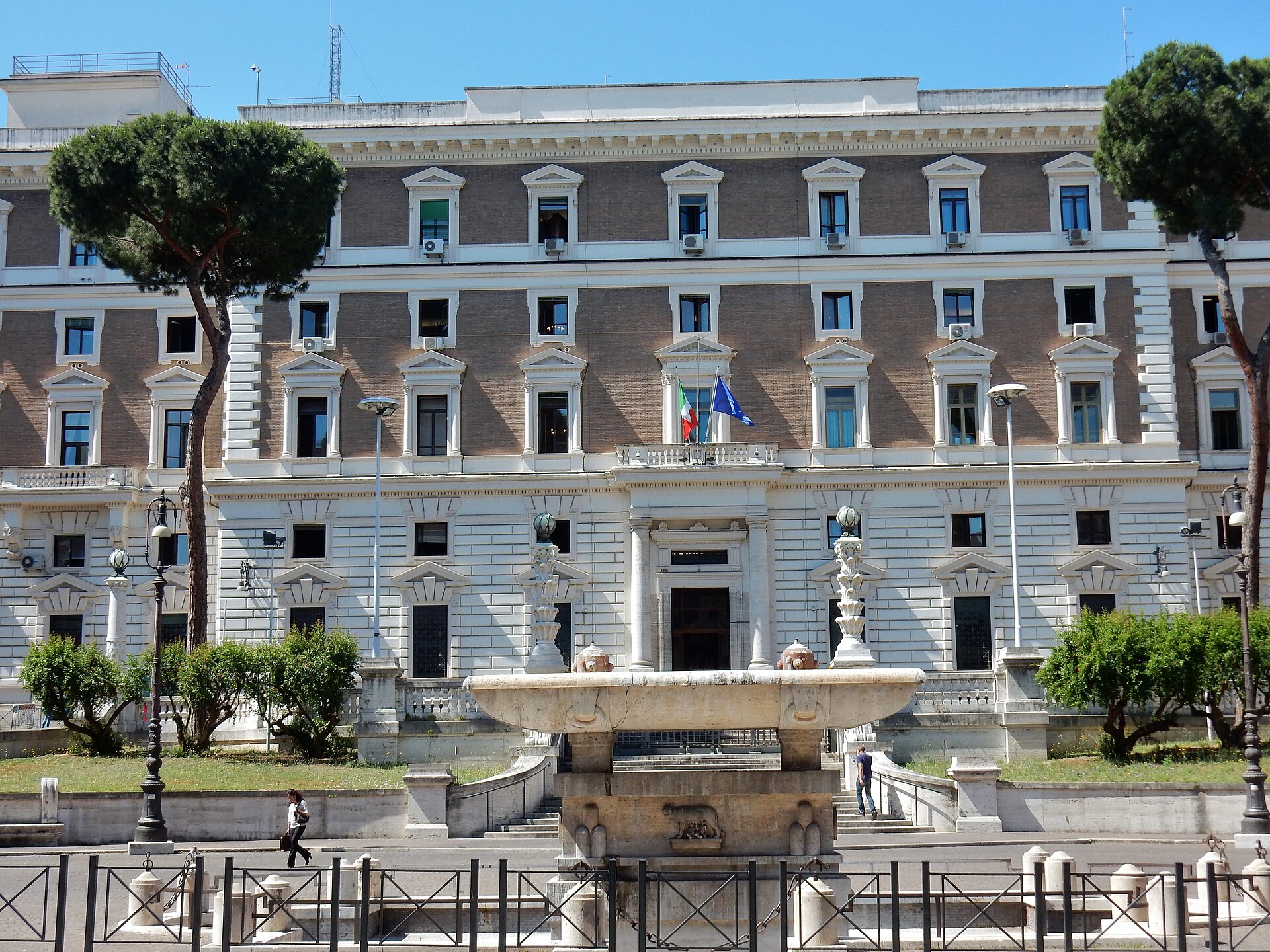
The statutory response to extortion and usury in Italy operates through a multi-tiered administrative and judicial ecosystem. At the governmental core stands the Ministero dell’Interno, which oversees the Extraordinary Government Commissioner for the coordination of anti-racket and anti-usury initiatives. This office coordinates the national strategy, represents the government in key judicial proceedings, and monitors the regional allocation of financial assistance.
At the territorial level, the Prefectures act as the operational bridge between citizens and central administration. Supported by specialized Evaluation Units (Nuclei di Valutazione), Prefectures conduct detailed preliminary inquiries into applications submitted by victims of usury and extortion. These files are subsequently forwarded to the Solidarity Committee (Comitato di solidarietà), the central body responsible for deliberating on the granting of economic benefits and reviewing eligibility criteria.
Financial and regulatory oversight involves independent constitutional bodies, most notably the Corte dei Conti. The Court of Auditors periodically evaluates the efficiency, financial sustainability, and statutory efficacy of the anti-usury solidarity funds. Its empirical findings have repeatedly highlighted structural deficiencies in the design of loan-based victim relief mechanisms, providing crucial data for legislative reform proposals.
Judicial enforcement intersects directly with the administrative track through ongoing criminal prosecutions. During 2020, state authorities formally joined proceedings as a civil party before the Tribunale di Caltanissetta in the major anti-mafia trial dubbed Stella cadente on June 4, and subsequently before the Tribunale di Palermo in the Octopus proceedings on September 16. These judicial actions underscore the persistent hold of organized crime over commercial activities.
Academic institutions also play an analytical role in diagnosing systemic criminal penetration. Under a structured collaboration agreement signed on October 11, 2018, in Milan, Bocconi University partnered with institutional authorities to examine the expansion of Campanian and Calabrian criminal clans within Lombardy, documenting how usury and extortion mechanisms are deployed to infiltrate northern commercial markets.
Critical Analysis of the Evidence: Structural Inefficiencies and Bureaucratic Disconnect
An examination of the empirical data exposes a counterintuitive institutional reality: despite worsening economic conditions, the volume of formal applications submitted under Article 14 of Law no. 108/1996 has not increased over time, but has steadily declined. This decline does not signal a retreat of criminal usury; rather, it reveals an acute misalignment between statutory relief mechanisms and the actual operational needs of distressed enterprises.
The Failure of the Loan Model
The foundational assumption of Law 108/1996 was that granting an interest-free, repayable loan would enable an exploited victim to regain financial solvency. Experience and official evaluations by the Court of Auditors have proven this premise flawed. When an entrepreneur turns to an illegal lender, the underlying business is already in advanced financial distress; adding further debt obligations, even without interest, accelerates collapse.
“L’esperienza maturata fin qui e le relazioni della Corte dei Conti rendono evidente come aver riservato ad una vittima di usura la concessione di un mutuo, sia pure senza interessi e rateizzabile, non è stato efficace ai fini che la norma si prefiggeva. Quando un imprenditore ricorre all’usuraio si trova già in una condizione economica disperata.”
In response to this systemic failure, institutional authorities formulated a reform package—initially outlined in 2019 and submitted to government legislative offices—aimed at replacing repayable loans with direct, non-repayable grants (contributo a fondo perduto). This proposed mechanism couples financial relief with mandatory professional tutoring, assigning dedicated turnaround experts to guide victims through complex debt restructuring and public administrative liabilities.
The Banking Usury Impasse
A second major institutional friction stems from the treatment of banking usury under Article 2 of Law 108/1996. While the statute broadened the definition of usury to encompass interest rates exceeding statutory thresholds charged by credit institutions, administrative implementation has produced widespread rejections. During 2020, the Solidarity Committee issued a high volume of formal rejections and pre-denial notices for loan applications tied to alleged banking usury.
This high rejection rate highlights a widening procedural rift. Applicants often seek state intervention to resolve crushing liabilities accumulated directly with public administrations and tax authorities. However, the legal mandate of the Commissioner does not provide autonomous statutory authority to intervene in secondary administrative debt settlements, leaving victims in procedural limbo without actionable relief.
Regional Disparities and Legal Remedies
Regional disbursements of anti-usury loans in 2020 showed substantial geographic concentration in southern territories. Campania accounted for the highest total loan volume at €1,165,946.51, followed by Puglia with €667,560.50, and Sicily with €374,572.79. While these figures reflect intense prosecutorial and administrative activity in historic mafia territories, they contrast sharply with the low application volumes emerging from northern regions like Lombardy, where clan penetration remains less visible and less frequently reported.
Finally, the administrative review system suffers from rigid procedural boundaries. Article 14, paragraph 2, of Law no. 44/1999 places the formal initiative for administrative review exclusively in the hands of the Minister of the Interior, leaving procedural reassessments narrowly constrained. In 2020, only three precautionary petitions (istanze cautelari) were formally registered and remained pending decision, illustrating the narrow scope of appellate mechanisms available to rejected claimants.
Transparency, Archival Sourcing, and Legal Framework
The empirical findings detailed in this investigation originate from the official institutional reporting of the Italian State, specifically the Relazione Annuale Attività 2020 compiled by the Extraordinary Government Commissioner for the coordination of anti-racket and anti-usury initiatives within the Ministry of the Interior.
Under Italian Law no. 633 of April 22, 1941, Article 5, official texts of state administrations and public bodies are excluded from copyright protection and reside in the public domain. The primary reference document is permanently accessible through the institutional portal of the Ministry of the Interior (relazione_annuale_2020_commissario_antiracket_e_antiusura.pdf).
Public access to these administrative metrics is fundamental for independent scrutiny of state anti-mafia policies. Preserving and analyzing these primary records ensures transparency in public fund allocation, tracks the structural limits of emergency legislation, and provides an objective benchmark for ongoing legislative reforms aimed at dismantling organized crime’s financial influence.