
Public Interest and Systemic Implications
Industrial waste management remains one of the most vulnerable sectors to systemic corporate manipulation, regulatory lag, and logistics obfuscation. When unauthorized containment operations scale to tens of thousands of barrels, the failure is rarely accidental; it indicates a sophisticated exploitation of jurisdictional boundaries and fragmented corporate governance.
The structural anatomy exposed in the Pontinia logistics hub reveals how shell capitalization, revolving directorships, and inter-company leasing arrangements can mask massive hazardous storage sites. Understanding these interlocking corporate mechanisms is essential for modern oversight bodies assessing environmental liabilities and tracking illicit transport corridors across regional boundaries.
Historical and Operational Context
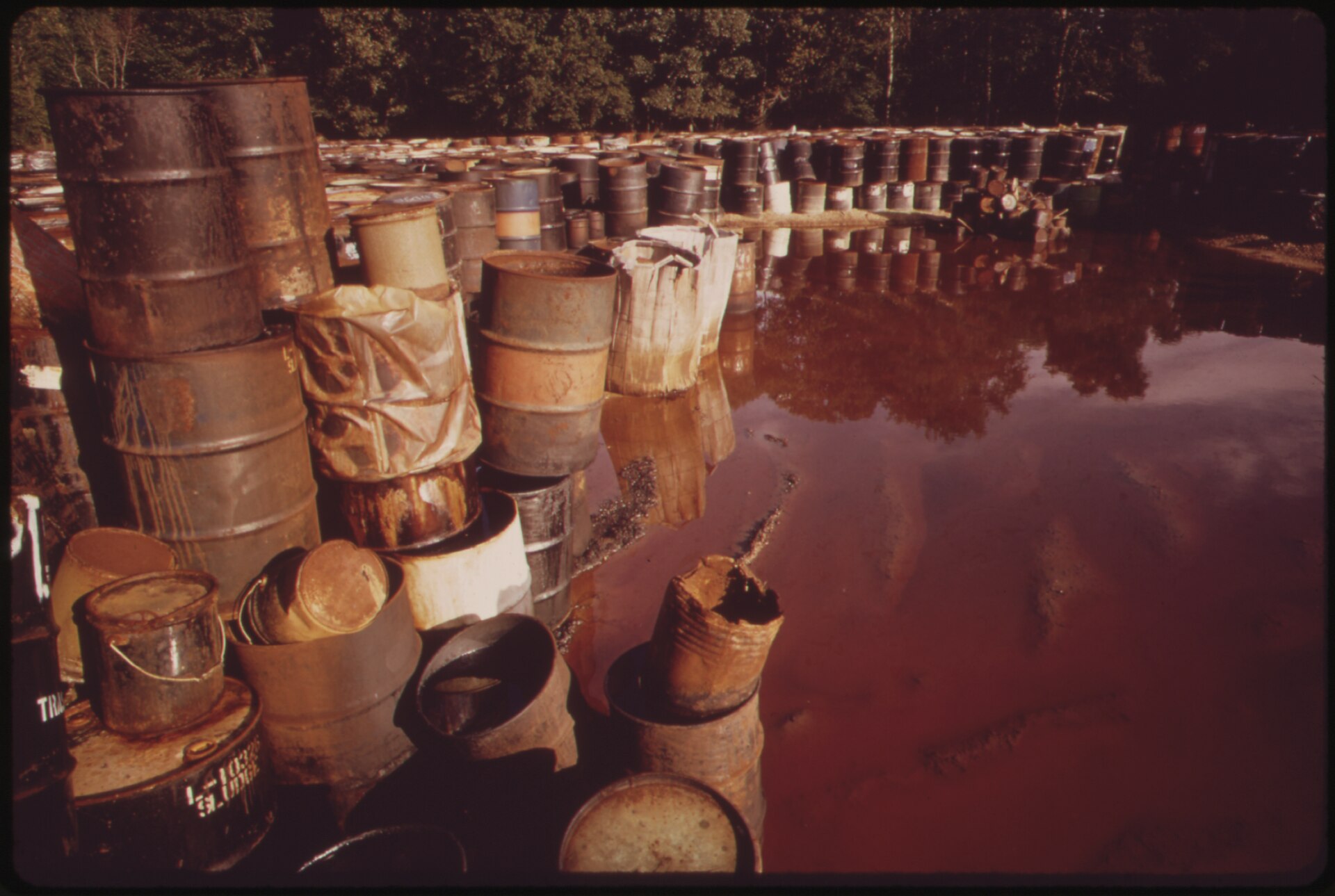
The operational locus centered on an industrial site in Pontinia, which became the subject of extensive containment and legal scrutiny after state authorities uncovered an unprecedented volume of undocumented hazardous material. The magnitude of the site redefined domestic investigative priorities regarding hazardous material flows.
«Le operazioni di sequestro consentirono di accertare la presenza in quel sito di oltre 11.600 fusti e di due cisterne colme di liquido da classificarsi come rifiuto pericoloso.»
The facility was formally operated by SIR Srl (Società Imprese Riunite Srl), a Rome-based corporate entity that had commenced logistical activities on the land in February 1997. However, official notification of operations was submitted to regional administrative authorities only in July 1997, leaving a five-month window of completely unmonitored material intake.
Quantitatively, the Pontinia intervention represented the single largest hazardous drum seizure documented in the country. This operational scale prompted dedicated parliamentary investigative mechanisms under specific statutory powers to map the broader network of corporate interlocks and secondary logistics facilities connected to the primary site.
Actors and Corporate Topography
The corporate architecture behind the Pontinia site reveals a dense network of capital sharing, shared operational bases, and cross-regional corporate migrations involving Rome, Caserta, and Policoro.
The Core Operating Entity: SIR Srl
SIR Srl was originally established on September 9, 1982, registered in Rome with a statutory purpose covering the collection, transport, and disposal of urban, special, and toxic-hazardous waste. The company operated on an initial fully paid-up capital of 20,000,000 Italian lire, held in equal 50 percent stakes by Vittorio Ugolini and Vincenzo Fiorillo.
Executive governance within SIR Srl underwent several strategic shifts. Nicodemo Spatari was appointed sole director on September 12, 1996, succeeding Vittorio Ugolini, who had taken over executive leadership from Luigi Ugolini on July 4, 1995. Vittorio Ugolini subsequently assumed the post of technical director in January 1999, while Gennaro Compagnucci was designated legal procurator in February 1996.
Operational Hubs and Logistics Nodes
SIR Srl maintained its registered offices at Via Buccari 3 in Rome, premises originally leased by Ugolini and Fiorillo in November 1977. In addition, the firm managed an extensive mechanical workshop and fleet depot at Via di Valleranello 281 in Rome. This secondary address served as a common registered hub for multiple satellite entities operating within the ecological sector.
Beyond Rome, SIR Srl established operational outposts in Caserta at Via Amendola 8, creating a structural bridge between central Italian logistics and southern waste disposal markets that frequently interacted with other specialized service providers.
The Caserta Network: DES and Ecodasty Srl
At the Via Amendola address in Caserta, corporate filings linked SIR Srl directly to DES (Dasty Ecological Service Srl), an enterprise established in March 1988 with a registered capital of 20,000,000 lire. DES operated alongside Ecodasty Srl, a firm incorporated in July 1994 with an identical 20,000,000 lire capital base.
The ownership structure of Ecodasty Srl demonstrated direct corporate integration, with SIR Srl holding a 25 percent equity stake and DES holding the remaining 75 percent. This interconnected ownership provided operational redundancy across regional transit corridors between Lazio and Campania.
The Lucanian Axis: Sateco and Progetto Ecologia
The corporate web extended into Basilicata through Sateco (Servizi Applicazioni Tecnico-Ecologiche Srl), founded in April 1988 and based at the shared Via di Valleranello 281 address in Rome. Sateco maintained a statutory object encompassing the collection and transport of urban, toxic, and radioactive waste, backed by a 20,000,000 lire capitalization.
SIR Srl controlled an 80 percent controlling share of Sateco, while the remaining 20 percent was held by Progetto Ecologia di Lascala Antonino e Albano Alessandro Snc, an entity established in September 1990 in Policoro. Sateco underwent corporate relocation to Policoro in October 1993, entered voluntary liquidation in November 1995, and was subsequently moved back to the Via di Valleranello facility in Rome.
Consortium Entities and Liquidation Vehicles
Further capital links involved Nuova Spra Ambiente Spa, which controlled a 50 percent stake in a consortium vehicle (Scrl) formed in May 1990. The consortium was placed into voluntary liquidation in October 1996, with Edoardo D’Alessio appointed liquidator in March 1998. D’Alessio concurrently held administrative roles at Cetan Srl and maintained equity in Ines Sud Srl, while Vincenzo Fiorillo of SIR had previously served on the consortium board until August 1990.
Critical Analysis of Evidence and Operational Anomalies
A rigorous examination of corporate filings and transport documentation reveals several systemic contradictions between declared administrative records and real-world logistics patterns.
Logistics Anomalies and Transit Gaps
The documentation recovered during inspections exposed critical irregularities in transit scheduling. In September 1997, records detailed the transport of a 9-tonne consignment of polypropylene waste originating from Avezzano on September 9, destined for the SIR facility in Rome.
Despite the short geographical distance between Avezzano and Rome, the shipment did not arrive at its destination until September 24, 1997. This unaccounted 15-day transit window for a routine domestic haul raises significant questions regarding interim offloading, undocumented transshipment, or temporary storage in intermediate, unauthorized locations.
Capitalization Discrepancy vs. Operational Volume
A recurring structural pattern across all examined entities—SIR Srl, DES Srl, Ecodasty Srl, and Sateco Srl—is the uniform reliance on minimum statutory capitalization (20,000,000 Italian lire). This minimal capital base stood in stark contrast to the massive liability footprint and physical volume of hazardous waste handled across the network.
The containment of 11,600 industrial drums and dual liquid cisterns at Pontinia required substantial capital outlays for procurement, heavy fleet maintenance, and site operations. The systemic use of low-capitalized legal entities insulated primary stakeholders from direct financial exposure while allowing high-volume toxic transfers to proceed unchecked.
Corporate Relocations and Regulatory Camouflage
The geographic trajectory of Sateco Srl illustrates the tactical use of corporate relocations. Transferring the corporate domicile from Rome to Policoro in 1993, followed by liquidation proceedings in 1995 and an immediate re-transfer back to Rome, created administrative fragmentation that hindered municipal and provincial environmental audits.
By dispersing legal responsibilities across multiple jurisdictions and overlapping board appointments, the network blurred the chain of legal custody over toxic consignments moving across Lazio, Abruzzo, Campania, and Basilicata.
Archival Provenance and Legal Framework
The empirical data underpinning this dossier originates from official legislative inquiries conducted by the Italian Parliament, specifically the XIII Legislature Parliamentary Commission of Inquiry into the Waste Cycle and Related Illegal Activities (Doc. XXIII n. 40), presided over by Deputy Scalia.
Comparative data regarding market baselines for municipal and industrial waste transport management were integrated through official reference filings established in collaboration with the National Environmental Protection Agency (ANPA) for the 1998 operational year.
This material is maintained and published in strict compliance with Article 5 of Italian Law n. 633/1941, which establishes that official texts of state and public administrative proceedings are exempt from copyright and remain within the public domain for public verification and historical record.