
Public Order Architecture and the Scale of Domestic Mobilization
Institutional accountability requires examining how democratic states allocate their coercive apparatus when economic stress, industrial disputes, and territorial flashpoints converge. Between 2011 and 2013, the Italian security apparatus underwent an extraordinary surge in operational deployments, moving hundreds of thousands of specialized personnel to contain domestic unrest and protect disputed infrastructure projects.
Official records from this period reveal that policing strategies were not merely reactive emergency measures, but represented a structural reallocation of national resources. The data traces how labor agitation, environmental opposition, and evolving security threats transformed the operational routine of public security authorities across every administrative province.
Investigating the comparative volume of reinforcement movements exposes the tension between civil liberties and public order enforcement during a period marked by deep economic transitions and severe institutional strain.
Historical and Geopolitical Context: Austerity, Infrastructure Battles, and External Pressures
The years 2011 through 2013 represented a decisive inflection point for domestic security in Italy, shaped by the European sovereign debt crisis and major geopolitical upheavals across the Mediterranean basin. In 2011, the outbreak of the Arab Spring and subsequent international events triggered immediate domestic alert protocols. Following the targeted operation that killed Al Qaeda leader Osama Bin Laden on May 2, 2011, state counter-terrorism mechanisms entered an emergency operational footing to assess asymmetric retaliation vectors against Western targets.
Simultaneously, territorial conflicts over national infrastructure projects intensified, most notably in the Susa Valley where work on the Turin-Lyon high-speed rail link (TAV) commenced. The opening of construction operations in late June 2011 triggered an extensive protest campaign by the NO-TAV movement, including mass demonstrations on July 3, 2011, and major mobilizations between December 8 and 11, 2011, commemorating historical resistance dates.
By 2013, public order challenges expanded across labor and political arenas, generating 10,287 monitored demonstrations nationwide. The state was forced to balance civil policing with massive territorial surveillance missions, post-earthquake reconstruction security in Abruzzo, and border operations driven by maritime migration flows.
Actors and Operational Entities Involved
The governance of public order involved multiple coordination bodies, specialized policing branches, and territorial security executives operating under central statutory mandates:
The Polizia di Stato, acting as the premier civilian security force under the authority of the Ministry of the Interior, supplied the absolute majority of specialized territorial reinforcements and tactical control personnel.
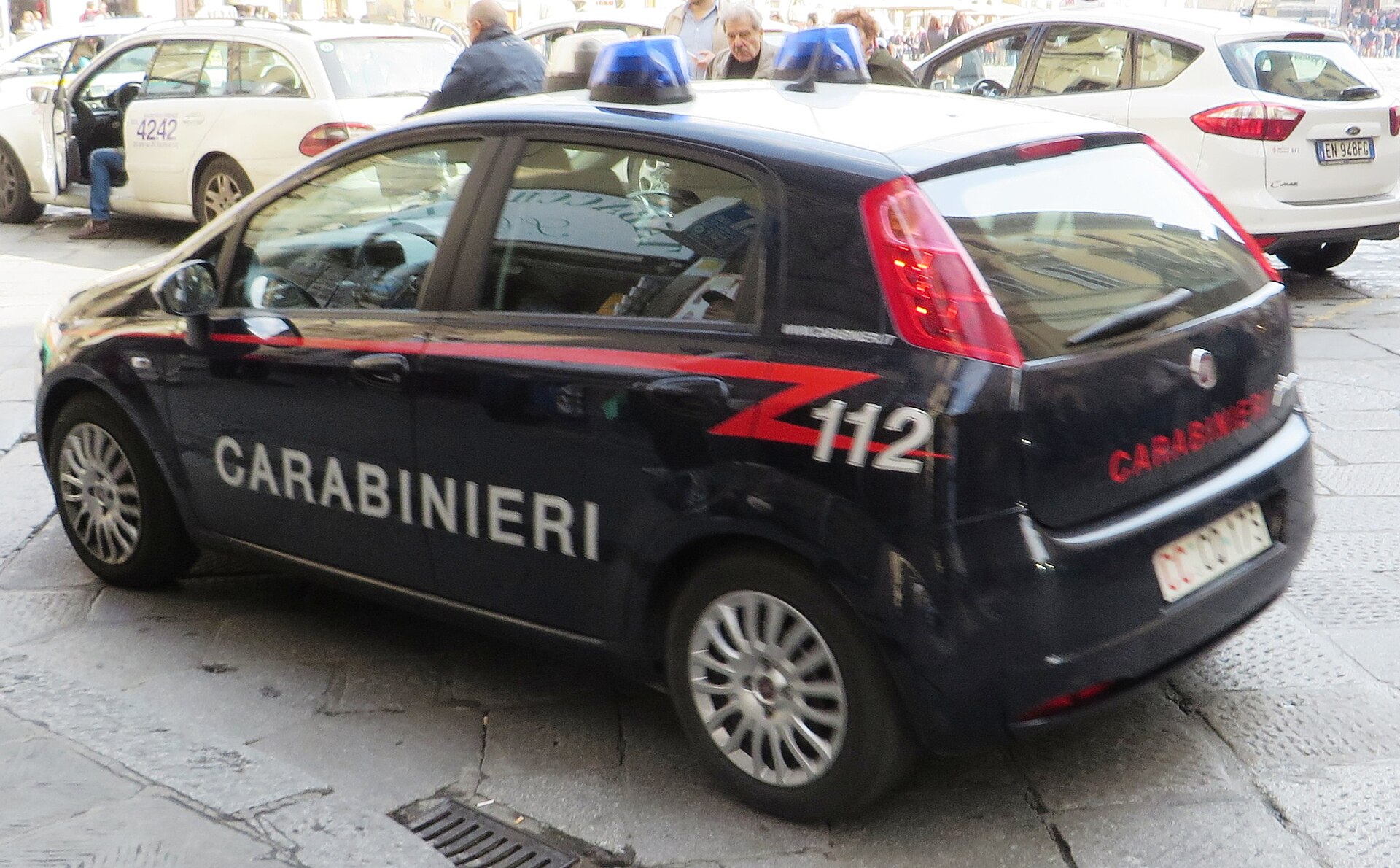
The Carabinieri, the national gendarmerie force operating under dual defense and interior oversight, provided broad territorial coverage, riot control contingents, and dedicated intelligence units across all contested sectors.
The Guardia di Finanza, Italy’s financial and customs policing agency, contributed substantial reinforcement quotas for perimeter containment, maritime processing, and territorial interdiction operations.
The Corpo Forestale dello Stato, the state environmental policing corps, was integrated into territorial task forces, particularly in alpine valleys and forested operational zones around disputed construction sites.
The Italian Armed Forces, deployed under national security provisions including statutory territorial control frameworks, provided static garrison support in sensitive areas such as Chiomonte and the Abruzzo reconstruction zones.
The Strategic Counter-Terrorism Analysis Committee (CASA), an inter-agency intelligence coordination body, handled high-level threat assessments and strategic counter-terrorism alignment across police and intelligence disciplines.
Critical Analysis of the Evidence: Resources, Flashpoints, and Security Realities
A rigorous examination of security data demonstrates how domestic unrest drove an unprecedented movement of uniformed personnel across Italy. In 2013 alone, national authorities mobilized a staggering total of 950,612 reinforcement units for public order and safety requirements. The operational burden fell overwhelmingly on two primary corps: the Polizia di Stato accounted for 474,864 units (50 percent), while the Carabinieri deployed 384,895 units (40 percent). The Guardia di Finanza supplied 89,970 units (9 percent), with the remaining 883 units (1 percent) provided by the Corpo Forestale dello Stato.
The scale of public demonstration was substantial: leaving aside sporting and religious gatherings, 2013 registered 10,287 major public order events. Labor and employment disputes constituted the single largest category with 3,939 demonstrations, reflecting widespread workplace distress, followed by 2,717 political gatherings, 718 environmental defense events, 461 student mobilizations, 384 immigration rallies, 104 anti-militarist protests, and 1,964 general civic events. By comparison, labor-specific rallies had reached 3,485 in 2011, showing an escalating trajectory of workplace conflict as economic pressures persisted.
The physical toll of these confrontations shifted noticeably between the two baseline years. In 2011, public order clashes resulted in 81 arrests and 1,190 persons reported at large, but caused severe law enforcement casualties: 484 Polizia di Stato officers, 191 Carabinieri, 33 Finanzieri, 1 Forestale officer, and 1 local police officer were injured, alongside 122 civilians. By 2013, criminalization metrics rose sharply even as officer injuries declined: 171 individuals were arrested and 2,947 reported at large, while injuries affected 333 police officers, 59 Carabinieri, 26 Finanzieri, 5 municipal officers, and 137 civilians.
A critical comparative focal point is the Susa Valley, where the Chiomonte TAV construction site evolved into a permanent tactical theater. Between June 27, 2011, and December 31, 2011, the Turin Provincial Public Security Authority was assigned 116,256 reinforcement units (47,978 Polizia, 47,978 Carabinieri, 18,760 Guardia di Finanza, and 1,540 Forestale). In addition, military contingents operated in the valley: 275 armed forces personnel from January 1 to September 30, 2011, reduced to 230 through year-end.
By 2013, the Susa Valley deployment grew even more resource-intensive. The Turin Provincial Authority received 130,150 specialized reinforcement units (54,340 Polizia, 53,340 Carabinieri, 21,160 Guardia di Finanza, and 310 Forestale). Furthermore, site security required a continuous military garrison: from January 1 to October 9, 2013, an active contingent of 215 military personnel operated daily under the 4,250-strong national territorial control framework. Following repeated sabotages and tactical assaults, the Turin security authority reinforced the site from October 10 to December 31, 2013, adding another 200 soldiers daily, maintaining a permanent military footprint of 415 troops at a single infrastructure perimeter.
State personnel were simultaneously divided across multiple structural emergencies. Migration management absorbed 215,660 reinforcement units in 2013 (84,810 Polizia, 90,420 Carabinieri, and 40,430 Guardia di Finanza). In Abruzzo, where CIPE approved reconstruction financing on December 21, 2012, statutory provisions under Decree-Law No. 43 of April 26, 2013 (converted into Law No. 71 of June 24, 2013) locked in a dedicated surveillance force of 135 soldiers throughout 2013 in coordination with defense and territorial cohesion ministries.
Stadium policing also underwent substantial tactical changes. In 2011, authorities monitored 2,900 soccer matches (375 Serie A, 473 Serie B, 1,426 Lega Pro, 30 international, and 596 other games). By 2013, monitored matches dropped 8.1 percent to 2,712 matches (371 Serie A, 458 Serie B, 1,175 Lega Pro, 37 international, 671 other matches). Despite fewer matches, reinforcement personnel deployed to professional leagues rose 9 percent from 66,288 in 2012 to 71,362 in 2013. The security environment produced mixed outcomes: tear gas deployments dropped sharply to 18 matches (-125 percent), civilian injuries fell 9.1 percent to 108, yet police injuries surged 28.8 percent to 103, steward injuries numbered 19, while arrests climbed 13.3 percent to 171 and reported individuals jumped 70.1 percent to 1,463, managed through 70 alert circulars and 50 national weekend coordination plans.
In the counter-terrorism domain, strategic intelligence assessments tracked shifting external and domestic threats. In 2011, CASA remained in permanent session from March 18 to November 10, evaluating 195 specific threat profiles (102 directly targeting Italy or its interests abroad, 93 targeting Western or moderate Arab partners with domestic spillover potential). Religious extremism surveillance in 2011 encompassed 5,402 monitored sensitive sites and 20,746 identity checks, resulting in 52 arrests and 42 administrative deportations. In 2013, CASA convened 51 times (50 ordinary sessions and one extraordinary session on September 12 with the Interior Minister), assessing 266 topics and 164 specific threats against state interests.
Domestic subversive landscapes showed a marked structural evolution. While traditional Marxist-Leninist terror organizations registered zero claimed attacks in both 2011 and 2013 due to investigations dismantling historic Red Brigades networks, insurrectionary anarchist structures escalated direct actions. The transnational network call issued in November 2010 and January 2011 by Greece’s Conspiracy of Fire Cells materialized in targeted attacks, including the December 9, 2011 mail bomb that exploded at the Equitalia headquarters, severely injuring its director general.
In the hearing held on October 30, 2013, before the Court of Genoa, two handwritten documents were produced in which the defendants claimed responsibility for the attack, declaring themselves the sole members of the Olga Cell/FAI.
On November 12, 2013, the Court of Genoa sentenced defendants Alfredo Cospito and Nicola Gai to prison terms of 10 years and 8 months, and 9 years and 4 months respectively, for terrorist attempt, illegal weapons carrying, and aggravated theft under terrorist aggravating circumstances. Meanwhile, investigative pressure on organized crime continued under the consolidated Antimafia Code (Legislative Decree No. 159 of September 6, 2011, reproducing Article 5 of Decree-Law No. 345/1991), yielding 146 major anti-mafia operations and 1,679 arrests throughout 2013.
Transparency and Legal Framework
The documentary foundation of this dossier rests upon official annual reports presented to the Italian Parliament regarding public order and security operations. These primary source records include the official state security reports published by the Ministry of the Interior for operational years 2011 and 2013, detailing institutional statistics, judicial outcomes, and force deployment registries.
Under Article 5 of Italian Law No. 633 of April 22, 1941, official texts issued by the State and public administrative bodies are excluded from copyright restrictions and belong fully to the public domain. These public records are accessible via institutional archives maintained by the Ministero dell’Interno (2011 Report) and the Ministero dell’Interno (2013 Report). Systematic examination of these statutory records provides vital civic transparency regarding state resource distribution and law enforcement governance.