
Executive Lead
The structural management of public security and state order requires an ongoing balance between democratic freedoms, territorial protection, and the systemic mobilization of armed institutions. Official security assessments reveal the evolving operational burden carried by law enforcement agencies facing labor conflicts, major infrastructure opposition, migration dynamics, and evolving terrorist threats across the national territory. Examining the operational scale of state interventions across key reporting periods provides essential public insight into how administrative powers allocate tactical personnel and deploy military reinforcement contingents.
Historical and Geopolitical Context
Between 2012 and 2015, the Italian security apparatus operated within a landscape characterized by socio-economic transitions, evolving protest paradigms, and elevated counter-terrorism requirements. Economic indicators during 2015 recorded a gradual recovery compared to the previous year, yet structural economic tensions continued to manifest through widespread industrial actions and organized citizen assemblies. Simultaneously, regional instability across North Africa and the Middle East generated continuous operational demands along southern maritime borders, requiring sustained administrative focus and extensive reinforcement logistics.
Public assemblies throughout this period demonstrated distinct operational patterns. In 2013, national authorities registered 10,287 demonstrations of significant public order interest, which included 2,717 gatherings addressing political matters, 3,939 focused on union and employment concerns, 461 student mobilizations, 384 regarding immigration issues, 718 environmental rallies, 104 anti-militarist protests, and 1,964 covering various other topics. Law enforcement interventions during these events resulted in 171 arrests, 2,947 individuals reported at liberty, while 333 officers of the Polizia di Stato, 59 Carabinieri, 26 financial police officers, 5 local police officers, and 137 civilians sustained injuries.
By 2015, the overall volume of public events remained elevated, with 10,581 significant demonstrations taking place across the country, excluding religious and sporting events. The topical distribution included 4,031 political gatherings, 3,877 union and employment protests, 437 student assemblies, 696 demonstrations focused on immigration matters, 618 environmental initiatives, 199 pacifist gatherings, and 723 on miscellaneous subjects. During these 2015 assemblies, 157 individuals were arrested, 3,405 were reported at liberty, and physical injuries were recorded for 153 civilians alongside 260 police operators, comprising 212 members of the Polizia di Stato, 32 from the Arma dei Carabinieri, 7 from the Guardia di Finanza, 2 from the Polizia Penitenziaria, and 7 from the Polizia Locale.
Key Institutional Actors and Judicial Entities
The operational framework of internal order relies on coordinated action among specialized civilian, military, and judicial bodies operating under defined statutory remits. Primary national policing duties are shared by the Polizia di Stato, the Carabinieri, and the Guardia di Finanza, with specialized environmental oversight formerly supported by the Corpo Forestale dello Stato. Inter-force coordination operates through provincial authorities of public security, working in tandem with the national intelligence apparatus to monitor systemic risks, organized crime, and emerging forms of violent extremism across urban and rural jurisdictions.
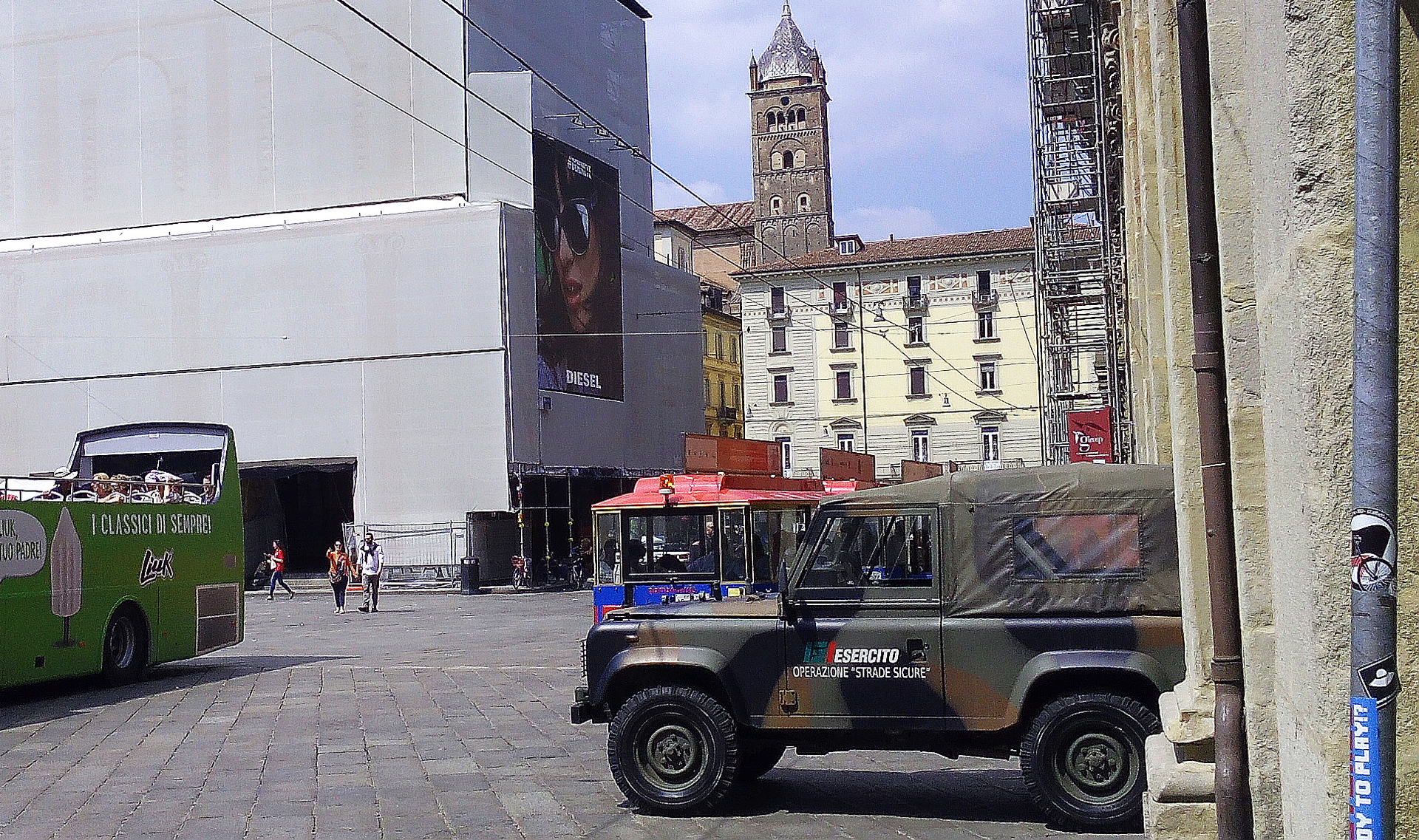
Territorial defense operations and fixed-site surveillance involve regular military personnel under the statutory umbrella of the national employment plan known as Operazione Strade Sicure, pursuant to article 7 bis, paragraph 2, of Decree-Law 23 May 2008, n. 92, converted with amendments by Law 24 July 2008, n. 125. The plan established an operational framework deploying thousands of armed forces personnel in static security and urban surveillance tasks. This inter-institutional matrix interfaces directly with judicial authorities, such as the Tribunale di Genova, which adjudicates subversive and insurgent crimes threatening institutional safety and public continuity.
Legislative tools governing these interventions also include Decree-Law 14 August 2013, n. 93, converted into Law 15 October 2013, n. 119, addressing emergency security measures and gender-based violence criminological assessments, as well as the organized crime provisions established under Legislative Decree 6 September 2011, n. 159 (art. 109). Strategic security coordination is reinforced through permanent ministerial evaluation bodies monitoring both international jihadist networks and domestic radical factions.
Specific judicial milestones within the reporting period highlighted direct challenges from insurrectionary networks. Notably, legal proceedings before the judicial court of Genoa addressed the armed attack claimed by the Nucleo Olga/FAI. During the hearing on 30 October 2013, two defendants submitted written manuscripts claiming sole responsibility for the attack. In the subsequent ruling on 12 November 2013, the court sentenced Alfredo Cospito to 10 years and 8 months of imprisonment, and co-defendant Gai to 9 years and 4 months of imprisonment, for crimes including attack for terrorist purposes, unlawful weapons possession and carrying, and aggravated theft with terrorist intent.
Critical Evidence Analysis and Operational Deployments
Logistical Burden and Inter-Force Reinforcement Allocation
The quantitative records demonstrate a massive commitment of supplemental law enforcement resources across national administrative jurisdictions. In 2013, total reinforcement movements for national public order and security requirements mobilized 950,612 units. This total deployment comprised 474,864 units of the Polizia di Stato (representing 50%), 384,895 units of the Arma dei Carabinieri (representing 40%), 89,970 units of the Guardia di Finanza (representing 9%), and 883 units of the Corpo Forestale (representing 1%).
Per le complessive esigenze di ordine e sicurezza pubblica, durante il periodo in esame, sono state impiegate 1.261.448 unità di rinforzo, di cui 647.359 della Polizia di Stato (51,3%), 472.608 dell’Arma dei Carabinieri (37,5%), 129.659 della Guardia di Finanza (10,3%) e 11.822 del Corpo Forestale (0,9%).
In 2015, total national reinforcement personnel rose to 1,261,448 units, illustrating a significant expansion in operational tasking. The operational breakdown placed 647,359 units with the Polizia di Stato (51.3%), 472,608 with the Arma dei Carabinieri (37.5%), 129,659 with the Guardia di Finanza (10.3%), and 11,822 with the Corpo Forestale (0.9%). These distribution ratios show that while the civilian state police maintained the majority share of public order operations, the military gendarmerie and financial police consistently absorbed substantial public safety duties beyond their primary tax and financial investigation duties.
Territorial Flashpoints and Critical Infrastructure
Territorial friction surrounding infrastructure development generated concentrated logistical mobilization, most visible in the province of Turin. During the entire year 2013, the Provincial Public Security Authority of Turin was assigned 130,150 reinforcement units, consisting of 54,340 Polizia di Stato, 53,340 Carabinieri, 21,160 Guardia di Finanza, and 310 Corpo Forestale dello Stato personnel. Static surveillance at the infrastructure worksite utilized a daily contingent of 215 military personnel from the national 4,250-strong quota between 1 January 2013 and 9 October 2013. Following repeated attacks and sabotage incidents at the TAV construction site in Chiomonte, the security apparatus was augmented from 10 October to 31 December 2013 with an additional daily detachment of 200 military personnel.
By 2015, containment operations in the same operational theater mobilized 72,824 reinforcement units assigned to the Turin Provincial Authority, split into 29,342 Polizia di Stato, 29,342 Carabinieri, and 14,140 Guardia di Finanza personnel. Daily on-site protection involved 308 military service members drawn from the national 4,800-personnel Strade Sicure deployment. The operational environment remained hazardous: from the commencement of worksite operations in Val Susa on 23 May 2011 to 31 December 2015, aggregate physical casualties reached 374 injured among police forces (243 Polizia di Stato, 110 Carabinieri, 20 Guardia di Finanza, 1 Corpo Forestale dello Stato) and 2 injured among Armed Forces personnel. In 2015 alone, out of 40 significant demonstrations held in that context, 28 registered civil unrest and unlawful conduct, including confrontations where a bloc of approximately 1,000 demonstrators launched firecrackers and smoke devices from a distance against security cordons.
Border Management, Emergency Logistics, and Sports Oversight
Immigration-related management represented another structural driver of troop deployments. Reinforcement units assigned to immigration tasks totaled 215,660 personnel in 2013 (84,810 Polizia di Stato, 90,420 Carabinieri, and 40,430 Guardia di Finanza). In 2015, personnel allocations for immigration contingencies accounted for 216,520 reinforcement units (95,530 Polizia di Stato, 87,905 Carabinieri, and 33,085 Guardia di Finanza), supported by dedicated Armed Forces contingents under the 4,800-unit national plan.
Civil protection and post-disaster territorial control also incorporated military units. Following the 21 December 2012 CIPE financial allocations for reconstruction efforts in the Abruzzo region, article 8, paragraph 7 of Decree-Law 26 April 2013, n. 43, converted by Law 24 June 2013, n. 71, maintained a static surveillance detachment of 135 military personnel operating in agreement with the Ministries of Defense and Territorial Cohesion.
Professional sports management reflected shifting enforcement strategies. In 2013, authorities monitored 2,712 soccer matches (-8.1% compared to 2012), including 371 Serie A, 458 Serie B, 1,175 Lega PRO First and Second Division, 37 international, and 671 other matches. During 2013, tear gas was deployed in 18 encounters (-125% compared to 2012), 108 civilians were injured (-9.1%), 171 were arrested (+13.3%), and 1,463 were reported at liberty (+70.1%). Police injuries reached 103 (+28.8%), while steward injuries totaled 19 (-9.6%). Reinforcement personnel for professional Serie A, B, and Lega PRO matches rose by 9% in 2013 to 71,362 units (from 66,288 in 2012), supported by 70 alert circulars and 50 national weekend management plans. By 2015, monitored football fixtures totaled 2,624 (-1.76% vs 2014), comprising 391 Serie A, 471 Serie B, 1,055 Lega PRO (groups A-B-C), 42 international, and 665 other matches, while reinforcement deployments for the primary professional leagues decreased by 9.79% to 92,098 units (down from 102,095 in 2014).
Counter-Terrorism Operations and Organized Crime Interventions
Strategic counter-terrorism monitoring recorded intensive activity across distinct operational vectors. The dedicated coordination body, placed in permanent session from September 2014 to confront heightened jihadist risks linked to the Islamic State, held 57 meetings in 2015 (including 7 extraordinary sessions), examined 578 operational topics, and evaluated 308 critical notifications, while updating specialized operational handbooks regarding returning foreign fighters. In 2013, the same body had convened 51 times (50 ordinary sessions and one on 12 September 2013 attended by the Minister of the Interior), evaluating 266 topics and 164 specific threats directly or indirectly concerning state interests.
Regarding structured domestic extremist organizations, state records confirmed that in both 2013 and 2015, no claimed attacks were carried out by structured organizations rooted in Marxist-Leninist ideology. Official assessments attributed this operational dormancy to investigative operations conducted from the early 2000s onwards, which dismantled both the militarist and movement factions of the Red Brigades. Meanwhile, anti-mafia investigative actions maintained extensive operational output; during 2013 alone, targeted police operations concluded 146 major investigations against mafia-type organized crime groups, resulting in the arrest of 1,679 individuals across the country.
Transparency and Legal Framework
The factual data, operational statistics, and statutory references compiled in this investigative dossier originate directly from official annual reports presented to the Italian Parliament on internal security, police operations, and public order administration. These documents constitute official administrative records published under statutory transparency obligations and made accessible via institutional portals.
Pursuant to Article 5 of Italian Law 22 April 1941, n. 633, official acts of the State and public administrations are exempt from copyright protection and reside within the public domain. These verification records remain accessible through official state repositories for parliamentary oversight and public accountability at interno.gov.it.