
Public Order Operations and Institutional Mobilization
Official parliamentary records reveal the structural scale and human cost of maintaining public order across Italy during consecutive operational cycles. Documented deployments illustrate how civilian protest management, infrastructural defense, and border monitoring concentrated state security apparatuses into permanent high-intensity logistics.
The administrative burden placed on national law enforcement agencies extended far beyond routine policing, requiring hundreds of thousands of specialized personnel transfers. Evaluating these operational shifts exposes how domestic security strategies adapted to labor unrest, major infrastructure conflicts, and internal judicial accountability.
Historical and Geopolitical Context
Between 2010 and 2013, Italy experienced compounded socioeconomic friction that reshaped domestic security priorities. The volume of public demonstrations expanded substantially, shifting from approximately 2,900 protest events recorded in 2009 to roughly 3,400 initiatives in 2010, marked by spontaneous strikes, blockades, and labor actions. By 2012, recorded demonstrations of significant interest to public order reached 11,212 national events, excluding religious and sporting fixtures.
This escalation was driven primarily by workplace and economic grievances. Of the 11,212 events documented in 2012, union and occupational disputes accounted for 4,781 demonstrations, representing the largest single category of public assembly. Political themes generated 1,798 demonstrations, environmental concerns accounted for 1,035 gatherings, student mobilizations comprised 836 events, immigration issues represented 349, peace initiatives totaled 250, electoral events numbered 135, and 2,028 focused on miscellaneous topics.
A central geographic flashpoint emerged at the high-speed rail construction perimeter in the Susa Valley. Under Article 19, paragraph 1, of Law No. 183 of November 12, 2011, the work sites in the Municipality of Chiomonte were legally designated as areas of strategic national interest, establishing a distinct statutory framework that enabled combined police and military protection.
“Le aree ed i siti del Comune di Chiomonte, individuati per l’installazione del cantiere della galleria geognostica e per la realizzazione del tunnel di base della linea ferroviaria Torino-Lione, costituiscono aree di interesse strategico nazionale.”
Concurrently, domestic counter-terrorism structures managed legacy judicial proceedings against historical extremist formations while responding to emergent armed cells. On May 28, 2012, appeal proceedings concluded with convictions against eleven militants of the Partito Comunista Politico - Militare, an organization dismantled in February 2007. Later that year, on November 7, 2012, an appellate court sentenced three members of Per il Comunismo - Brigate Rosse for political conspiracy and arms possession.
The counter-extremism landscape shifted into active judicial adjudication in 2013 following the armed attack claimed by Nucleo Olga/FAI. During court proceedings in Genoa on October 30, 2013, written manuscripts were submitted wherein the defendants claimed sole responsibility, leading to formal prison sentences delivered on November 12, 2013.
Institutional Actors and Security Apparatus
The institutional architecture responsible for executing domestic security measures engaged several core national entities:
- Polizia di Stato: Provided 426,752 reinforcement units in 2012, representing 49.5% of total national reinforcement movements, and sustained 530 injured personnel during 2012 demonstrations, with an additional 333 injured in 2013.
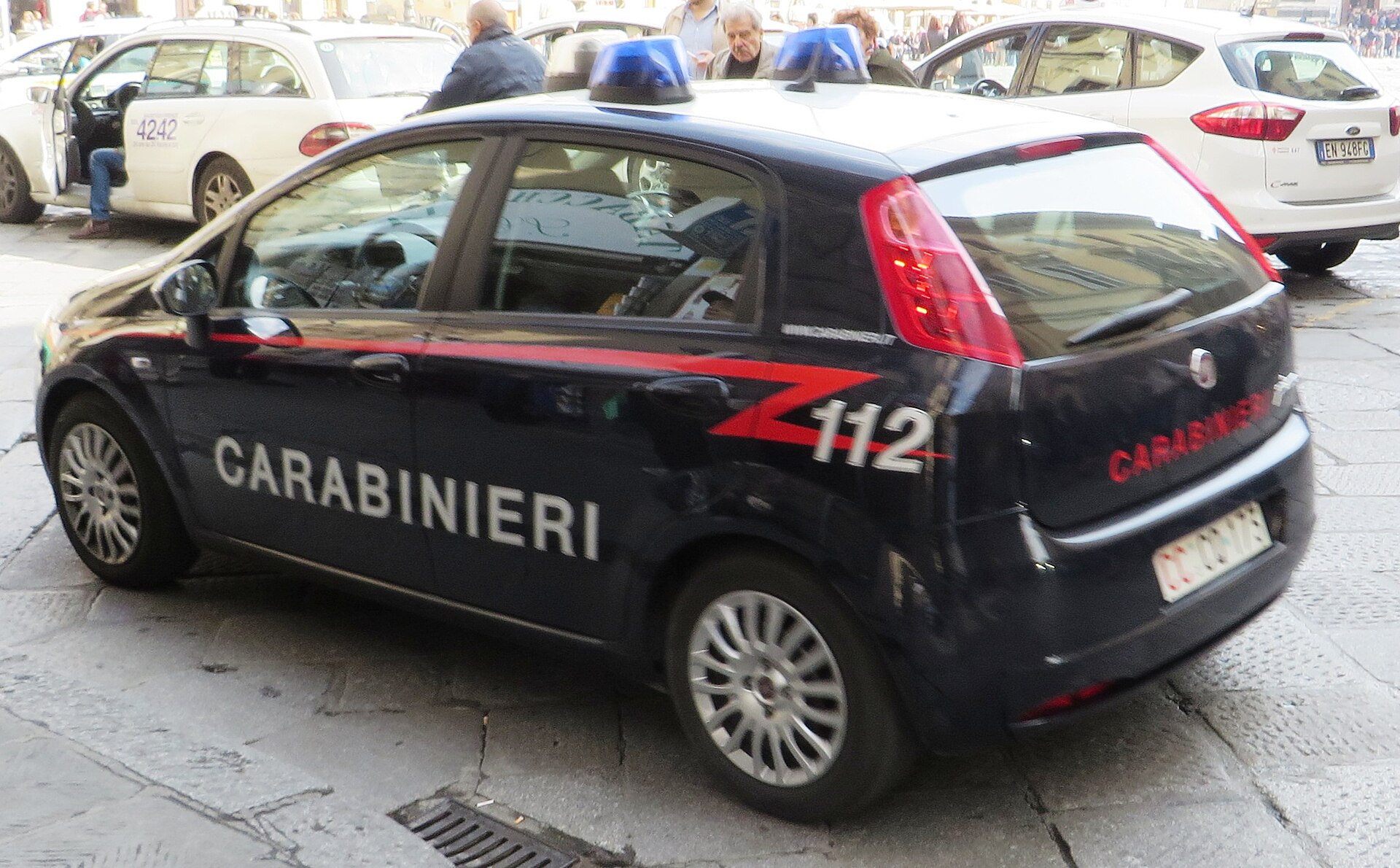
- Carabinieri: Supplied 363,210 reinforcement units in 2012, accounting for 42.1% of national movements, sustaining 119 injuries during 2012 public events and 59 injuries in 2013.
- Guardia di Finanza: Deployed 68,203 reinforcement personnel in 2012, representing 7.9% of national mobilizations, with 18 injuries recorded in 2012 and 26 in 2013.
- Corpo Forestale dello Stato: Contributed 4,616 units to national reinforcement operations in 2012 (0.5%), including dedicated allocations to the Turin provincial security authority.
- Forze Armate Italiane: Deployed military contingents directly into infrastructural static security at Chiomonte and historical post-disaster zones in Abruzzo.
Critical Analysis of Operational Evidence and Institutional Data
A systematic review of the operational records demonstrates how state resources were redistributed to meet specific territorial containment requirements. In 2012 alone, total national reinforcement movements across all branches comprised 862,781 deployed personnel. The Turin provincial public security authority consumed a massive portion of these resources, receiving 150,220 reinforcement units in 2012 (63,855 Polizia di Stato, 63,855 Carabinieri, 21,020 Guardia di Finanza, and 1,490 Corpo Forestale dello Stato).
During the critical construction expansion phase between February 26 and March 1, 2012, the Chiomonte site required an extraordinary allocation of 1,860 daily reinforcement units alongside specialist assets. Military staffing at the site was augmented from the 150 personnel deployed on July 20, 2011, to 220 armed forces personnel beginning January 1, 2012. By 2013, Turin reinforcements remained high at 130,150 units (54,340 Polizia di Stato, 53,340 Carabinieri, 21,160 Guardia di Finanza, and 310 Corpo Forestale dello Stato), with military contingents at Chiomonte reinforced by an additional 200 daily personnel from October 10 to December 31, 2013, adding to the 215 troops already present.
Public security deployments linked to migration logistics showed an upward trajectory across reporting cycles. While migration-related operations required 155,260 reinforcement units in 2012 (60,960 Polizia di Stato, 60,960 Carabinieri, and 33,340 Guardia di Finanza), the total surged to 215,660 units in 2013 (84,810 Polizia di Stato, 90,420 Carabinieri, and 40,430 Guardia di Finanza). This operational escalation underscores the reallocation of territorial force capacity toward southern border controls and maritime transit points.
Physical casualties and legal interventions during public demonstrations reflect sustained operational friction. In 2012, public order events resulted in 204 arrests, 2,973 individuals reported at liberty, and injuries sustained by 530 police officers, 119 carabinieri, 18 financial guards, 9 local police officers, and 222 civilians. In 2013, similar events resulted in 171 arrests, 2,947 individuals reported at liberty, and physical injuries to 333 police officers, 59 carabinieri, 26 financial guards, 5 local police officers, and 137 civilians. In the earlier 2010 cycle, protests generated 129 arrests, 1,279 individuals reported at liberty, with injuries recorded among 234 police officers, 34 carabinieri, 9 financial guards, 1 local police officer, and 95 civilians.
The documents also reveal the scale of emergency policing following environmental crises and post-disaster recovery. Following the earthquakes of May 20 and May 29, 2012, in Emilia-Romagna, a dedicated security contingent was deployed from June 10 to September 15, 2012, to protect settlements from criminal intrusion. Similarly, in Abruzzo, where reconstruction funds were allocated by CIPE on December 21, 2012, security arrangements under Article 8, paragraph 7, of Decree-Law No. 43 of April 26, 2013, maintained 135 military personnel for site vigilance throughout 2013.
Sporting event monitoring presents an interesting dynamic within security logistics. In 2012, authorities monitored 2,951 football matches (400 Serie A, 495 Serie B, 1,305 Lega PRO, 39 international, 712 other), utilizing 66,288 reinforcement units for professional leagues compared to 67,081 in 2011. Tear gas was deployed in 8 matches, with 99 civilians injured, 151 arrested, and 860 reported at liberty, alongside 80 police injuries and 21 steward injuries. In 2013, monitored matches dropped to 2,712 (371 Serie A, 458 Serie B, 1,175 Lega PRO, 37 international, 671 other), yet police injuries rose to 103 while steward injuries stood at 19, managed through 70 alert circulars and 50 national weekend security plans.
Threat intelligence records illustrate the broader national risk assessment apparatus. During 2012, security evaluations reviewed 179 specific threat alerts (64 concerning Italy or national interests abroad, 115 concerning other Western nations). In 2013, the assessment committee convened for 51 meetings (including a session on September 12, 2013, attended by the Minister of the Interior), reviewing 266 topics and evaluating 164 specific threats directly or indirectly affecting state interests. Meanwhile, organized crime investigations in 2013 concluded 146 major anti-mafia operations resulting in 1,679 arrests.
Judicial sentencing documented in the records highlights the resolution of specific terrorism cases. Following the Genoa proceedings, the court convicted defendants Cospito and Gai on November 12, 2013, imposing prison terms of 10 years and 8 months, and 9 years and 4 months, respectively, for terrorist attack, weapon possession, and aggravated theft under terrorist aggravating circumstances.
Transparency and Legal Framework
This investigation is constructed entirely from official parliamentary reports and institutional records submitted by the Ministry of the Interior to the Italian Parliament:
- Relazione al Parlamento anno 2012 — Ministero dell’Interno (interno.gov.it)
- Relazione al Parlamento anno 2013 — Ministero dell’Interno (interno.gov.it)
- Relazione 2010 al Parlamento — Polizia di Stato (poliziadistato.it)
- Relazione del Ministro dell’Interno sulle Commissioni Straordinarie — Dipartimento per gli Affari Interni e Territoriali (dait.interno.gov.it)
Under Article 5 of Italian Law No. 633 of April 22, 1941, official texts of state and public administrative acts are exempt from copyright protection and reside permanently within the public domain, guaranteeing open civic examination and non-proprietary scrutiny.