
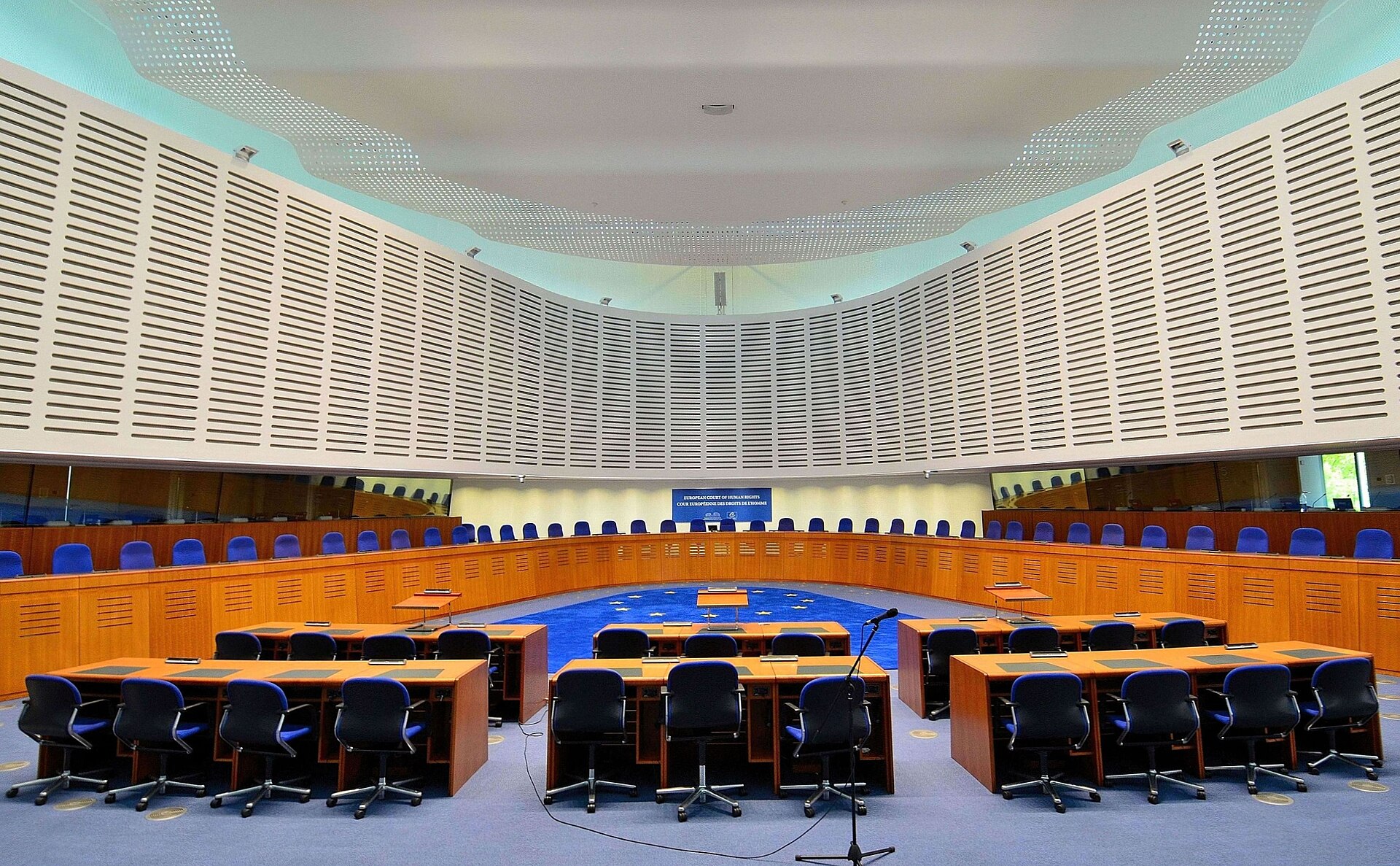
Executive Summary: Public Interest and Judicial Compliance
The operational interface between domestic high courts and international human rights jurisprudence constitutes a critical bulwark against arbitrary state detention and administrative overreach. When national statutory reforms alter the execution of custodial measures, sovereign authorities frequently face scrutiny regarding whether preexisting deprivation-of-liberty orders retain valid legal basis under supranational scrutiny. Examining institutional records reveals how member states navigate the tension between entrenched national rulings and evolving convention standards.
Understanding these procedural friction points is essential for public accountability, as state compliance directly impacts fundamental liberties, the legality of detention regimes, and institutional transparency. Recent jurisprudence underscores persistent systemic vulnerabilities surrounding compulsory confinement, retrospective statutory shifts, and the procedural right to effective domestic remedies. This dossier investigates how high courts harmonize national mandates with supranational human rights obligations.
Historical and Institutional Evolution of Human Rights Oversight
The supervisory architecture established under the European human rights framework functions through continuous dialogue, structured appeals, and periodic judicial review across member jurisdictions. Over decades, the enforcement of convention safeguards has evolved from isolated treaty interpretations into an active mechanism directly reviewing domestic penal execution and administrative consistency. National supreme tribunals maintain dedicated internal working groups to track, review, and assimilate supranational case law.
Within this evolving environment, judicial authorities across Belgium, Italy, France, Portugal, Russia, Poland, Romania, and Croatia have confronted complex questions regarding custodial legitimacy. Legislative updates in member countries often create severe procedural challenges when domestic courts must determine whether historical confinement orders survive subsequent statutory reforms. The legal integrity of detention relies entirely on the clarity and predictability of the underlying legislative authorization.
The procedural timeline highlights several critical junctures where domestic rulings clashed with rights standards. In 2017, formal complaints challenged the continuous confinement regimes enforced under Belgian jurisdiction, pointing to systemic friction in statutory modifications. By late 2020 and throughout the second half of 2021, high courts across Europe systematically registered and processed key decisions addressing custodial legality, political association rights, and procedural detention guarantees.
Identified Institutional Actors and Litigants
The institutional architecture governing these proceedings encompasses supranational tribunals, domestic supreme courts, sovereign state governments, and individual litigants challenging administrative deprivation of liberty. Key institutional and private entities appearing across the judicial records include:
- Corte europea dei diritti dell’uomo (European Court of Human Rights): The international judicial body tasked with adjudicating alleged violations of the convention, operating through its various sections and the Grand Chamber.
- Corte suprema di cassazione (Supreme Court of Cassation): The highest judicial authority in the Italian legal system, responsible for reviewing legal consistency and publishing bi-annual jurisprudence bulletins through its dedicated working group.
- Radicali Italiani (and Associazione politica nazionale Lista Marco Pannella): Political and civil rights associations that initiated international proceedings concerning institutional and political participation rights.
- National State Authorities: The respondent governments of Belgium, Italy, France, Portugal, Russia, Poland, Romania, and Croatia, defending their respective domestic penal, administrative, and judicial frameworks.
- Individual Applicants: Litigants including Jimmy Denis, Derek Irvine, Miniscalco, Galan, Maestri, Karrar, Sanchez, M.P., Volodina, X., Succi, Spinelli, Ignat, and Marinoni, who sought supranational judicial determination of their convention rights.
Critical Evidence Analysis: Detention Legitimacy, Retroactivity, and Domestic Remedies
A rigorous examination of primary judicial documentation exposes substantial systemic friction between initial compulsory confinement orders and subsequent statutory modifications. In the proceedings initiated by Jimmy Denis and Derek Irvine against the Kingdom of Belgium, applicants challenged the ongoing execution of compulsory internment measures under Article 5 §§ 1 and 4, alongside Article 13. The foundational legal dispute centered on whether legislative modifications severed the legal basis required to sustain deprivation of liberty.
Domestic national courts had ruled that the internment orders issued in 2002 and 2007 were definitive, maintaining that Article 5 § 1 did not preclude the compulsory internment order and its subsequent execution phase from being governed by distinct legal rules. Consequently, domestic judges established that the deprivation of liberty retained a valid legal foundation rooted in the historical internment orders, despite the shifting legislative landscape.
«In entrambi i casi, dunque, il giudice nazionale, chiamato a pronunciarsi sulla legittimità della misura applicata ai ricorrenti, all’indomani della modifica legislativa in questione, aveva ritenuto che le decisioni emesse nei loro confronti fossero definitive e che l’articolo 5 § 1 CEDU non impedisse che un ordine di internamento obbligatorio e la successiva fase di esecuzione fossero disciplinati da norme diverse.»
The procedural trajectory of these applications reveals critical institutional mechanisms. After the initial review, the applications were referred under Article 43 of the Convention to the Grand Chamber. The public hearing, conducted on 21 October 2020 via videoconference due to the pandemic emergency, highlighted the technical complexity of harmonizing national statutory changes with supranational jurisprudence, including precedent established in earlier decisions such as the Buzadji doctrine.
Beyond Belgian detention cases, the judicial documentation illustrates an expansive breadth of human rights litigation across multiple sovereign states. Italian proceedings processed during the same timeframe included rulings such as Miniscalco, Galan, Maestri ed altri, Succi ed altri, Spinelli, and Marinoni, alongside distinct actions brought by the Associazione politica nazionale Lista Marco Pannella. Concurrently, supreme domestic case law, including the Italian Cassation ruling number 24414 of 6 July 2021 (deposited on 9 September 2021), reflected continuous judicial efforts to align national criminal procedure with Strasbourg jurisprudence.
The cross-jurisdictional record also catalogs critical international determinations across Europe, including Karrar c. Belgio, Sanchez c. Francia, M.P. c. Portogallo, Volodina c. Russia, X. contro Polonia, and Ignat c. Romania. What the official records reveal is a multifaceted judicial landscape where state authorities must constantly justify deprivation of liberty, administrative decisions, and executive oversight against binding procedural thresholds.
However, significant analytical questions remain open. Official bulletins summarize judicial outcomes and legal principles but do not reveal the internal administrative deliberations of national detention boards or the specific institutional delays occurring between statutory enactments and judicial reviews. This documentation gap underscores the need for ongoing public scrutiny into how domestic legal systems reconcile historical detention decrees with evolving international human rights guarantees.
Transparency, Source Provenance, and Legal Framework
The primary evidence underlying this dossier originates directly from official judicial records published by the Supreme Court of Cassation working group in its bi-annual jurisprudence bulletin for the second semester of 2021 (Bollettino Protocollo Cassazione-CEDU II 2021). The original document is archived and accessible via official institutional repositories at cortedicassazione.it.
Pursuant to Article 5 of Italian Law 633/1941 (L. 633/1941 art. 5), official texts of state acts, judicial rulings, and public administrative publications are excluded from copyright protection and reside permanently in the public domain. The dissemination and critical examination of these official records support public oversight, ensuring that institutional actions and supranational compliance mechanisms remain transparent and accessible to the international community.