
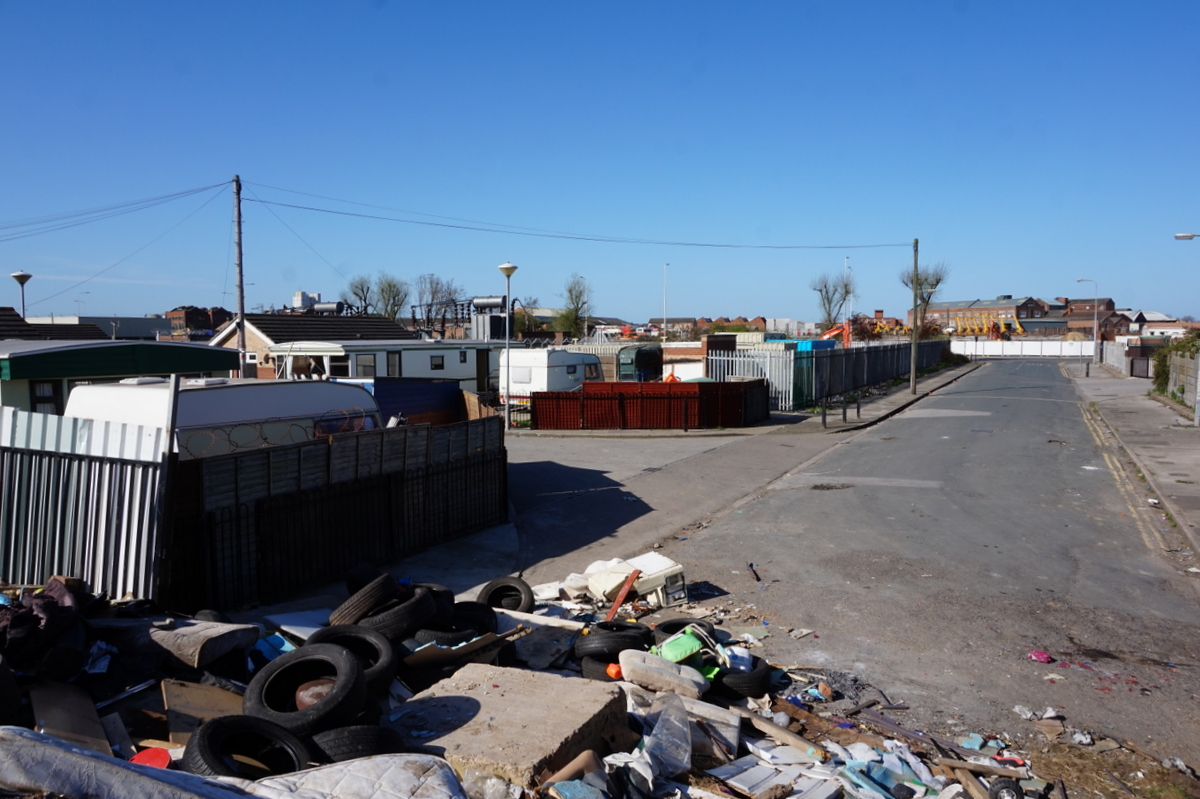
Lead: Public Interest and the Boundaries of State Protection
The formal recognition of substantive state failure regarding systemic environmental degradation marks a critical turning point in international human rights jurisprudence. When public authorities possess documented knowledge of toxic exposure for decades without deploying adequate structural remedies, administrative delays cease to be mere bureaucratic inefficiency and become direct human rights violations. This dossier dissects the institutional timeline, legislative inertia, and judicial determinations surrounding the protracted crisis across the municipalities of Campania.
The core of the issue lies in the threshold between environmental nuisance under private life protections and the positive obligation of the state to safeguard life itself. Official findings demonstrate that when institutional awareness dates back decades, ad-hoc administrative interventions fail to discharge the state’s positive legal duties. The implications reach far beyond regional boundaries, establishing strict accountability parameters for public administration across Europe.
Historical and Geopolitical Context: Chronology of an Administrative Failure
The roots of systemic illegal dumping in the region known as the Land of Fires reach back several decades, sustained by structural deficits in regional waste management and enforcement. Official state documentation confirms that competent public authorities were aware of widespread illicit dumping practices since at least 1988. Despite this early awareness, comprehensive surveillance systems and environmental remediation plans were omitted for generations, permitting toxic contamination to accumulate across vast agricultural and residential areas.
Between 1998 and 2015, the national legislature established seven separate parliamentary inquiry commissions dedicated specifically to investigating illicit waste management and its territorial impacts. These investigative bodies repeatedly documented organized trafficking networks, unpermitted burial sites, and open-air burning of hazardous industrial residues. However, the prolific findings generated by these parliamentary inquiries were not accompanied by timely, binding structural interventions or proportional administrative resource allocations.
The institutional timeline reveals significant legislative lagging across criminal and administrative frameworks. It was not until 2001 that the legal system introduced its first severe criminal offense specifically targeting illicit waste trafficking. Open-air burning and illegal waste incineration were not codified as distinct criminal offenses until 2013, leaving judicial authorities with inadequate statutory mechanisms during the preceding decades of peak unauthorized disposal.
The codification of comprehensive environmental crimes remained fragmented until the enactment of Law no. 68 in 2015, which finally introduced structured penal provisions to combat waste trafficking and unauthorized dumping. On the executive side, state authorities created a specialized Delegated Official position in 2012 and formulated a centralized Action Plan only in 2016. Remedial systemic action to resolve structural management dysfunctions in Campania dragged on until at least 2019, reflecting an administrative response characterized by continuous deferral.
Key Institutional Actors and Jurisdictional Framework
The institutional architecture surrounding this systemic failure spans supranational courts, national executive bodies, and affected civic groups. Understanding the operational dynamics requires examining each entity’s role throughout the multi-decade conflict:
- The European Court of Human Rights (ECHR): The international judicial body tasked with assessing state compliance with fundamental safeguards under Articles 2, 8, 34, and 46 of the Convention.
- The European Commission (European Commission): The executive organ of the European Union, which initiated formal infringement proceedings before the Court of Justice of the European Union in 2013 regarding non-compliance with systemic waste directives.
- The Court of Justice of the European Union (CJEU): The judicial authority that adjudicated critical precedents on environmental risk management and public health, including Case C-157/96 and Case C-297/08 regarding Italian waste management defaults.
- The Italian Parliamentary Inquiry Commissions: The seven investigative commissions instituted between 1998 and 2015 that mapped illegal dumping networks and produced extensive institutional records of regulatory failure.
- The Government of Italy: Represented by its state legal defense, which argued that measures taken through emergency decrees, delegated officials, and action plans met international legal standards.
- The Forty-One Resident Applicants: Private citizens residing within the affected municipalities who lodged formal applications in early 2014, establishing standing to challenge the state’s structural inaction.
Critical Analysis of the Evidence: Structural Inertia vs. Legal Obligations
The central evidentiary conflict centers on whether executive actions constituted an adequate and timely response or an ineffective posture masking regulatory default. In official proceedings, state representatives maintained that public authorities acted with rigor and promptness to counter environmental hazards. The defense argued that all appropriate measures were deployed to protect citizens’ rights and formally requested that scrutiny be restricted entirely to Article 8, which protects private and family life.
The evidentiary record dismantles this defense by contrasting official awareness against the actual timeline of public intervention. Jurisprudential principles established in landmark rulings, including Case C-157/96 (The Queen v. Ministry of Agriculture, Fisheries and Food ex parte National Farmers’ Union and Others, 5 May 1998), dictate that where substantial risks to human health exist, authorities must take preventive action without awaiting full realization of harm. State knowledge documented in 1988 versus legislative action delayed until 2001, 2013, and 2015 demonstrates an evidentiary gap exceeding twenty years.
The European Commission’s 2013 referral to the Court of Justice of the European Union for non-compliance with the ruling in Case C-297/08 further confirms that systemic deficiencies persisted long after initial judicial warnings. The appointment of a Delegated Official in 2012 and the adoption of an Action Plan in 2016 arrived more than a decade after the structural emergency was fully established across institutional records. Executive intervention remained slow, fragmented, and incomplete throughout the critical period.
By determining that arguments raised under Article 8 were subsumed within the substantive review of Article 2, international human rights jurisprudence established that prolonged environmental exposure linked to administrative failure falls directly under the right to life. Regarding just satisfaction under Article 41, the judicial authority reserved judgment on non-pecuniary damages for up to two years following the final judgment, leaving institutional monitoring and structural execution under Article 46 as ongoing compliance obligations.
Transparency and Legal Basis
This dossier is compiled from official institutional records, parliamentary inquiry proceedings, and final judicial acts issued by international and national authorities. The primary analysis examines the formal judgment delivered on 30 January 2025 regarding Italian state responsibility under Articles 2, 8, 34, and 46 of the European Convention on Human Rights.
“The absence of adequate surveillance and remediation plans, despite official awareness dating from at least 1988, combined with delayed criminal legislation until 2015, demonstrates a systemic failure to protect fundamental rights.”
In accordance with Article 5 of Italian Law no. 633/1941, official texts of state acts, legislative provisions, and judicial rulings are not subject to copyright and belong to the public domain. The complete source text and accompanying judicial summaries are maintained in public institutional repositories and can be accessed directly through official records at Corte di Cassazione Official Portal.