
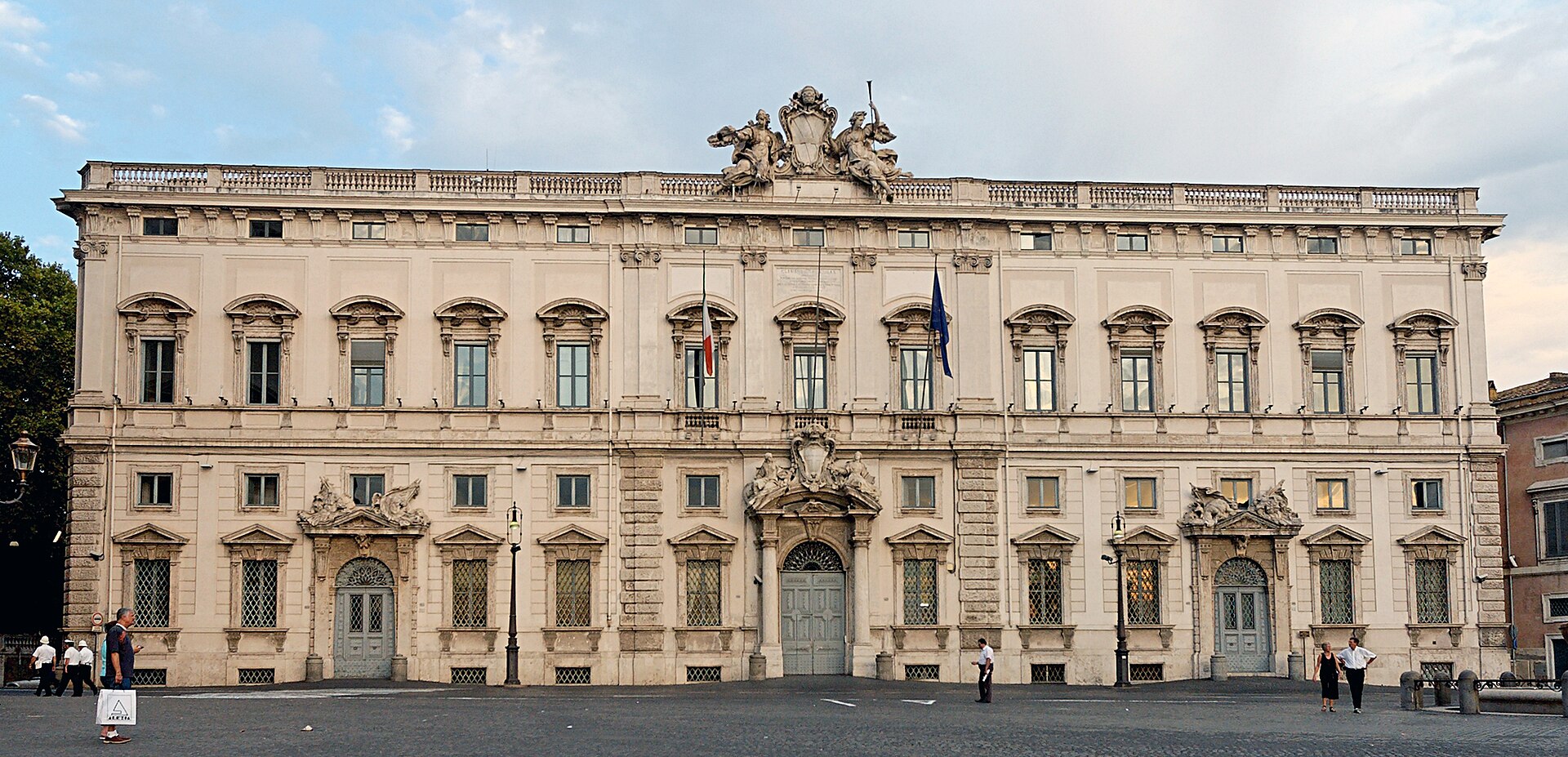
Public Interest and Constitutional Conflict
The boundary between democratic legislative immunity and financial accountability remains one of the most contentious battlegrounds in decentralized governance. When regional elected officials approve massive capital injections into publicly owned commercial enterprises, the collision between parliamentary prerogative and public accounting oversight tests the core architecture of institutional checks and balances.
Constitutional conflict case number 3 of 2021 addresses this institutional friction directly, focusing on whether audit judges can hold regional assembly members financially liable for legislative policy decisions. The case challenges the assertion of jurisdictional power over assembly votes, examining the limits of parliamentary protection when public treasury funds are deployed into commercial operations.
The dispute carries substantial financial implications for regional public finance, centered on a 60 million euro capital increase for the Saint-Vincent Resort and Casino approved by regional lawmakers. The resolution of this jurisdictional clash establishes legal parameters determining whether economic policy votes by regional councillors enjoy absolute constitutional protection or remain subject to judicial review for gross negligence and treasury damage.
Historical and Institutional Context
The institutional framework governing the Saint-Vincent gaming complex dates back to regional legislative interventions designed to anchor the local tourism economy in the alpine valley. Under regional law number 36 of 2001, the management of the gaming house was entrusted to Casinò de la Vallée spa, an entity structured with exclusive public shareholding reserved solely for the regional administration and internal local municipalities.
By 2009, regional authorities sought to restructure the business model of the hospitality and gambling complex through targeted legislative planning. Regional Law number 49 of 23 December 2009 established strategic guidelines aimed at optimizing development and relaunching both the casino and the adjoining Grand Hôtel Billia in Saint-Vincent, specifying that financial transfers must be anchored within annual regional budget laws.
As financial instability persisted within the operational management of the resort, the Regional Council approved a major capital strengthening plan involving a 60,000,000 euro recapitalization of Casinò de la Vallée spa. This massive allocation of public resources triggered immediate scrutiny from the regional audit prosecutor, who initiated fiscal liability proceedings against the individual councillors who voted in favor of the measure.
The jurisdictional confrontation escalated when the jurisdictional section of the Court of Audit for Valle d’Aosta issued ruling number 5 on 25 October 2018, holding elected officials accountable for public financial loss. That judgment was subsequently reformed in part by the Third Central Appellate Jurisdictional Section of the Court of Audit in ruling number 350 on 30 July 2021, prompting the Autonomous Region to raise a formal conflict of attribution before the Constitutional Court.
Key Institutional Actors and Legal Representatives
The primary applicant in this constitutional conflict is the Autonomous Region of Valle d’Aosta, represented before the court by administrative law specialist Giovanni Guzzetta. The regional government asserted that judicial penalties imposed on councillors for voting on economic measures violated constitutional prerogatives safeguarding legislative autonomy.
On the opposing side stands the President of the Council of Ministers, represented by State Attorneys Emanuele Feola and Leonello Mariani, defending the jurisdictional integrity of state judicial bodies. Intervening directly in his institutional capacity was the General Prosecutor of the Corte dei conti, Angelo Canale, asserting the audit judiciary’s power to evaluate administrative damage resulting from gross negligence.
Individual regional councillors, including parties designated in judicial filings as A. and L.T., mounted their defense through legal counsel Federico Sorrentino, seeking protection under statutory immunity clauses. The legal proceedings were adjudicated by the Constitutional Court of Italy under the presidency of Giuliano Amato, with Judge Silvana Sciarra serving as judge rapporteur during the public hearing conducted on 25 January 2022.
The legal framework anchors itself in Article 122, fourth paragraph, of the Italian Constitution, alongside Article 24 of the Special Constitutional Statute for Valle d’Aosta (Constitutional Law number 4 of 26 February 1948). These provisions establish that regional councillors cannot be called to answer for opinions expressed or votes cast in the exercise of their official statutory functions.
Critical Analysis of Evidence and Jurisdictional Limits
The central evidentiary question in this dispute is whether an assembly act approving a corporate recapitalization constitutes a political-legislative function or a purely administrative decision disguised as assembly deliberation. The Court of Audit maintained that executing a 60 million euro capital increase represents an administrative management act, which falls outside the protective scope of statutory legislative immunity.
«È dunque insufficiente la forma amministrativa dell’atto adottato per escludere la prerogativa dell’insindacabilità.»
The constitutional assessment established that the formal label or administrative vehicle of an assembly decision cannot be used to circumvent parliamentary prerogatives. The core question is whether the deliberation is structurally connected to the broader economic steering mandate of the legislative assembly, rather than the mechanical execution of day-to-day corporate management.
A critical procedural dilemma addressed in the case files concerns the admissibility of constitutional challenges brought against appellate court rulings rather than first-instance decisions. The state advocacy argued that the Region had forfeited its claim by failing to challenge the initial 2018 ruling, contending that acquiescence had crystallized the alleged constitutional infringement.
«Non può costituire motivo di inammissibilità del conflitto tra enti la mancata proposizione del ricorso a seguito della sentenza di primo grado, considerato che l’istituto dell’acquiescenza non trova applicazione nei giudizi per conflitto di attribuzione, stante l’indisponibilità delle attribuzioni costituzionali di cui si controverte.»
The evidentiary record reveals persistent structural questions regarding the financial governance of publicly owned gambling entities. While regional lawmakers claimed the 60 million euro investment was an indispensable public intervention to safeguard employment and regional assets, audit prosecutors argued that the venture channeled public funds into a chronically deficit-ridden commercial operation without viable market returns.
What the primary legal documents do not detail are the precise managerial balance sheets and operational forecasts presented to councillors prior to the vote. This evidentiary silence highlights the unresolved policy tension: the court examined whether the power to judge existed, leaving open the broader question of how public administrations can prevent capital erosion in state-controlled market entities without stripping lawmakers of their constitutional decision-making freedom.
Transparency and Legal Provenance
The factual analysis in this dossier is derived directly from the official ruling issued by the Constitutional Court of the Italian Republic in Judgment number 90 of 2022 (European Case Law Identifier: ECLI:IT:COST:2022:90), delivered following the public hearing of 25 January 2022 and registered on 13 April 2022.
This judicial act is public under Article 5 of Italian Law number 633 of 1941, which establishes that official texts of state and administrative institutions are in the public domain and free of copyright restrictions. The full record of the ruling, procedural interventions, and official legal maxims are accessible via the public portal of the Constitutional Court at cortecostituzionale.it.