Investigative Journalism
Unclessify — Journal of Investigation and Declassification, Founded by Graziano Costantino
Historical record of thermonuclear tests during Operation Castle in 1954
archives.gov
STREAMING HD

Historical record of thermonuclear tests during Operation Castle in 1954

archives.govUnited States1954public
#desecretazione e archivi#guerra e crimini di guerra#filmato d'archivio#pacific proving grounds#bikini#usa

This archival film documents the 1954 Operation Castle thermonuclear tests at the Pacific Proving Grounds, featuring barge detonations, diagnostic setups, and operational summaries by General Clarkson.

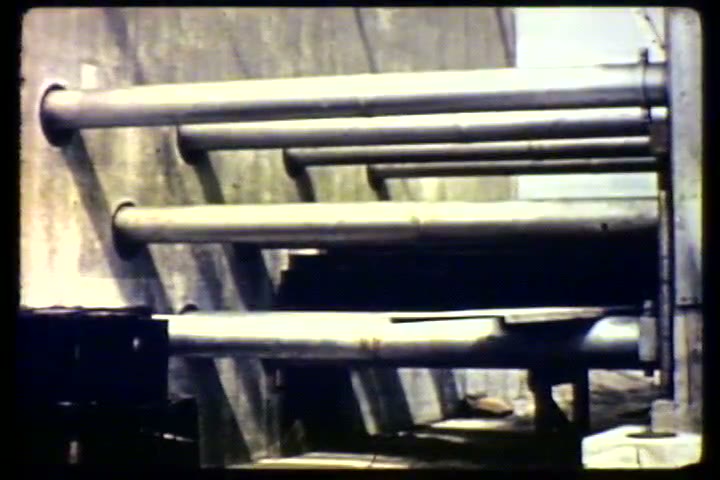
The film presents an official summary of Operation Castle, conducted between March 1 and May 14, 1954, at the Pacific Proving Grounds across Bikini and Eniwetok Atolls. Task Force Commander General Clarkson introduces the operational review of the all-thermonuclear test series, which comprised three detonations on land and four on barges. Key sequences capture weapon assembly operations at the southern tip of Parry Island, the firing post located on Enyu Island, beachfront timber structures supporting vacuum diagnostic pipes, high-altitude imagery of massive nuclear fireballs, maps tracking fallout trajectories toward Rongelap, Rongerik, and Utirik, and naval ships testing their washdown decontamination spray systems at sea.

Released under the title «Nuclear Test Film - Operation Castle», this 21-minute record is attributed to the Department of Energy and is distributed in the public domain under a CC0 dedication. The film incorporates visual and technical records produced in conjunction with the Department of Defense and the Atomic Energy Commission, documenting primary yield measurements, barge-mounted explosive assemblies, and radiochemical cloud sampling procedures.

Context for the broader military engineering, logistics, and coastal construction operations associated with these programs is preserved in the United States National Archives within Record Group 77, Records of the Office of the Chief of Engineers. These archives include preliminary inventories, correspondence concerning military functions up to 1955, and extensive engineering plans and registers documenting harbor improvements, maritime equipment, and coastal facilities managed by engineer districts and divisions.

The footage serves as a primary source on the transition to deliverable megaton-range nuclear weapons in 1954. By preserving detailed technical explanations, diagnostic layouts, and footage of massive detonations alongside fallout dispersion charts across Pacific atolls, the film provides critical documentary evidence of mid-twentieth-century nuclear testing and testing methodology.

Share:

Content Details

Source

archives.gov

Nation

USA

Year

1954

Classification

public

Categories

declassified, History

Format

Direct Stream HD

Link Status

Validated source

📁 Case File & Evidentiary RecordsUnclessify Video Dossier

Investigative recordings, authenticated telemetry, and official exhibits verified by Unclessify Intelligence.

Editorial Transparency & Fair Use Notice

Original investigative video reportage compiled exclusively by Unclessify Intelligence based on declassified archives, authenticated telemetry, and historical public records. Synthesis, narrative context, and editorial analysis represent independent journalism under international freedom of information and public interest principles.

Read Full Editorial Policy & Source Transparency →

What this piece rests on

The text was checked against the facts listed below, extracted from the act above. It does not yet carry corroboration from independent sources.

The 182 facts verified in the text
  1. [atto] Johnson, rev., "Preliminary Inventory of the Textual Records of the Office of the Chief of Engineers, Part I, Central Office, Subordinate Offices, Engineer Boards and Commissions, Field Offices, and Detached Engineer Officers," NM 19 (ca. 1964);
  2. [atto] Johnson, comp., "Preliminary Inventory of the Textual Records of the Office of the Chief of Engineers, Part II, Engineer Divisions and Districts," NM 45 (1965);
  3. [atto] NM-19, Textual Records of the Office of the Chief of Engineers, Part I," NM 78 (1967);
  4. [atto] NM-45, Textual Records of the Office of the Chief of Engineers, Part II," NM 79 (1967); supplement in National Archives microfiche edition of preliminary inventories.
  5. [atto] Top of Page 77.2 General Records of the Headquarters Office 1789-1955 History: Corps of Artillerists and Engineers authorized for three years by an act of May 9, 1794 (1 Stat. 366), and continued indefinitely by an act of March 3, 1795 (1 Stat. 430).
  6. [atto] Top of Page 77.2.2 Correspondence relating to civil functions, 1890-1947 Textual Records: General correspondence, 1890-1923, with record cards and indexes.
  7. [atto] Correspondence with engineer districts and other field offices, 1923-42, with index and record cards.
  8. [atto] Decimal correspondence with engineer divisions and districts, 1942-47.
  9. [atto] Correspondence with other agencies and organizations ("Miscellaneous File"), 1923-42, with record cards and index.
  10. [atto] Correspondence relating to rivers and harbors, bridge construction, boats, and construction permits, 1923-42, with record cards and index.
  11. [atto] Top of Page 77.2.3 Other records relating to civil functions Textual Records: Register books and card indexes to the Civil Works Map File described below, 1800-1947.
  12. [atto] Architectural and Engineering Plans: "Construction" portion and other portions of the Civil Works Map File, showing canals, bridges, dams, piers, and jetties built along U.S. coasts and major rivers, and types of dredge boats used, ca. 1840-1947 (7,000 items).
  13. [atto] Photographic Prints: River and harbor improvement activities, from Civil Works Map File, 1863-1927 (H, 2,000 images).
  14. [atto] Equipment and techniques used in river and harbor improvement work, 1897-1948 (RF, RHEO; 2,300 images).
  15. [atto] Views showing progress on various river and harbor construction projects, published in Corps of Engineers numbered pamphlets, 1938-41 (PR, 475 images).
  16. [atto] Flood control activities in urban and rural areas nationwide, in albums, 1913-47 (FC, 500 images).
  17. [atto] Various civil works projects in the United States, 1936-40 (HI, 20 images).
  18. [atto] Various civil works projects in South America, mainly Brazil, in album, 1933 (BE, 109 images).
  19. [atto] Dam and underwater tunnel construction at an unidentified site, 1904-6 (D, 22 images).
  20. [atto] Top of Page 77.2.4 Correspondence relating to military functions, 1890-1955 Textual Records: General correspondence, 1890-1917, included in general correspondence, 1890-1923, described Under 77.2.2; with record cards and indexes.
  21. [filmato, parlato] Operation Castle, the fifth in a series of tests at the Pacific Proving Grounds.
  22. [filmato, parlato] Another accumulation of men, of machines, another meeting of ships and aircraft and troops.
  23. [filmato, parlato] Here was the best of physics, of metallurgy, of electronics.
  24. [filmato, parlato] During the months after the historic Mike detonation, preparations for a new series of tests to solve the problems of a deliverable megaton weapon went ahead at an accelerated pace throughout the country.
  25. [filmato, parlato] Operation Castle became a reality and is now successfully concluded.
  26. [filmato, parlato] The report which follows is a summation of what occurred at the Pacific Proving Grounds during that operation in 1954.
  27. [filmato, parlato] Here to lead off this record is General Clarkson, Task Force Commander.
  28. [filmato, parlato] Operation Castle was concluded on the 14th of May 1954.
  29. [filmato, parlato] Castle was an all-thermonuclear test, a test basically of devices in the megaton range.
  30. [filmato, parlato] We feel that the report of this important test should give the failures as well as the successes, should reflect the changes in thinking that occurred during the test.
  31. [filmato, parlato] We hope this treatment will help you understand the problems that were experienced during the course of the operation.
  32. [filmato, parlato] This program encompassed then three shots on land and four shots on barges.
  33. [filmato, parlato] Our main base camp on Bikini was located in the same island complex.
  34. [filmato, parlato] The firing station to be used on all Bikini shots was located on Enyu Island.
  35. [filmato, parlato] Parry and Eniwetok Islands on Eniwetok Atoll again functioned as the center of land-based operations.
  36. [filmato, parlato] This then was the weapon schedule and the operational plan for Castle on March 1st.
  37. [filmato, parlato] This is the third time this island has been used as the headquarters for a Pacific Task Force.
  38. [filmato, parlato] For this operation, a weapons assembly area was constructed at the southern tip of this valuable piece of real estate.
  39. [filmato, parlato] This is the first time on any operation that weapons were assembled on Parry and then moved out to the firing site.
  40. [filmato, parlato] Weapon development would be impossible without diagnostic instrumentation.
  41. [filmato, parlato] But such instrumentation is expensive, very expensive at this distance from home.
  42. [filmato, parlato] For this reason, extensive instrumentation was limited to a few shots and each diagnostic experiment was carefully considered before being included in the program.
  43. [filmato, parlato] A great mass of information was gathered as a result of an array of 12 evacuated pipes.
  44. [filmato, parlato] These pipes are like peepholes looking at portions of the weapon's case to pick up gamma and neutron emission from many stages of the reaction.
  45. [filmato, parlato] Starting at H minus 48 hours, all personnel at Bikini Atoll were evacuated from the scattered islands and moved aboard task force ships.
  46. [filmato, parlato] The only men to remain were the members of the firing party protected in their bunker on Enyu Island.
  47. [filmato, parlato] Once more, for the first time since Operation Crossroads in 1946, Bikini took its place in the story of atomic testing.
  48. [filmato, parlato] This photograph was taken from an airplane at 50 miles.
  49. [filmato, parlato] The width of the fireball at this time, about three seconds after detonation, was four miles.
  50. [filmato, parlato] The frame size of the picture is 6 by 8 miles.
  51. [filmato, parlato] The top of the fireball at this time, 40 seconds after detonation, was 5 miles above sea level.
  52. [filmato, parlato] Proved that we can have a high-yield weapon weighing less than 10 tons.
  53. [filmato, parlato] The tremendous yield resulted in a serious fallout situation at Bikini and certain other atolls downwind from Ground Zero.
  54. [filmato, parlato] The actual wind was in this direction, some 10 degrees less favorable than forecast.
  55. [filmato, parlato] Even so, the winds were within the area of acceptable fallout.
  56. [filmato, parlato] However, the unexpected high yield caused significant fallout to occur on Rongelap Atoll 110 miles distant, on Rongerik 150 miles from Bikini, and on Utirik 280 miles out.
  57. [filmato, parlato] After the natives were evacuated, radiation survey teams were flown back to the exposed atolls where studies were made and water and soil samples taken.
  58. [filmato, parlato] Evacuation was carried out on the second morning after the shot.
  59. [filmato, parlato] Rongerik had no native population, but was occupied by 28 men of the task force.
  60. [filmato, parlato] Eight men were evacuated by air at H plus 28 hours and the remaining men soon after.
  61. [filmato, parlato] Utirik had 150 natives and they were also evacuated, although radiation levels here were relatively light.
  62. [filmato, parlato] The removal of personnel from the contaminated atolls was done mainly by destroyers.
  63. [filmato, parlato] These destroyers were attached to the task force primarily for security purposes, but were easily adapted for use as evacuation vessels.
  64. [filmato, parlato] All of those exposed were taken to Kwajalein where complete physical examinations were carried out.
  65. [filmato, parlato] Every effort was made to assure their comfort and well-being.
  66. [filmato, parlato] Fallout on Bikini temporarily rendered that atoll unusable.
  67. [filmato, parlato] 25 R per hour was recorded on Eneu, our port of entry.
  68. [filmato, parlato] On Enyu, the site of our control station, 35 R per hour was recorded.
  69. [filmato, parlato] Hundreds of roentgens per hour were measured on Aamon and Bikini islands.
  70. [filmato, parlato] Even if radiation had not been a factor, blast damage on Eneu was considerable.
  71. [filmato, parlato] It would have taken a sizeable effort to make that island again usable as a base camp.
  72. [filmato, parlato] The ground shot and fallout experienced by our firing party on Enyu forced us to give up the idea of a manned station.
  73. [filmato, parlato] The necessary electronic systems were installed on the USS Estes to permit firing remotely by radio.
  74. [filmato, parlato] The possibility of further damage to previously prepared shot sites at Bikini caused us to change our schedule at this point.
  75. [filmato, parlato] Back in the States, at about the same time Castle was in operation, the results of these drops plus tested fusing and firing systems made it possible to have a deliverable weapon ready, a weapon approximately 19 feet in length and 5 feet in diameter.
  76. [filmato, parlato] While the case is made of aluminum, this is by no means a light weapon, since it weighs 43,000 pounds.
  77. [filmato, parlato] This was the first time that the barge method of firing was used.
  78. [filmato, parlato] It was felt that if firing could be done from a barge on open water, it would result in an appreciable reduction in fallout as well as a considerable simplification of operational problems.
  79. [filmato, parlato] We had to postpone 14 days from the scheduled date of firing because of weather.
  80. [filmato, parlato] The winds continued to swing around, blowing to the south and then to the west.
  81. [filmato, parlato] Then, for 16 days the winds remained in this sector.
  82. [filmato, parlato] Since Eniwetok was in this area, it might receive fallout if the winds were too close to a borderline condition.
  83. [filmato, parlato] on the 26th of March, the forecast was for a favorable wind in the right direction.
  84. [filmato, parlato] The shot was set for 6:30 the next morning, the 27th of March.
  85. [filmato, parlato] On this rather unimpressive barge floating in the Bikini Lagoon rested a device which carried the hopes for a large step forward in the weapons development program.
  86. [filmato, parlato] The distance of the camera aircraft is 50 miles.
  87. [filmato, parlato] The frame size of the picture is 14 by 18 miles.
  88. [filmato, parlato] Looked from Eniwetok Atoll 200 miles away.
  89. [filmato, parlato] Daily commuting from ship to shore cost several working hours per man each day.
  90. [filmato, parlato] We had to watch the radiation doses received by the people working on the test islands.
  91. [filmato, parlato] A maximum of 3.9 roentgens per man was set for the operation, and with minimum readings of approximately 100 milliroentgens per hour, the men had to work fast.
  92. [filmato, parlato] As on previous tests, the armed forces took advantage of the Castle series to broaden their knowledge of the effects produced by high-yield weapons.
  93. [filmato, parlato] As an example, there has been much uncertainty in specifying the minimum safe distance for aircraft delivering high-yield weapons.
  94. [filmato, parlato] Blast and thermal effects were measured on B-36 and B-47 aircraft positioned so that some damage was expected.
  95. [filmato, parlato] This data will help us to specify the yield at which parachute drops are required for delaying a detonation as well as providing us with answers to many questions which arise when positioning for multiple drops is considered.
  96. [filmato, parlato] The whole picture of fallout contamination becomes of increasing importance with high-yield weapons.
  97. [filmato, parlato] In one program, drone ships were sent into fallout areas to evaluate the worth of a washdown system for ship decontamination.
  98. [filmato, parlato] We found we could measure fallout even in large ocean areas by making aerial surveys using extremely sensitive radiation detection equipment and with surface craft such as tugs and destroyers.
  99. [filmato, parlato] As a result of these measurements, we were able to document for the first time fallout data from high-yield detonations.
  100. [filmato, parlato] It is now known that fallout from the larger Castle shots blanketed areas of more than 5,000 square miles with radioactive material that would have been lethal to unprotected personnel.
  101. [filmato, parlato] This one result gives a new insight into a method for using high-yield weapons in both strategic and tactical situations.
  102. [filmato, parlato] It is now around the 10th of April in the recap of our story of Castle: three shots down and three to go.
  103. [filmato, parlato] The weather continued to work against our keeping a firm firing schedule.
  104. [filmato, parlato] During the middle two weeks of April, we were faced with the same situation.
  105. [filmato, parlato] The winds above 10,000 feet were again in an unsafe direction.
  106. [filmato, parlato] Under these conditions, populated areas were directly in line of fallout.
  107. [filmato, parlato] Again we postponed, awaiting a favorable forecast.
  108. [filmato, parlato] This occurred on the 25th of April at noon.
  109. [filmato, parlato] Anchored in its location off the island of Yurochi, zero hour approached.
  110. [filmato, parlato] The time of firing: 6:10 on the 26th of April.
  111. [filmato, parlato] Camera position: 50 miles at 10,000 feet.
  112. [filmato, parlato] The weapon was scheduled for firing on the 5th of May.
  113. [filmato, parlato] For the first time in the operation, we had what could be considered a normal interval between shots.
  114. [filmato, parlato] On the 16th of April, a Strategic Air Command B-36 landed at Eniwetok Island.
  115. [filmato, parlato] Camera position: 50 miles at 10,000 feet.
  116. [filmato, parlato] The sixth and final shot of Operation Castle.
  117. [filmato, parlato] This device was also flown out to the forward area for final assembly at Parry Island.
  118. [filmato, parlato] The barge was towed directly to its zero point at Eniwetok Atoll.
  119. [filmato, parlato] Here, over the spot that was once the island of Elugelab and is now the Mike crater, was anchored in position.
  120. [filmato, parlato] At 6:20 on the morning of May 14th, the smallest device of the operation was ready.
  121. [filmato, parlato] This test initiated an investigation of small, lightweight thermonuclear weapons in the megaton class.
  122. [filmato, parlato] The yield was about 1.7 megatons, essentially as predicted.
  123. [filmato, parlato] From this firing we learned that we have the capability of developing megaton weapons weighing less than 10,000 pounds.
  124. [filmato, parlato] Castle was by far the most complex and significant operation in the short but impressive history of nuclear testing, and in my opinion, absolutely vital to national security and the security of the free world.
  125. [filmato, parlato] We were beset by operational problems of a magnitude not encountered previously.
  126. [filmato, parlato] The degree of flexibility attained by the task groups and by the task force as a whole in meeting these problems is only one example of the spirit of cooperation evidenced by all members of the three services and by the members of the Atomic Energy Commission and its contractors.
  127. [filmato, parlato] To the men who made Operation Castle a success, to the same men who were asked to undergo many personal hardships, I have already expressed my gratitude.
  128. [filmato, parlato] I am sure that these men also deserve the sincere appreciation of the Department of Defense, the Atomic Energy Commission, and the people of the United States.
  129. [filmato, parlato] This concludes the report on Operation Castle.
  130. [filmato 01:20] Un ufficiale militare in uniforme e occhiali (Generale Clarkson) parla davanti alla telecamera all'interno di un ufficio o studio.
  131. [filmato 04:05] Una lunga struttura a traliccio in legno con 12 condotte/tubi sottovuoto allineati che si estende lungo una spiaggia sabbiosa verso il mare.
  132. [filmato 05:00] Esplosione nucleare con un'enorme sfera di fuoco luminosa sopra le nuvole ripresa dall'alto in cielo aperto.
  133. [filmato 06:10] Grafico a mappa che illustra le direzioni del vento, la dispersione del fallout e le distanze tra gli atolli. — a schermo: AREA OF ACCEPTABLE FALLOUT FORECAST ACTUAL 10° BIKINI ENIWETOK RONGELAP RONGERIK UTIRIK
  134. [filmato 08:20] L'ufficiale in uniforme in piedi a un podio illustra una mappa retroilluminata dell'atollo di Bikini con punti di detonazione.
  135. [filmato 09:35] Personale a bordo di una chiatta o nave mentre manovra cavi e strutture metalliche sul ponte.
  136. [filmato 11:15] Fungo atomico di una potente detonazione termonucleare con anello di condensazione visibile nel cielo notturno/scuro.
  137. [filmato 12:55] Nave militare in mare aperto completamente avvolta da getti d'acqua del sistema di decontaminazione (washdown system).
  138. [filmato 14:30] Ripresa aerea di una piccola chiatta bianca che galleggia sulle acque scure dell'oceano/laguna.
  139. [filmato 16:00] Un grande ordigno/dispositivo coperto da un telo scuro montato su una piattaforma o rotaia su una chiatta con operai attorno.
  140. [filmato 17:35] Veduta aerea grandangolare di una chiatta posizionata vicino a una laguna/scogliera corallina in mare aperto.
  141. [filmato 18:25] Sfera di fuoco e bagliore intenso di un'esplosione nucleare all'orizzonte al di sopra delle nuvole al tramonto/alba.
  142. [filmato] Clarkson
  143. [filmato] USS Estes
  144. [filmato] Department of Defense
  145. [filmato] Atomic Energy Commission
  146. [filmato] 1954
  147. [filmato] May 14, 1954
  148. [filmato] 1946
  149. [filmato] March 1, 1954
  150. [filmato] March 26
  151. [filmato] March 27
  152. [filmato] April 10
  153. [filmato] April 25
  154. [filmato] April 26
  155. [filmato] May 5
  156. [filmato] April 16
  157. [filmato] May 14
  158. [filmato] Pacific Proving Grounds
  159. [filmato] Bikini
  160. [filmato] Bikini Atoll
  161. [filmato] Enyu Island
  162. [filmato] Parry Island
  163. [filmato] Eniwetok Island
  164. [filmato] Eniwetok Atoll
  165. [filmato] Eniwetok
  166. [filmato] Rongelap Atoll
  167. [filmato] Rongelap
  168. [filmato] Rongerik
  169. [filmato] Utirik
  170. [filmato] Kwajalein
  171. [filmato] Eneman Island
  172. [filmato] Aamon Island
  173. [filmato] Bikini Island
  174. [filmato] Bikini Lagoon
  175. [filmato] Yurochi Island
  176. [filmato] Elugelab
  177. [filmato] Mike crater
  178. [filmato] United States
  179. [filmato] durata 21 minuti (1261 secondi)
  180. [filmato] licenza CC0
  181. [filmato] autore o produzione: Department of Energy
  182. [filmato] pagina d'origine https://commons.wikimedia.org/wiki/File%3ANuclear%20Test%20Film%20-%20Operation%20Castle.webm

Comments (0)