
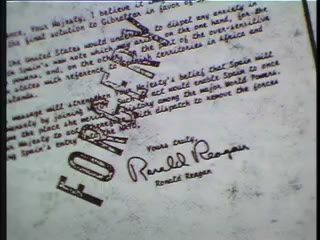
The footage provides a detailed overview of disinformation, bribery, forgery, and other tactics employed abroad by the Soviet Union. The visuals document studio interviews and discussions with various figures, including former intelligence officers, journalists, and state officials, interspersed with archive shots and close-ups of reference publications and books, such as a volume printed in Berlin in 1968. The recordings feature contributions from experts such as Arnaud de Borchgrave, Jean-François Revel, Stanislav Levchenko, Ladislav Bittman, and Dennis Kux, speaking about strategies aimed at influencing Western public opinion and decision-making processes without resorting to direct armed conflict.
The audiovisual document is preserved at the National Archives and Records Administration, corresponds to the reference year 1984, has a total duration of 24 minutes, and is distributed under the license http://creativecommons.org/publicdomain/zero/1.0/. The recorded scenes illustrate statements from witnesses and former agents describing methods used to condition journalists and manipulate international information flows in countries including the United States, Czechoslovakia, France, Japan, Italy, West Germany, and other locations mentioned throughout the interviews.
The official reference record, which the National Archives catalog attributes to the U.S. Information Agency, confirms that the material examines the various measures adopted by the Soviet Union to further its strategic aims abroad, documenting communist actions and intentions. Among the examples cited is an Italian case: in July 1983 the Rome magazine Pace e Guerra ran a story based on two telegrams attributed to the American embassy in Rome, proposing to exploit the attack on the Pope to steer the European press against the Soviets and the Bulgarians. The embassy showed them to be fakes; the film explains that, among other things, they lacked the number every embassy telegram carries.