
Lead: The Public Interest in Border Integrity
The interception of high-volume illicit narcotics within commercial containerized shipping corridors exposes the structural vulnerabilities of global trade infrastructure. When multi-tonne shipments breach international transit boundaries, they test both domestic inter-agency coordination and border security resilience. Documenting these interdictions provides critical public oversight into law enforcement methodology, operational efficacy, and the scale of transnational illicit economies.
Historical and Geopolitical Context
The Evolution of Containerized Smuggling Corridors
The consolidation of global maritime logistics has created high-density shipping routes that connect agricultural export hubs in South America directly to primary European container terminals. Commercial supply chains rely on high-velocity throughput, where standard shipping containers are transferred through automated deep-sea hubs under strict turnaround schedules.
Transnational criminal networks systematically exploit these logistics networks by embedding illicit cargo within legitimate perishable commodities. Perishable freight, particularly fruit shipments requiring continuous refrigeration, is frequently selected by trafficking syndicates due to strict customs clearance timelines designed to prevent spoilage of legal commercial goods.
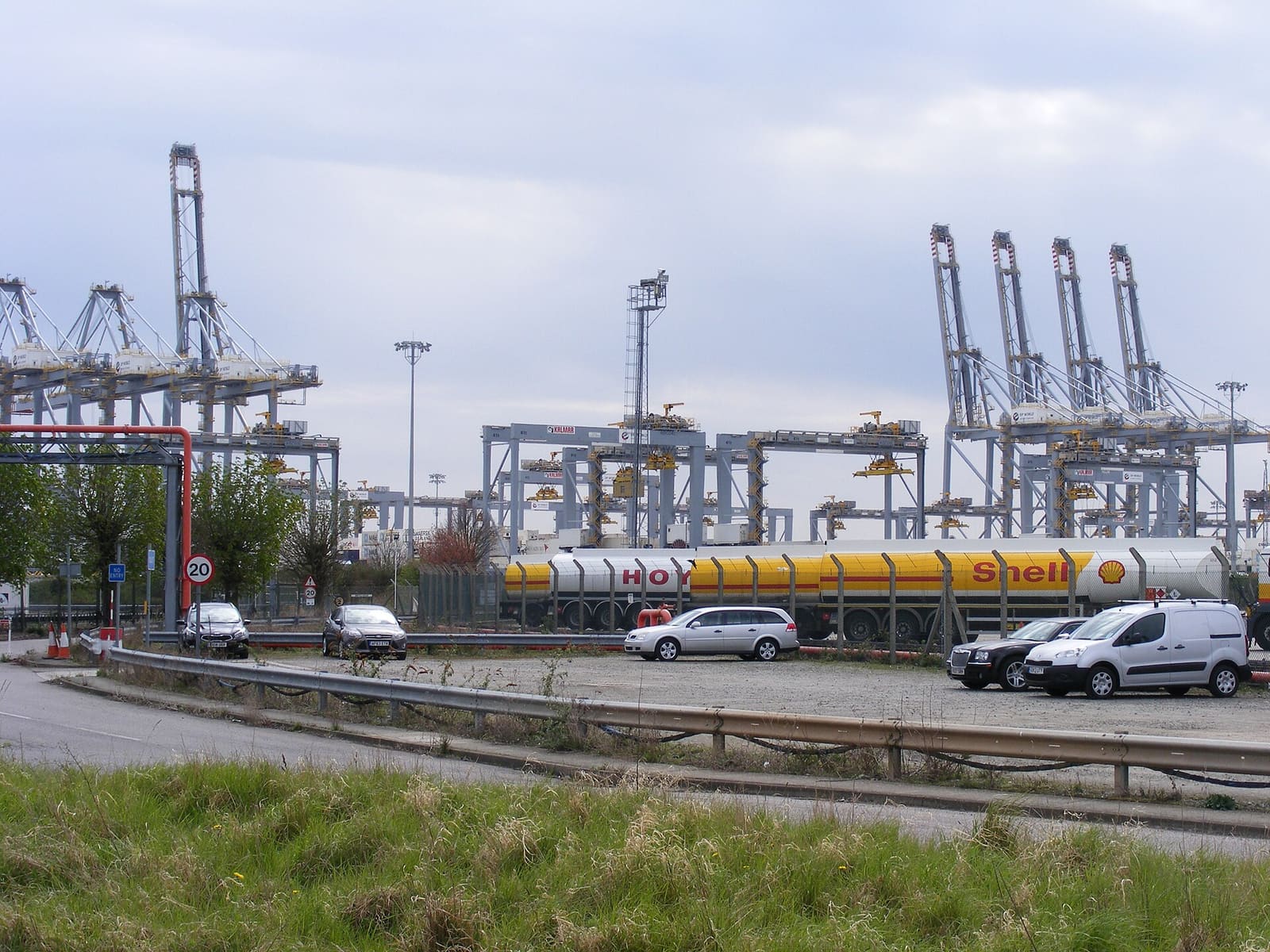
Over recent decades, enforcement agencies have shifted from random physical inspections to intelligence-led targeting frameworks. The interception at London Gateway Port in Essex illustrates the operational realities of modern interdiction, where maritime entry points serve as the primary defensive perimeter against bulk Class A drug importation.
The Domestic Logistics Pipeline and Controlled Movement
Upon arrival at maritime ports of entry, containerized freight enters domestic supply chains via heavy goods transport routes connecting regional distribution hubs. The operational trajectory moving from maritime terminals in Essex to inland delivery destinations reflects established freight distribution corridors across southern England.
Law enforcement interdiction strategies increasingly incorporate controlled transit tactics rather than immediate public seizures at the quayside. By permitting intercepted containers to proceed along their scheduled distribution route under controlled conditions, investigative bodies seek to map the domestic reception and warehousing tiers of trafficking operations.
The transit pathway terminating near Buntingford, Hertfordshire, highlights how rural and semi-rural logistics nodes are leveraged by organized groups to offload illicit shipments away from monitored port perimeters, requiring multi-jurisdictional surveillance capabilities across county boundaries.
Key Institutional and Operational Actors
Law Enforcement and Border Security Entities
The primary investigative and operational entities identified in the official record encompass domestic intelligence and border interdiction authorities operating within the United Kingdom’s legal framework:
- National Crime Agency (National Crime Agency): The United Kingdom’s lead non-ministerial law enforcement agency responsible for tackling organized crime, responsible for leading the intelligence development and downstream investigative actions.
- Border Force (Border Force): The operational law enforcement command within the Home Office tasked with frontline customs and immigration enforcement at international ports, responsible for physical search and extraction operations.
- London Gateway Port (London Gateway): The deep-sea container terminal on the north bank of the River Thames in Essex, acting as the maritime port of entry and initial site of interdiction.
Transnational Supply Chain Infrastructure
The logistical mechanisms documented in the case involve coordinated transcontinental maritime transit systems connecting South American agricultural points of origin to British distribution corridors:
- South American Export Hubs: Regional agricultural packing and maritime departure centers facilitating the commercial transport of perishable coverloads.
- Buntingford Delivery Destination: The inland reception point in Hertfordshire utilized for the scheduled terminal delivery of the monitored containerized consignment.
- Organized Crime Networks: The transnational trafficking syndicates responsible for financing, sourcing, concealing, and receiving the intercepted multi-tonne narcotics cargo.
Critical Analysis of the Evidence
Operational Mechanics of the Interdiction
According to the official investigative release, Border Force officers executed the physical interdiction based on actionable intelligence developed by the National Crime Agency. The operation resulted in the discovery of a massive consignment weighing approximately 2.9 tonnes:
“Acting on NCA intelligence, Border Force officers recovered the 2.9 tonne consignment which was hidden in a coverload of bananas from South America.”
The tactical removal of the illicit substances prior to the container’s scheduled dispatch demonstrates a calibrated risk-mitigation strategy. By substituting or extracting the illicit cargo at the quayside while permitting the container to proceed to Buntingford, Hertfordshire, investigators maintained operational control while monitoring downstream logistics facilitators.
Economic Valuation and Organized Crime Disruption
The official evaluation attributed an estimated street value of £232 million to the seized haul, categorizing it as one of the most substantial individual interdictions within the domestic maritime jurisdiction:
“This is a very significant seizure which has deprived the organised crime group behind it of huge profits.”
While the removal of 2.9 tonnes represents a profound asset disruption for the syndicate involved, valuation figures released in investigative disclosures reflect wholesale-to-retail street projections. Such metrics do not delineate the baseline production or procurement capital expended at source, leaving the precise financial resilience of the operating syndicate unquantified in public records.
Evidentiary Limitations and Unresolved Questions
The official public disclosure omits several vital evidentiary dimensions regarding the operational architecture of the trafficking network. The documentation does not specify the precise maritime carrier, the specific South American port of origin, or the identity of the import-export corporate entities named on the shipping manifests.
Furthermore, the record leaves open the ultimate tactical outcome of the controlled delivery to Buntingford. The release confirms the container was allowed to proceed to its inland destination, but does not disclose whether arrests, detentions, or subsequent asset seizures occurred at the secondary delivery location.
The institutional strategy emphasizing upstream collaboration remains central to official operational policy, though structural metrics evaluating long-term disruption remain opaque in baseline press releases:
“The NCA will continue to combat the threat of Class A drugs with partners at home, such as Border Force, and further upstream in source and transit countries.”
Transparency, Source Provenance, and Legal Framework
This investigative dossier is compiled from official administrative releases issued by the National Crime Agency, documenting executive law enforcement operations against transnational organized crime. The underlying public record provides an empirical baseline for analyzing border security procedures, inter-agency operational protocols, and commercial logistics vulnerabilities.
The public dissemination of these findings operates under the legal framework established by UK Open Government Licence v3.0, integrated with Article 5 of Italian Law No. 633/1941 regarding the reproduction of foreign official acts. Primary documentation and official case proceedings remain accessible via the originating agency repository at the National Crime Agency Archive.