
Executive Lead
State intervention against organized crime in Italian local administration has evolved from targeted actions against peripheral southern councils into a structural defense of public procurement, healthcare infrastructure, and metropolitan districts. The statistical trajectory between 2015 and 2017 demonstrates that municipal dissolution under Article 143 of Legislative Decree 267/2000 is no longer geographically confined to historical strongholds. Understanding this systemic vulnerability is critical today as organized crime shifts away from overt violence toward administrative capture, budgetary manipulation, and public tender subversion.
Official ministerial reporting spanning 2015 through 2017 documents a sharp escalation in institutional interventions, rising from 7 dissolved municipal councils in 2015 to 21 dissolved councils in 2017 alone. Beyond the quantitative surge, the records reveal two qualitative shifts: the unprecedented dissolution of major public healthcare boards and metropolitan subdivisions, alongside a severe statistical nexus between financial distress and mafia infiltration.
Institutional Background and Geographical Trajectories
The legislative framework governing extraordinary administrative management stems from Article 143 of the Consolidated Law on Local Authorities (TUOEL), established by Legislative Decree no. 267 of August 18, 2000. Originally designed as an exceptional preventive measure to rescue local bodies compromised by mafia infiltration, the mechanism replaces elected officials with a three-member extraordinary commission appointed by Presidential Decree (D.P.R.). The statutory mandate requires identifying concrete, unambiguous, and relevant elements of conditioning that compromise the impartiality and functioning of local public administration.
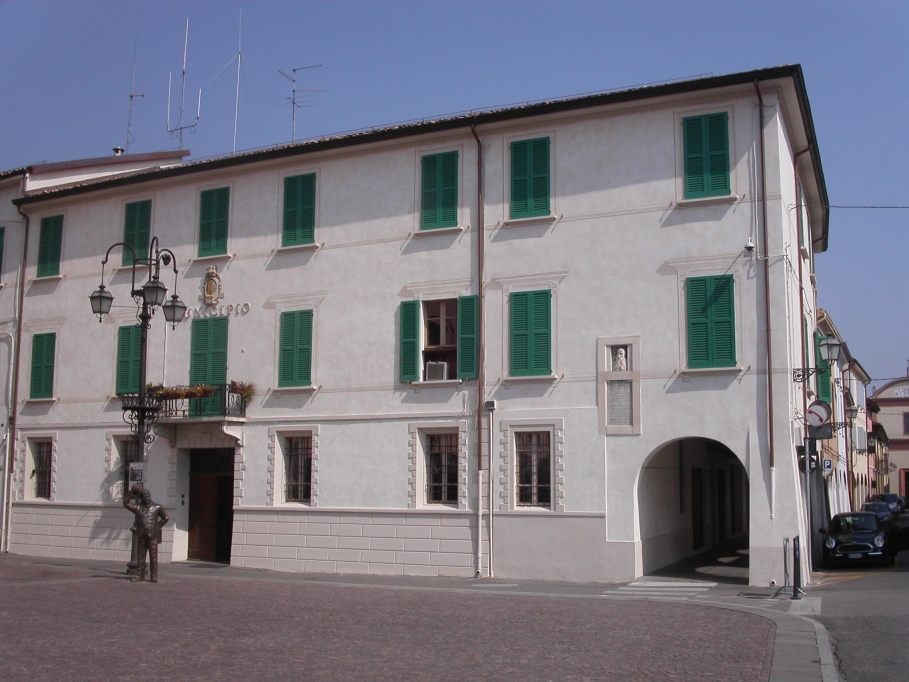
Historically concentrated across southern territories—predominantly Calabria, Campania, and Sicily—criminal penetration has steadily advanced into northern economic hubs. The dissolution of the municipal council of Brescello (Reggio Emilia) on April 20, 2016, with its 5,546 residents, marked the first application of Article 143 in the Emilia-Romagna region and only the seventh dissolution in northern Italy since 1991. It followed historic northern interventions in Bardonecchia (May 2, 1995), Bordighera (March 24, 2011), and Ventimiglia (February 6, 2012).
By 2017, the northern trajectory intensified further with the dissolution of Lavagna in Liguria and an official administrative access inspection ordered in Seregno, located in the northern province of Monza and Brianza. Simultaneously, criminal infiltration penetrated large-scale metropolitan and specialized structures previously considered resilient. On August 27, 2015, a Presidential Decree dissolved Municipio X of Roma Capitale, placing an administrative body serving 229,642 citizens under extraordinary state control. In parallel, the D.P.R. of April 23, 2015 dissolved the directorship of the Sant’Anna e San Sebastiano Hospital in Caserta, representing the first dissolution of a specialized hospital enterprise in national history following five prior interventions against general provincial health authorities.
Institutional Entities and Governing Actors
The implementation of extraordinary management involves complex administrative interactions between central government bodies, specialized prefectures, extraordinary commissions, and the administrative judiciary:
- Ministero dell’Interno (Department for Internal and Territorial Affairs): The central executive department responsible for assessing prefectural reports, coordinating commission activities, and submitting dissolution decrees to the Council of Ministers.
- Consiglio di Stato (Council of State) and TAR Lazio (Regional Administrative Court): Judicial arbiters evaluating appeals filed by dismissed local administrators against dissolution decrees.
- Municipio X of Roma Capitale: The metropolitan coastal municipal district representing 229,642 residents, managed under extraordinary commission until late 2017.
- Azienda Ospedaliera Sant’Anna e San Sebastiano of Caserta: The premier specialized hospital entity subjected to comprehensive administrative restructuring following evidence of syndicate control over clinical procurement and service contracts.
- Northern Municipalities: Including Brescello (Reggio Emilia), Lavagna (Genoa), and Seregno (Monza and Brianza), signaling cross-regional syndication.
- Southern Municipal Administrations: Entities dissolved across Calabria, Campania, Puglia, and Sicily, including Scafati (D.P.R. January 27, 2017), Crispano (D.P.R. January 24, 2017), San Felice a Cancello (D.P.R. May 15, 2017), Canolo (D.P.R. May 5, 2017), Parabita (D.P.R. February 17, 2017), Petronà (November 24, 2017), and Castelvetrano (June 7, 2017).
Critical Analysis of Evidence: Fiscal Vulnerability and Jurisprudential Friction
A rigorous examination of dissolution proceedings reveals a pronounced systemic anomaly: the intimate correlation between financial insolvency and organized crime infiltration. In 2017, exactly 9.5% of municipalities dissolved for mafia conditioning had formally declared financial default (dissesto finanziario) or entered multi-year financial rebalancing procedures. When contrasted against the broader national baseline—where only 0.9% of Italy’s 7,960 municipalities faced financial distress in 2017—the data establishes that entities subject to criminal infiltration are more than ten times as likely to experience complete budgetary collapse.
This structural intersection indicates that criminal conditioning rarely operates solely through illicit extortion; rather, it dismantles public accounting integrity, depletes municipal coffers through non-transparent contract awards, and systematically undermines local tax collection capacity. Insolvent municipalities lose administrative autonomy, creating operational voids that organized syndicates exploit to entrench territorial control.
Furthermore, ministerial data from 2017 shows that 38 extraordinary commissions were actively operating across the country, managing 1 hospital enterprise in Campania, 1 administrative district in Lazio, 18 municipalities in Calabria, 7 in Campania, 6 in Sicily, 3 in Puglia, 1 in Emilia-Romagna, and 1 in Liguria. This operational density generated intense legal friction between executive actions and judicial oversight. In 2017 alone, 8 key rulings were published—5 by the Council of State and 3 by TAR Lazio.
The administrative case law established decisive procedural criteria regarding the nature of Article 143 dissolutions. As affirmed in definitive jurisprudence:
“Lo scioglimento dei corpi rappresentativi del Comune, di cui all’art. 143 del Dlg.vo 267/2000 per infiltrazioni mafiose, ha natura di atto non già sanzionatorio, bensì preventivo e cautelare.”
Consequently, the administrative judge’s review remains strictly extrinsic, limited to verifying the overall reasonableness, adequacy of the preliminary inquiry, and proportionality of the measure. A dissolution decree is legally flawed only if the evaluation of all accumulated elements proves entirely illogical when assessed collectively.
However, jurisdictional divergence has created significant institutional anomalies. In Ventimiglia, after the initial dissolution decree was annulled judicially following an appeal by the former mayor before the Council of State in 2016, the Ministry of the Interior was forced to consult the State Attorney General regarding a possible petition for revocation (ricorso per revocazione), because the very same administrative head had concurrently been declared definitively ineligible to run for office under Article 143, Paragraph 11. Similar judicial reversals occurred in Giardinello (where the extraordinary commission had to be reinstated on October 9, 2015 after an appellate victory by the State) and Tropea (where the commission was reinstated on September 27, 2017).
Transparency and Legal Foundation
This investigative analysis is constructed exclusively from official administrative reports published by the Department for Internal and Territorial Affairs of the Italian Ministry of the Interior, covering commission activities from 2015 through 2017. These public records evaluate the closure of extraordinary managements, prefectural inspection accesses, and the administrative case law shaping municipal oversight across all regions.
The primary source documents are preserved and accessible under Italian administrative transparency laws and Article 5 of Law no. 633 of April 22, 1941, which establishes that official texts of state and public administration acts belong to the public domain. Complete institutional documentation can be examined directly through the official repository of the Ministry of the Interior 2017 Report and the corresponding 2015-2016 Comprehensive Review.