
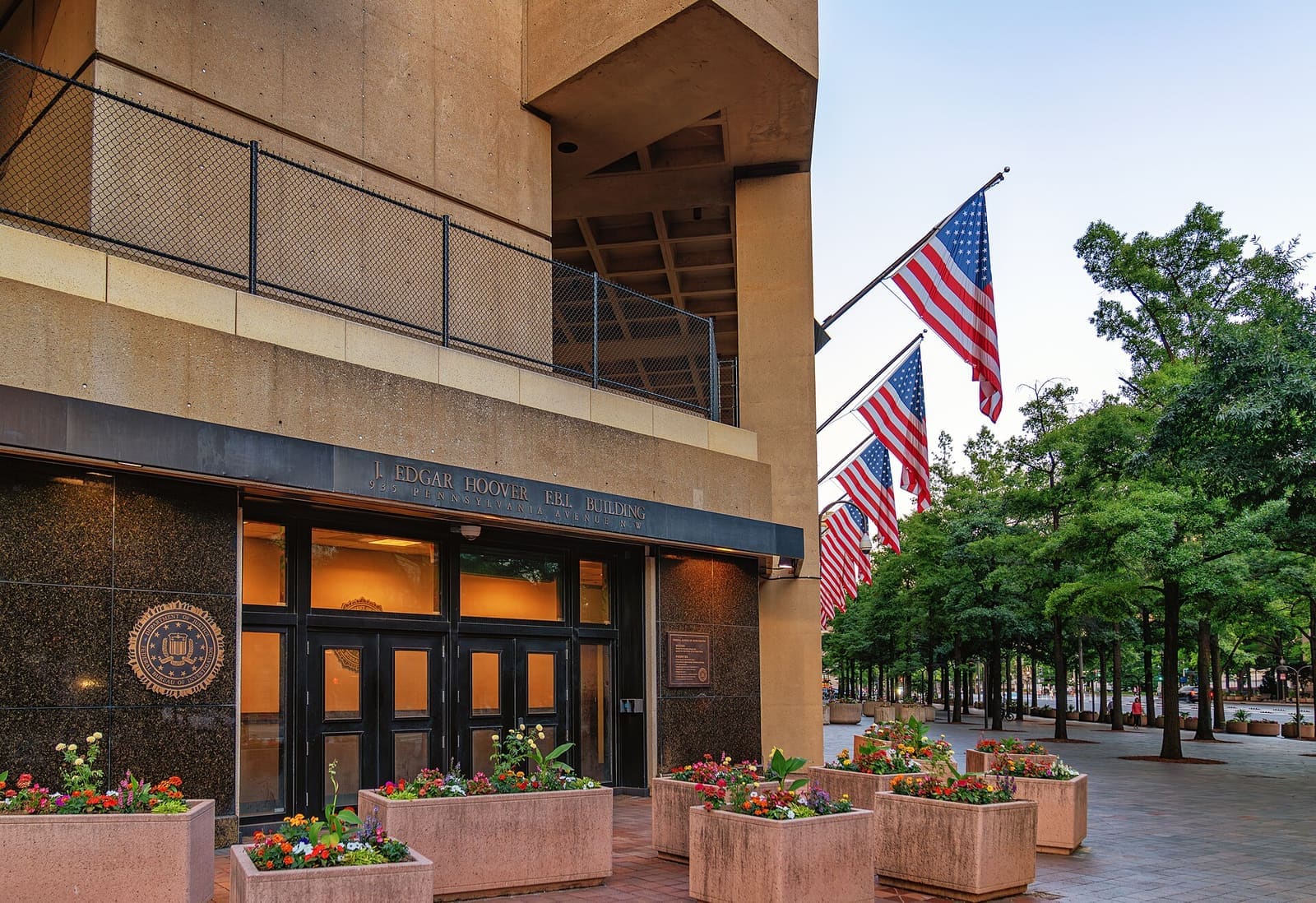
Lead: The Public Stakes of Declassified Intelligence
Declassified federal archives provide a critical diagnostic tool for understanding how state surveillance structures interact with political movements, private industry, and civic organizations. As intelligence methods continually evolve in the digital age, examining the documented historical reach of the Federal Bureau of Investigation reveals the institutional mechanisms used to monitor, categorize, and occasionally neutralize domestic subjects. Understanding these historic operational precedents is essential for assessing the baseline of government transparency and the enduring limits of civilian oversight today.
Historical and Geopolitical Context
The operational framework of domestic surveillance in the United States expanded significantly across the twentieth century, driven by acute geopolitical friction during the Cold War and intense internal sociopolitical upheaval. Federal intelligence agencies broadened their focus well beyond conventional counterespionage against foreign adversaries, constructing vast indexing systems to monitor domestic labor leaders, civil rights activists, anti-war organizers, and corporate executives under broad national security mandates.
Surveillance files compiled across multiple presidential administrations illustrate how political dissent, anti-imperialist student activism, and fringe ideological movements were routinely assessed through the lens of internal security threats. Organizations such as the Asian American Political Alliance, formed in 1968 at UC Berkeley, became subjects of dedicated intelligence tracking regarding potential overseas communist ties, while community figures and labor organizers faced prolonged scrutiny across decades of activity.
Simultaneously, the agency’s domestic operations engaged in active operational disruption rather than passive intelligence gathering. The institutional use of targeted counterintelligence strategies, such as fabricating internal informant identities to compromise leadership hierarchies, established precedents where federal record-keeping actively shaped the political realities it purported merely to observe.
The Shifting Boundaries of Counterintelligence
Throughout the Cold War era, the boundary between domestic policing and foreign counterintelligence blurred as federal agents tracked defectors, diplomatic trade fronts, and geopolitical intermediaries. The surveillance apparatus closely monitored entities like the Amtorg Trading Corporation, the initial Soviet trade representation established in New York in 1924, while simultaneously investigating paramilitary exile formations such as Alpha 66 operating in the southern United States.
This dual operational focus created massive record depositories that crossed federal jurisdictions, entangling high-profile legal defense attorneys, diplomatic envoys, scientific research institutes, and media broadcast organizations within identical surveillance classifications.
Key Actors: Profiles and Monitored Entities
The released archives encompass an expansive array of political organizers, federal officials, legal practitioners, corporate conglomerates, and ideological factions. Below are key subjects and organizations documented across the declassified investigative holdings:
Political Figures and Movement Organizers
- William Albertson: American Communist Party official targeted by the FBI in 1964 with an active “snitch jacket” operation, wherein federal agents forged and planted a fabricated report falsely branding him as a government informant.
- Saul Alinsky: Pioneer of modern American community organizing and author of Rules for Radicals (1971), whose decades-long community mobilization across urban centers drew extensive domestic intelligence monitoring.
- Dennis Banks: Native American activist, educator, and co-founder of the American Indian Movement established in Minneapolis in 1968, subject to extensive domestic intelligence dossiers.
- Juan Mari Brás: Founder of the Puerto Rican Socialist Party and vocal advocate for Puerto Rican independence, subject to multi-decade surveillance files and subsequent FOIA appeal proceedings.
- Alger Hiss: U.S. State Department and United Nations official accused of Soviet espionage in 1948 and convicted of perjury in 1950, generating investigative records exceeding 15,000 pages.
- Ion Mihai Pacepa: Former two-star general in the Romanian Securitate and top advisor to Nicolae Ceauşescu who defected to the United States in July 1978, later collaborating with intelligence services on Eastern Bloc operations.
- Oleg Penkovsky: Soviet military intelligence (GRU) colonel codenamed HERO who supplied critical intelligence regarding Soviet missile emplacements in Cuba prior to his arrest and execution.
Legal Figures, Fixers, and State Officials
- Roy Marcus Cohn: Prominent attorney, chief counsel to Senator Joseph McCarthy during the 1954 Army-McCarthy hearings, political fixer, and private counsel to Donald Trump.
- William Mark Felt Sr.: Former Associate Director of the FBI who served as the anonymous “Deep Throat” source during the Watergate scandal; convicted in 1980 for civil rights violations regarding unauthorized break-ins targeting Weather Underground associates before receiving a presidential pardon.
- Guy Banister: Former FBI employee, Assistant Superintendent of the New Orleans Police Department, and private investigator later implicated in Jim Garrison’s investigation into the assassination of President John F. Kennedy.
- Donald Crichton Alexander: Tax attorney appointed Commissioner of Internal Revenue by President Richard Nixon in May 1973, serving through early 1977.
- Arthur Hobson Dean: Senior partner at Sullivan & Cromwell, chief U.S. negotiator for the Korean Armistice Agreement at Panmunjeom, and key diplomat for the 1963 Nuclear Test Ban Treaty.
- Jack Greenberg: Director-Counsel of the NAACP Legal Defense Fund from 1961 to 1984 who argued forty civil rights cases before the Supreme Court, including Brown v. Board of Education.
- Melvin Belli: Noted civil litigation attorney known as the “King of Torts” who represented high-profile clients including Jack Ruby following the shooting of Lee Harvey Oswald.
- Johnnie L. Cochran Jr.: Prominent defense attorney notable for leading the legal defense of O.J. Simpson, as well as representing civil rights plaintiffs in high-profile police brutality litigation.
Paramilitary, Extremist, and Corporate Entities
- Alpha 66: Anti-Castro paramilitary organization founded by Cuban exiles in the early 1960s, active in southern Florida and tracked as an extremist formation.
- Citizens’ Councils of America: Network of southern white supremacist organizations formed in 1954 to oppose public school desegregation following the Supreme Court’s Brown ruling through economic boycotts and intimidation.
- Minutemen: Militant anti-communist organization founded in 1961 by Robert Boliver DePugh, subject to extensive domestic security files.
- Roberto Calvi: Italian financier and chairman of Banco Ambrosiano, linked to the illegal Masonic lodge Propaganda Due (P2), whose 1982 death in London sparked widespread international investigations.
- Erich Priebke: SS captain convicted of war crimes in Italy for his role in the 1944 Ardeatine caves massacre in Rome, subject to post-war intelligence dossiers tracking his flight to Argentina.
- Corporate Cross-References: Surveillance documentation and investigative cross-references encompassing private sector giants including Berkshire Hathaway, General Mills, Nordstrom, Equifax, and the now-defunct cryptocurrency exchange FTX.
Critical Analysis of Evidence: Institutional Practices and Archival Voids
The released documentation highlights the systemic dualism of historical FBI files: while they provide exhaustive granular logs of associations, travel, and financial dealings, they simultaneously expose the aggressive operational interventions deployed by federal authorities against civilian targets.
“These files offer a rare glimpse into the FBI’s surveillance, investigation, and documentation of notable personalities and organizations, revealing the intricate ways they interacted with or were perceived by the U.S. government.”
Active Disruption: The Reality of the Snitch Jacket
The 492-page release concerning Communist Party official William Albertson documents one of the Bureau’s most destructive covert tactics: the “snitch jacket.” Rather than merely gathering intelligence on party infrastructure, agents manufactured fraudulent internal records attributing informant activities to Albertson. This deliberate forgery resulted in his expulsion from his political community, demonstrating how domestic intelligence files often served as offensive instruments engineered to induce organizational collapse from within.
The Politics of File Destruction and Incomplete Records
A critical analytical finding within these declassified releases is the prevalence of purged or destroyed records, which creates severe archival blind spots. Multiple file entries in the collection note permanent record destructions that curtail historical accountability:
- Follow-up FOIA inquiries regarding community organizer Saul Alinsky revealed that portions of his investigative material had been destroyed, leaving only fragmented field office releases.
- Archival inquiries regarding New Orleans District Attorney Jim Garrison confirmed that related investigative files were formally marked as destroyed or transferred without retention.
- Files concerning Adolf Hitler—specifically investigative leads regarding assassination threats from 1933 and post-1945 rumors of survival—contain official notifications that remaining records were destroyed on March 7, 1973.
- Prosecutorial files relating to James Louis Browning Jr., the lead federal prosecutor in the 1976 trial of Patty Hearst, reflect extensive document destructions confirmed by agency response notices.
Surveillance Scope Beyond Political Factions
The analytical breadth of the archive reveals that surveillance was not confined to traditional political radicals or espionage targets. Broad tracking files were opened on standard professional bodies, scientific enterprises, and cultural media platforms:
- Professional associations including the American Bar Association, the American Psychiatric Association, and the American Psychological Association were monitored and cross-referenced within security files.
- Independent research entities like the Battelle Memorial Institute and anti-nuclear or energy advocacy groups such as the Fusion Energy Foundation were systematically logged.
- Public broadcasting and media systems, including the Public Broadcasting Service (PBS), the British Broadcasting Corporation (BBC), and the television production network behind America’s Most Wanted, accumulated extensive file references.
- Early digital rights organizations and hacker networks, such as the Electronic Frontier Foundation (EFF) and the Cult of the Dead Cow (cDc), faced early federal monitoring as digital communications expanded.
Financial Obstacles to Historical Disclosure
The records illustrate that declassification is routinely restricted not only by redactions or destruction, but also by administrative cost barriers. On institutional files of massive public significance—such as the archive on Planned Parenthood Federation of America—the FBI identified over 200,000 pages of relevant records but quoted release processing fees of $6,025.00 for duplication on CD-ROM media, effectively placing large-scale public interest disclosures behind prohibitive financial paywalls.
Transparency, Archival Sourcing, and Legal Framework
The dossiers analyzed in this collection originate from public access requests processed under the Freedom of Information Act (FOIA) and systematically hosted by the investigative research repository The Black Vault. Under United States copyright law (specifically 17 U.S.C. § 105), official records generated by officers or employees of the U.S. federal government as part of their official duties are placed in the public domain, guaranteeing the unrestricted right of citizens, researchers, and journalists to examine and redistribute these state records.
The primary source archive is accessible directly via The Black Vault’s FBI Files: Historical Figures & Groups Archive. Continued analytical scrutiny of these files remains a foundational requirement for evaluating historical government overreach and preserving an unvarnished record of state intelligence practices.